

1. The Three Suspension Types, Explained
Suspension on a fat tire e-bike isn't just a spec on a product page — it's what sits between you and every rock, root, curb, and crater on your path. The three fundamental types each offer a very different riding philosophy.
Hardtail
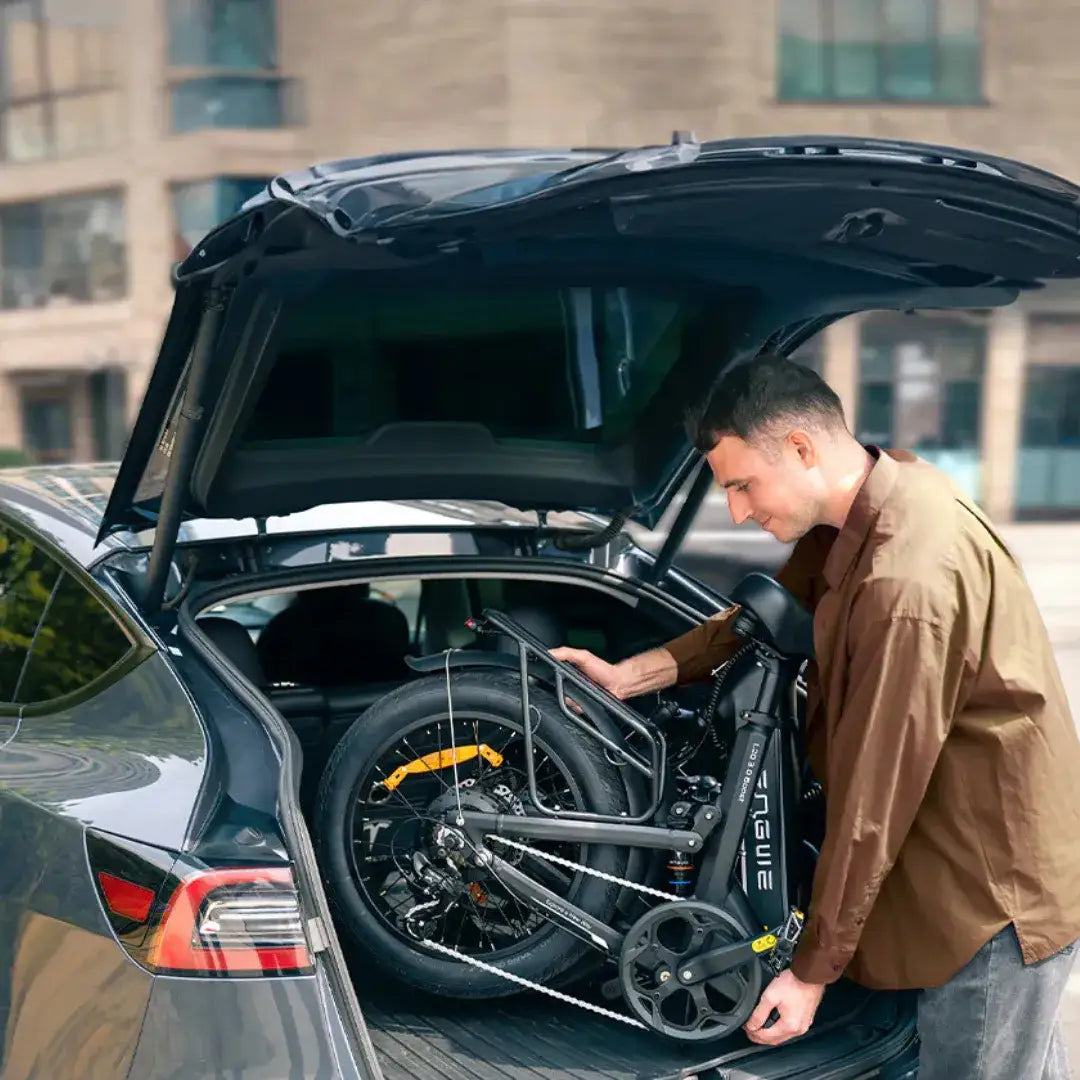
A hardtail e-bike features a front suspension fork but no rear suspension whatsoever. The rear of the frame is completely rigid. This is the lightest, lowest-maintenance option in the category — ideal for smooth trails, pavement, and riders who prioritize efficiency.
Dual Suspension
Dual suspension (also called "full suspension") pairs a front fork with a rear shock absorber mounted within the frame. Both ends of the bike absorb impact, offering dramatically smoother performance across rough terrain without the rider absorbing the punishment.
Full Suspension
In common usage, "full suspension" and "dual suspension" are interchangeable — both refer to independent front and rear shock systems working in concert. When a manufacturer specifically labels a bike "full suspension," they typically emphasize premium-grade components on both ends.
2. Where Full-Suspension Fat Tire E-Bikes Truly Shine
The combination of fat tires and full suspension creates a uniquely capable machine. Each technology amplifies the benefit of the other — fat tires already absorb vibration passively, and when paired with active dual suspension, the result is a ride quality unlike anything else in the e-bike world.

- Technical & Steep Terrain — Full suspension allows both wheels to track the ground independently. On descents and technical climbs, this translates to traction and control that a hardtail simply can't replicate.
- City & Urban Surfaces — Potholes, speed bumps, train tracks, and broken pavement are absorbed quietly rather than transferred through the frame and into your spine. Daily commuting becomes genuinely comfortable.
- Sand & Beach Riding — The rear shock prevents the back wheel from bouncing off loose sand, keeping you planted and pedaling efficiently across surfaces that would otherwise buck a rigid bike.
- Off-Road & Trail Adventures — Forest paths, rocky fire roads, and singletrack all demand that both tires stay in contact with the earth. Dual suspension makes that possible at speed.
- Pro Tips & Riding Tricks — The planted, predictable feel of a full-suspension platform makes learning jumps, drops, and technical maneuvers far more forgiving.
3. The Ranger: Our Best Full-Suspension Fat Tire E-Bike
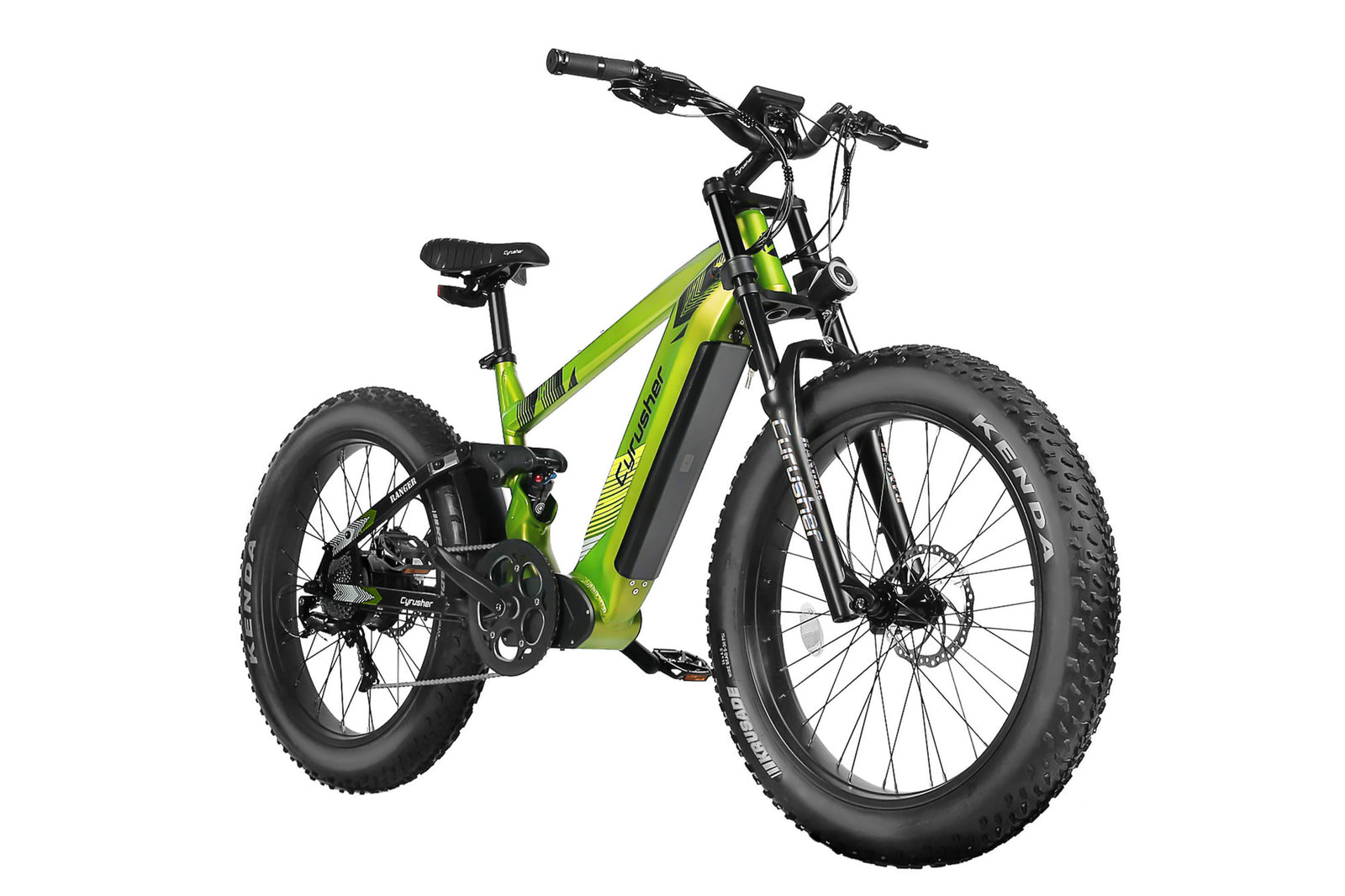
The Cyrusher Ranger 1.0 represents exactly what a full-suspension fat tire e-bike should be — a machine built for riders who refuse to let the terrain decide where they go. Whether you're navigating muddy forest trails, rocky desert paths, or a pothole-riddled urban street, the Ranger is engineered to absorb it all without breaking stride.
What Makes the Ranger Different?
A hydraulic front fork and dedicated rear suspension unit work together to create a seamlessly smooth platform. The fat tires provide the base layer of compliance, and the dual-shock system amplifies this significantly — the Ranger earns its all-terrain name on every surface it encounters.
- Robust Frame Construction — Built to handle the stresses of off-road riding with a geometry that's equally comfortable on-road.
- Reliable Stopping Power — Hydraulic disc brakes front and rear mean confident, consistent braking in wet or dry conditions.
- Sustained Range — A high-capacity battery supports extended adventure rides without forcing you to plan around charge anxiety.
- Ride Versatility — Multiple assist modes let the rider dial in the experience — from a light pedal assist on flat ground to full motor support on steep climbs.
4. Cost, Maintenance & Weight — The Real Comparison
There's no single "best" suspension type for every rider. The right choice depends on where you ride, how often you ride, and how much mechanical upkeep you're comfortable with. Use this breakdown to make the most informed decision:
| Factor | Hardtail | Full / Dual Suspension |
|---|---|---|
| Price Range | Generally lower upfront cost; fewer components to manufacture | Higher initial investment; rear shock and linkage add cost |
| Maintenance | Lower; only front fork requires service | Higher; both front fork and rear shock need periodic servicing |
| Long-Term Value | Simpler, lower lifetime cost if terrain allows it | Higher value for demanding terrain; protects rider's body over time |
| Weight | Lighter; no rear shock hardware | Heavier; rear pivot hardware and shock add meaningful mass |
| Money Saving Tips | Buy entry-level; terrain is forgiving enough that upgrades matter less | Prioritize quality rear shock; a cheap one defeats the purpose entirely |
💡 Backyard Provider Tip: If you ride on anything other than smooth pavement at least 20% of the time, a full-suspension fat tire e-bike will pay for itself in comfort, control, and longevity — your body will thank you after the first hundred miles.
5. What the Broader Fat Tire E-Bike Market Looks Like
The fat tire e-bike segment has matured rapidly over the last several years. What was once a niche product for extreme-terrain enthusiasts is now a mainstream category embraced by commuters, outdoor adventurers, and fitness riders alike. The proliferation of quality manufacturers has also made full-suspension configurations far more accessible at reasonable price points.
Key market trends include a growing preference for integrated battery systems, torque-sensing pedal assist, and hydraulic braking — all of which the best full-suspension fat tire bikes in 2025 now offer as standard.

Popular Fat Tire E-Bike Brands
Frequently Asked Questions
For most riders who ride mixed terrain — including any off-road, gravel, or rough pavement — absolutely yes. The added comfort, control, and traction make a substantial real-world difference that you'll feel on every ride.
On a hardtail, the front fork is your only active shock-absorption point. A quality fork with good travel and damping significantly improves ride quality and steering precision. It's the single most impactful upgrade or spec to scrutinize on a hardtail build.
In most cases, no. Rear suspension requires a pivot-based frame architecture that cannot be retrofitted to a rigid hardtail. The frame itself is the defining structural difference. If full suspension is a priority, select a bike designed for it from the start.
Ready to experience full-suspension fat tire riding firsthand?
Cyrusher Ranger 1.0