

Commercial refrigerators and freezers are essential in every professional kitchen. Whether you run a cozy neighborhood diner, an upscale restaurant, or a high-volume catering operation, these units deliver the temperature-controlled storage your ingredients and prepared dishes demand. They help you maintain strict food safety compliance while giving your team the organized space they need to work quickly in a demanding environment. In this guide, we will walk you through the various categories of commercial refrigeration and freezer equipment, explain the differences between them, and help you pinpoint the ideal solution for your business.
In This Guide
1. Types of Commercial Refrigerators & Freezers
2. Refrigerator & Freezer Door Configurations
3. Purchasing Considerations for Commercial Refrigeration
4. Installation Tips & Considerations
Types of Commercial Refrigerators & Freezers
Whether you are searching for a refrigerator or a freezer, commercial cooling equipment is available in a wide array of shapes, sizes, and layouts. Certain models prioritize quick and easy access, making them perfect for fast-paced kitchens. Others are engineered for maximum bulk storage, serving operations that handle large quantities of food. The nature of your kitchen and the menu you offer will largely dictate which unit best meets your needs.
1. Reach-In Refrigerators & Freezers

When it comes to reach-in refrigerators and freezers, you have two primary choices: single-door and multi-door units. Single-door versions are great for holding prepped meats, fresh produce, and garnishes that your team grabs throughout the day. Multi-door models work well for storing bulk ingredients or large batches of prepared items.
Both styles operate much like a standard home refrigerator, featuring built-in shelves for neat organization and full-size doors that swing open for easy access. Their upright form factor fits comfortably in most commercial spaces, and they are typically placed in or close to the prep area or production line so ingredients are always within arm's reach.
✔ Best for: Standard daily storage tasks
✔ Restock: From walk-in cooler or freezer weekly or as needed
2. Roll-In Refrigerators & Freezers
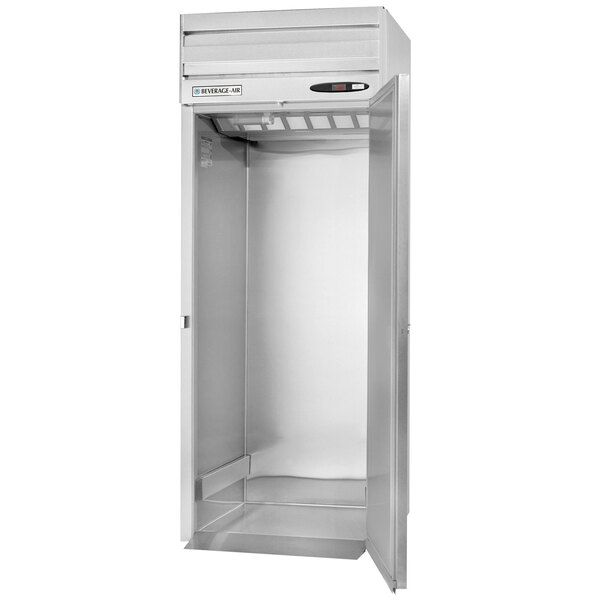
Roll-in refrigerators and freezers are built to accommodate wheeled food racks that slide smoothly in and out of the cabinet. They feature integrated ramps for effortless loading, which saves valuable time and reduces physical strain on your staff. Roll-in models are especially popular in cook-chill operations and catering facilities that rely on advanced food preparation workflows.
For peak efficiency, position your roll-in unit in or next to the prep zone so food can move seamlessly between stations. You can also protect food quality by running items through a blast chiller before loading them in, which keeps the internal temperature stable and prevents freshly cooked batch meals from warming the cabinet.
✔ Best for: Storing bulk prepared foods
✔ Restock: From walk-in cooler or freezer weekly or as needed
3. Pass-Through Refrigerators & Freezers
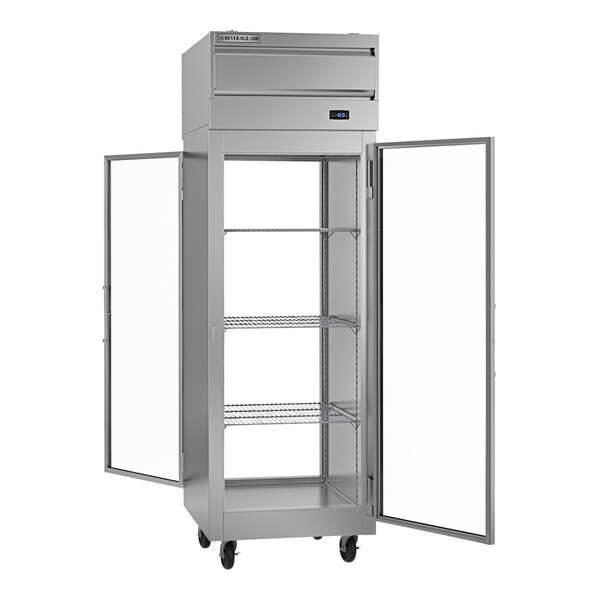
Pass-through refrigerators and freezers are specialized units fitted with doors on both sides, creating a secure transfer point between two distinct areas of your kitchen — typically the prep zone and the service station. When used correctly, they streamline food preparation and significantly reduce the risk of cross-contamination caused by improper handling.
These units shine in high-volume environments where keeping zones separate is critical, such as school cafeterias, buffet lines, and healthcare facilities. They can also double as display merchandisers in certain configurations, letting back-of-house staff restock while front-of-house customers browse the selection.
✔ Best for: Transferring foods between kitchen zones
✔ Restock: With prepared foods on a case-by-case basis
4. Walk-In Coolers & Freezers

Walk-in coolers and freezers function as their own refrigerated rooms, offering generous space for storing large volumes of fresh or frozen ingredients. They can be purchased as standalone units or built directly into your facility for a fully customized layout. Their insulated walls, ceilings, and floors deliver precise temperature control, keeping everything inside in optimal condition.
Regardless of the walk-in model you select, these units deliver the greatest value in kitchens that need to hold a significant quantity of fresh or frozen inventory. They are also ideal for high-volume foodservice operations that receive large ingredient deliveries on a daily basis. Place them in or near your receiving area so shipments can go straight inside, cutting down on unnecessary foot traffic in your busy kitchen.
✔ Best for: Large-scale ingredient storage
✔ Restock: As weekly or monthly shipments arrive
5. Undercounter Refrigerators & Freezers
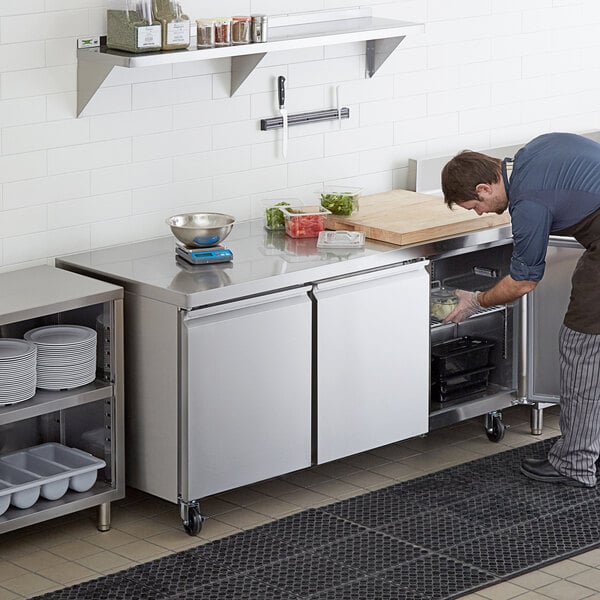
As their name implies, undercounter refrigerators and freezers tuck neatly beneath your countertops, making them a superb refrigeration solution for kitchens where square footage is limited. Their compact design frees up valuable floor space for other equipment, helping you maintain a smooth and efficient workflow.
Undercounter units work beautifully in prep areas where you need fast access to frequently used ingredients and supplies. They can also be installed under a bar to keep cocktail ingredients and mixers right at the bartender's fingertips. Pizzerias, sandwich shops, and catering businesses that rely on the same core ingredients over and over will find these units especially practical.
✔ Best for: Compact ingredient storage
✔ Restock: From walk-in cooler or freezer weekly or as needed
Types of Refrigerator & Freezer Doors
Selecting the right door style for your commercial refrigerator or freezer means weighing your kitchen layout, how often the unit will be opened, and the importance of energy efficiency. Every door type comes with its own set of advantages, so pick the one that lines up best with your daily operations and available space.
Swing Doors
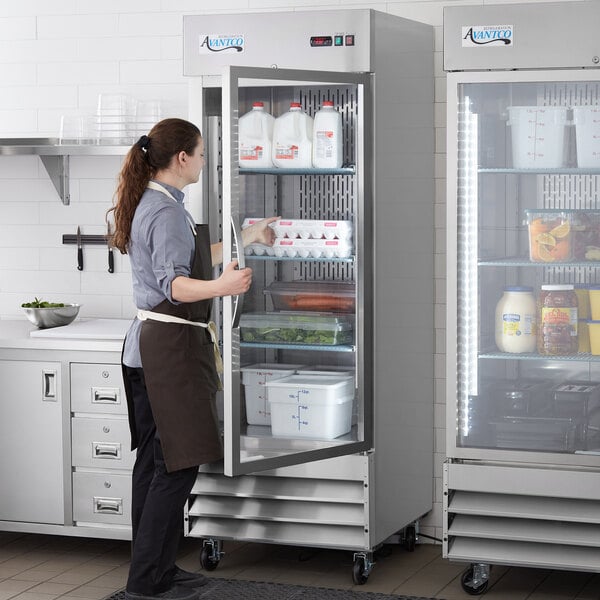
Swing doors are the classic door style most people picture on a refrigerator or freezer. They feature large, hinged panels that swing outward toward the user for full, unobstructed access to everything inside. Depending on your space, the hinge can be mounted on the left or right side. A major perk of swing doors is that many are designed to stay propped open when needed, making loading and unloading a breeze. When fully open, they also give you a complete view of the unit's contents for fast, efficient inventory checks.
✔ Best for: Standard refrigeration needs
✔ Used on: All styles of refrigerators
Half Doors
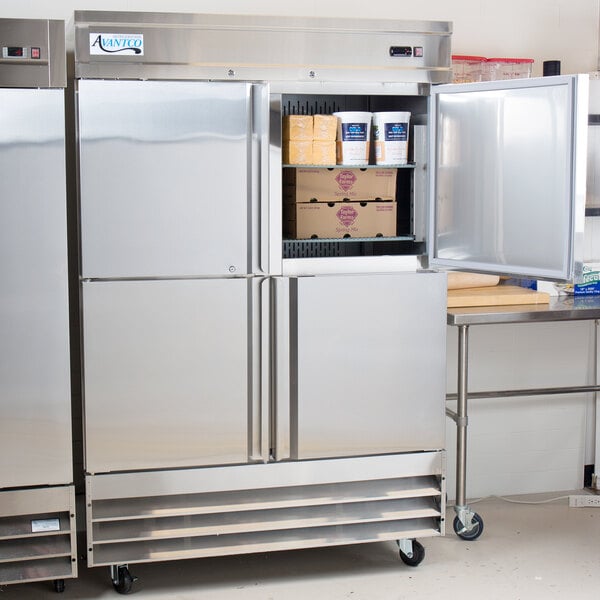
Half doors work like swing doors but with one important twist — the opening is divided into two separate sections. This lets you open just the top or bottom portion depending on what you need, which is a major win for energy conservation and temperature stability. Because only the relevant section is exposed, far less warm air enters the cabinet, which reduces temperature swings and eases the load on the compressor.
✔ Best for: Temperature retention, energy efficiency
✔ Used on: Reach-in units
Drawers
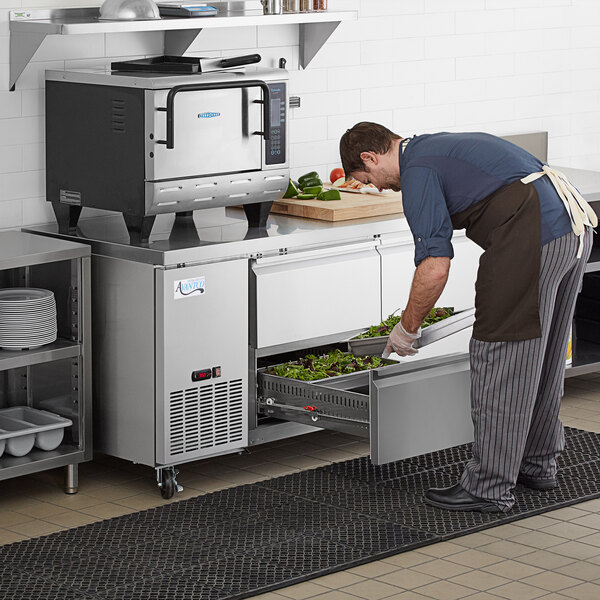
Drawer-style refrigeration doors pull out from the unit, granting top-down access to stored items. This design is particularly handy on undercounter models where space conservation and quick item identification matter most. Drawers can also be integrated into larger cabinets alongside swing doors, giving you the flexibility and convenience of both access styles in a single unit.
✔ Best for: Convenient top-down storage
✔ Used on: Combination reach-in units, undercounter units
Strip Curtains

Strip curtains, sometimes called strip doors, act as a flexible barrier that is easy to walk through while preserving the interior temperature of a walk-in unit. They are made of overlapping plastic strips hung from the top of the doorway. When someone passes through, the weighted strips fall back into place immediately, sealing warm air out and cold air in to maintain consistent temperature control.
✔ Best for: Easy access for bulk storage and inventory
✔ Used on: Walk-in units
Purchasing Considerations for Commercial Refrigeration
Beyond the size and style of the unit itself, you should also think about how your refrigerator or freezer will affect your kitchen's overall workflow. Features like door transparency, compressor placement, gasket design, and thermostat type all play important roles in daily usability and long-term performance.
Door Transparency
When buying a standard refrigerator or freezer, you will generally choose between solid doors and glass doors. Each comes with distinct trade-offs worth considering.
Solid Doors: Usually crafted from stainless steel or aluminum, solid doors are designed to endure the rigors of a busy commercial kitchen. They are easy to maintain, always look clean, and deliver superior insulation. The trade-off is that you cannot see inside without opening the door.
Glass Doors: Glass panels let you see the contents at a glance without opening the unit, saving time and energy. However, they offer somewhat less insulation than solid doors, which can lead to marginally higher energy consumption. They also need more frequent cleaning to stay clear and presentable.
Compressor Location
The compressor is the engine of your refrigeration system. It circulates refrigerant to keep food cold and your equipment running smoothly. Because warm air naturally rises and cold air sinks, top-mounted and bottom-mounted compressors perform differently depending on the environment.
Top-Mounted: These compressors draw in warmer air, making them well-suited for cooler environments. They resist clogging, leave all shelf space free for storage, and are harder to reach for cleaning.
Bottom-Mounted: Bottom compressors pull in cooler air, which makes them ideal for warm kitchens. They elevate the bottom shelves for easier access. On the downside, they can collect dust, grease, and debris from the floor, and they may cut into available storage capacity.
Removable Gaskets
Gaskets create an airtight seal around your refrigerator's door, locking cold air inside the unit. Some reach-in models include easily removable door gaskets that speed up cleaning and sanitizing. These gaskets can also be swapped out once they begin showing wear, keeping your unit in prime working condition for years to come.
Digital Thermostats
Many newer reach-in refrigerators and freezers ship with digital thermostats. Digital readouts deliver greater accuracy and make it far simpler to monitor temperatures at a glance, which typically translates into lower service costs and fewer maintenance visits. They are also easy to program and adjust, letting you dial in the exact temperature you need in seconds.
Spec Line vs. Standard Duty Refrigerators
While all commercial refrigerators and freezers are engineered for the demands of professional food service, spec line models represent a manufacturer's absolute best. These premium units feature more advanced temperature controllers, a broader range of interior and exterior options, and upgraded construction quality compared to standard duty models. They are typically chosen by design consultants for institutional projects that call for a top-tier refrigeration solution.
Installation Tips & Considerations
Beyond the features of the unit itself, you also need to plan where and how you will install it. Keep these essential guidelines in mind, and consider hiring a professional for the job if needed.
Measure Door Frames & Hallways: Commercial refrigerators and freezers are large, heavy units. Measure every door frame and hallway the equipment must pass through before you buy. This ensures the unit fits in your kitchen and helps you plan a clear delivery route.
Check Ventilation Clearance: Most manufacturers list specific clearance requirements for the back and sides of the unit. Ignoring these can lead to inefficient cooling, extra service calls, or even a voided warranty. Also steer clear of exceptionally humid or dusty locations, which can cause rust or compressor issues.
Place on a Level Surface: After confirming your ventilation is adequate, install the unit on a flat, level surface that is away from heat and moisture sources. Running a reach-in in an area with high ambient temperatures can force the compressor to overwork, potentially causing breakdowns and voiding your warranty.
Confirm the Power Supply: Your refrigerator or freezer must be connected to the correct voltage as specified by the manufacturer. It should also run on its own dedicated electrical circuit. Check the equipment manual for best practices and any special power requirements for your particular model.
When it comes to commercial refrigerators and freezers, the options are expansive and varied. There is no single solution that fits every operation, and your needs may evolve over time. These units are a cornerstone of any professional kitchen, and developing a solid understanding of the different types will set your business up for lasting success with safe, organized, and efficient food storage.
Chef AAA TSM33R Glass Door Merchandiser