

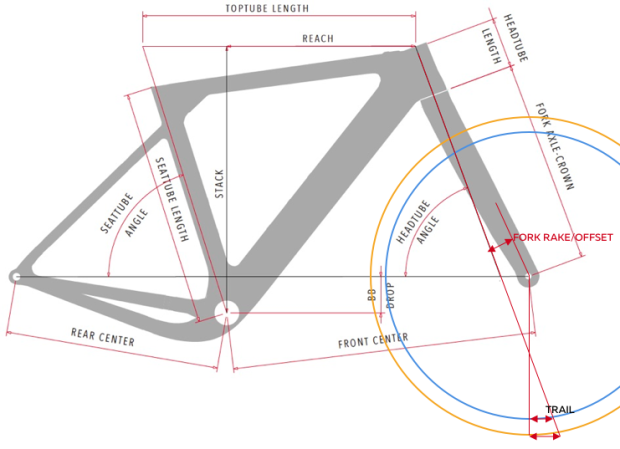
I have spent considerable time contemplating why certain bicycles feel exceptional while others leave much to be desired. The journey to understanding this phenomenon has been enlightening, particularly when it comes to gravel bikes. These versatile machines represent a fascinating intersection of engineering principles and rider experience, where seemingly minor measurements can dramatically alter how a bike handles on varied terrain.
I have also been captivated by the cycling community's growing appreciation for geometry specifications. What was once the domain of professional bike fitters and frame builders has become common knowledge among enthusiasts. This represents a wonderful shift in how riders approach their equipment choices, moving beyond simple aesthetics toward a deeper understanding of performance fundamentals.
The relationship between geometry and ride quality is something every gravel cyclist should comprehend. Whether you are navigating rocky fire roads, smooth country lanes, or technical singletrack, the numbers that define your frame's dimensions directly influence your comfort, control, and confidence. Let us explore these critical measurements together.
"Understanding geometry transforms how you select, set up, and ride your gravel bike. Knowledge empowers better decisions."
What Exactly Is Frame Geometry?
Frame geometry encompasses every angle and measurement that defines a bicycle's physical structure. These specifications determine everything from how aggressively you are positioned to how the bike responds when you turn the handlebars. Think of geometry as the architectural blueprint of your bicycle, where each dimension serves a specific purpose in the overall riding experience.
Gravel bikes present particularly interesting geometry considerations because they must excel across diverse conditions. Unlike road bikes optimized purely for pavement efficiency or mountain bikes designed exclusively for technical terrain, gravel machines require balanced geometry that provides stability on rough surfaces while maintaining efficiency on smoother roads.
Head Tube Angle: The Steering Foundation
The head tube angle represents one of the most consequential measurements in gravel bike design. This angle, measured between the head tube and the ground, fundamentally shapes steering behavior. Steeper angles create quicker, more responsive handling suited to smooth terrain, while slacker angles provide stability and confidence on technical descents.
Most gravel bikes feature head tube angles between 70 and 73 degrees. Bikes at the steeper end of this range handle similarly to endurance road bikes, offering quick direction changes and responsive steering. Those with slacker angles provide a more planted, confident feel when navigating loose surfaces or descending at speed.
When comparing gravel bikes, pay close attention to head tube angle as it significantly influences how the bike feels during steering inputs. A difference of even one or two degrees creates noticeable changes in handling character, particularly when riding becomes technical.
Steeper Angles (72-73°)
Quick steering response, road-like handling, excellent for smooth gravel and pavement, favored by racers seeking speed and agility.
Slacker Angles (70-71°)
Stable descending, confident on loose terrain, forgiving handling, preferred for bikepacking and adventure riding applications.
Trail and Fork Offset: The Handling Equation
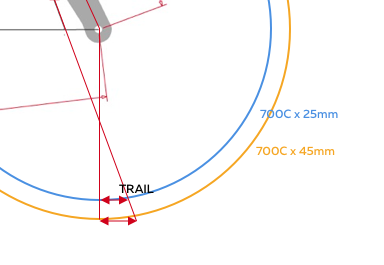
Trail might be the most misunderstood geometry measurement, yet it profoundly affects how your gravel bike handles. Trail describes the distance between where the steering axis meets the ground and where the tire actually contacts the ground. Greater trail values create stability, while lower trail produces lighter, quicker steering.
Fork offset, sometimes called rake, works in conjunction with head tube angle to determine trail. A fork with more offset reduces trail, while less offset increases it. Gravel bike designers carefully balance these relationships to achieve their desired handling characteristics.
Understanding trail helps explain why two bikes with identical head tube angles can feel remarkably different. The fork offset chosen by each manufacturer creates distinct handling personalities, even when other measurements appear similar on paper.
Bottom Bracket Drop and Height
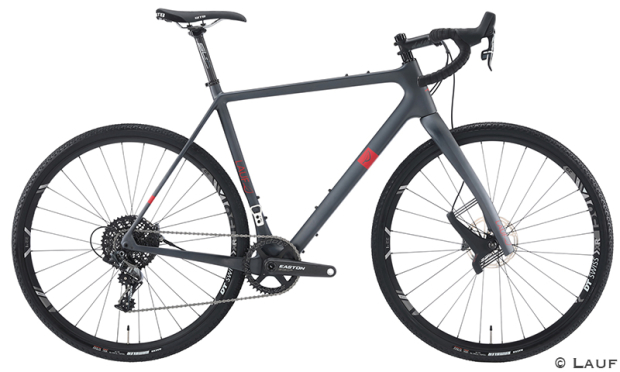
Bottom bracket position determines how low your center of gravity sits relative to the wheel axles. This measurement significantly impacts stability and pedal clearance. Gravel bikes generally position the bottom bracket lower than road bikes to enhance stability on rough terrain, while maintaining sufficient clearance to avoid pedal strikes.
Bottom bracket drop measures how far the bottom bracket sits below a line connecting the wheel axles. Greater drop lowers your center of gravity, improving stability and confidence on technical terrain. However, excessive drop reduces ground clearance and increases the risk of pedal strikes on obstacles.
When evaluating gravel bikes, consider how the bottom bracket position aligns with your typical riding terrain. Riders frequenting rocky, technical routes might prefer slightly higher positions, while those on smoother gravel roads benefit from the stability of lower configurations.
Chainstay Length: Stability and Tire Clearance
Chainstay length, measured from the bottom bracket center to the rear axle, profoundly influences a gravel bike's character. Longer chainstays create wheelbase length that enhances stability, particularly when carrying loads or navigating rough terrain. They also provide clearance for larger tires, which proves essential for aggressive gravel riding.
Shorter chainstays position the rider closer to the rear wheel, creating snappier acceleration and more agile handling. Racing-oriented gravel bikes often feature relatively short chainstays to maximize power transfer and responsive handling on smooth, fast courses.
The chainstay length also determines maximum tire width. Riders planning to run particularly wide tires should verify that their chosen frame accommodates their desired rubber. Most modern gravel frames accept tires between 40 and 50 millimeters, though specifications vary significantly.
Geometry Comparison Overview
| Measurement | Race Oriented | Adventure Oriented |
|---|---|---|
| Head Tube Angle | 72-73° | 70-71° |
| Trail | 55-65mm | 65-75mm |
| Chainstay Length | 415-425mm | 430-445mm |
| BB Drop | 65-70mm | 70-80mm |
Wheelbase: The Stability Equation
Wheelbase represents the total distance between front and rear axles. This measurement results from the combination of head tube angle, fork offset, chainstay length, and frame reach. Longer wheelbases provide greater stability at speed and on rough terrain, while shorter wheelbases create nimbler, more maneuverable bikes.
Gravel bikes typically feature wheelbases notably longer than road bikes of equivalent size. This additional length accommodates the stability needs of varied terrain while providing the compliance that makes long days in the saddle comfortable. Adventure-oriented gravel bikes often stretch this dimension further to enhance stability when loaded with bikepacking gear.
When comparing gravel bikes, wheelbase serves as a useful summary statistic that captures the combined effects of multiple geometry choices. Bikes with similar wheelbases often share handling characteristics, even when individual measurements differ.
Stack and Reach: Fit Fundamentals
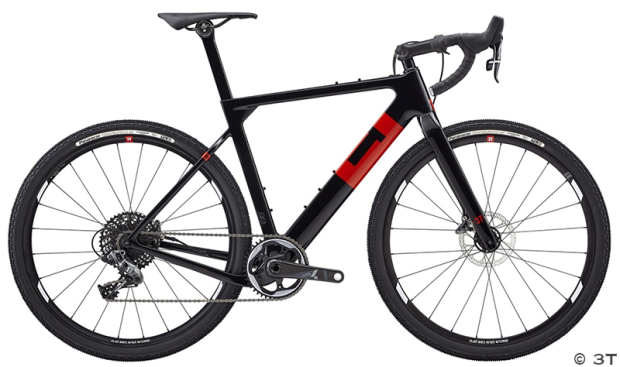
Stack and reach have revolutionized how riders compare frame sizes across different manufacturers. Stack measures the vertical distance from the bottom bracket center to the top of the head tube, while reach measures the horizontal distance. These measurements describe your position relative to the bike's core, independent of seat tube angle or handlebar choice.
Gravel bikes generally feature higher stack-to-reach ratios than road bikes, positioning riders more upright for comfort during extended adventures. This elevated position reduces stress on the lower back and neck, enabling longer riding times without discomfort. Racing gravel bikes often moderate this trend, lowering the stack to create more aerodynamic positions.
Understanding your preferred stack and reach values simplifies bike shopping considerably. Once you establish comfortable measurements on a well-fitted bike, you can quickly evaluate whether other frames will accommodate your position requirements.
Seat Tube Angle: Pedaling Efficiency
The seat tube angle determines your position over the pedals and significantly affects pedaling efficiency. Steeper seat tube angles position riders further forward over the bottom bracket, engaging the quadriceps more effectively for powerful pedaling. More relaxed angles shift weight rearward, which can benefit climbing on steep gradients.
Modern gravel bikes often feature seat tube angles between 72 and 74 degrees. This range balances pedaling efficiency with the flexibility to accommodate various riding styles. Some manufacturers offer adjustable seat tube angles through innovative frame designs, allowing riders to optimize their position for different events.
When considering seat tube angle, remember that saddle position on rails provides some adjustment range. A bike with a slightly different angle than ideal can often be optimized through careful saddle placement.
Tire Clearance: Room to Grow
Though not strictly a geometry measurement, tire clearance deserves attention when evaluating gravel bikes. The frame and fork dimensions directly determine maximum tire width, which profoundly affects ride quality and capability. Generous tire clearance provides options that narrower frames cannot match.
Most contemporary gravel frames accommodate tires between 40 and 50 millimeters wide on 700c wheels. Many also support 650b wheels with even wider tires, sometimes exceeding 2 inches. This versatility allows a single frame to serve varied purposes, from fast road-oriented riding to near-mountain-bike capability.
When selecting a gravel bike, consider your likely terrain and tire preferences. Riders exploring truly rough conditions benefit from frames accommodating the largest possible tires, while those primarily riding smooth gravel may prioritize other characteristics.
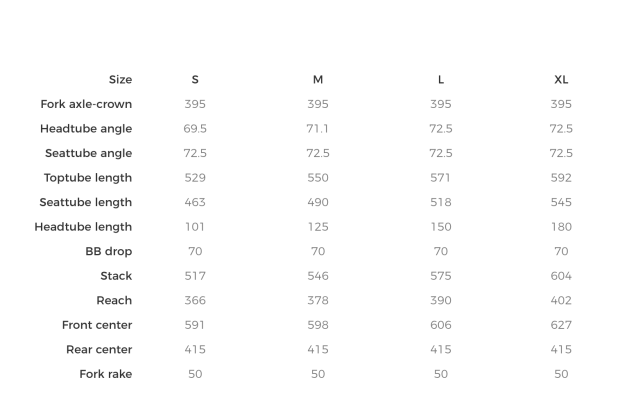
Wheel Size and Geometry Interaction
Many gravel bikes now accommodate both 700c and 650b wheel sizes, and understanding how wheel size affects geometry proves essential. Switching between wheel sizes alters bottom bracket height, trail, and effective head tube angle. Thoughtfully designed frames account for these changes to maintain balanced handling across wheel options.
Smaller 650b wheels lower the bottom bracket and reduce trail slightly. These changes can make bikes feel more nimble and planted on technical terrain. However, frames not designed for multiple wheel sizes may handle awkwardly when swapping from their intended configuration.
If wheel size flexibility appeals to you, seek frames specifically designed to accommodate both options. These bikes feature geometry that performs well regardless of which wheels you install, rather than compromising in one configuration.
Putting Geometry Knowledge to Work
Armed with geometry knowledge, you can more effectively evaluate and compare gravel bikes before purchasing. Begin by identifying your primary riding style and terrain preferences. Racers seeking speed on smooth gravel should prioritize steeper angles, shorter chainstays, and lower stack values. Adventure riders exploring technical terrain benefit from slacker angles, longer wheelbases, and more upright positions.
Geometry charts published by manufacturers enable direct comparisons between models. Look beyond marketing terminology to the actual numbers, as terms like "all-road" or "adventure" carry no standardized meaning. The measurements tell the true story of how a bike will behave.
Remember that no single geometry suits everyone or every condition. The ideal gravel bike for your needs depends on your body dimensions, flexibility, riding goals, and the specific terrain you plan to explore. Use geometry knowledge as a tool for informed decision-making, not as a rigid prescription.
Key Takeaways for Gravel Bike Selection
Head tube angle determines steering responsiveness — steeper for quick handling, slacker for stability.
Trail affects steering feel and is determined by the combination of head angle and fork offset.
Chainstay length influences stability, tire clearance, and rear-end handling characteristics.
Stack and reach define your riding position and help compare sizes across different manufacturers.
Conclusion: Geometry as Your Guide
Understanding gravel bike geometry transforms you from a passive consumer into an informed buyer. The measurements that define frame dimensions directly influence every aspect of the riding experience, from handling responsiveness to all-day comfort. By learning to interpret geometry charts, you gain the ability to predict how bikes will behave before throwing a leg over them.
The gravel bike market offers tremendous variety precisely because riders have diverse needs and preferences. Some seek race-day weapons optimized for speed, while others prioritize stability and comfort for multi-day adventures. Geometry knowledge helps you identify which bikes align with your specific requirements, avoiding expensive mismatches.
Take time to study the geometry of bikes you are considering and compare them against machines you have previously enjoyed or found lacking. This analytical approach, combined with test rides when possible, leads to satisfying purchases that serve your riding goals for years to come. The perfect gravel bike exists for you — geometry knowledge helps you find it.
Featured Product
Ready to Experience Premium Gravel Performance?
Discover the Cervelo Aspero, engineered with precision geometry for exceptional gravel riding. Experience the perfect balance of speed, stability, and versatility.
Cervelo Aspero GRX RX610© BACKYARD PROVIDER — Your Trusted Source for Outdoor Excellence