

The frame is the soul of any bicycle — it shapes how the bike feels, how long it lasts, and how it responds when you push it. Today, four materials lead the pack: steel, aluminum, carbon fiber, and titanium. Each one has its own personality, its own strengths, and its own compromises — and no single material is perfect for every rider. Here's a clear, practical look at what sets them apart so you can choose the frame that matches your ride.
Steel Frames
Steel is the original bike-frame material and still one of the most respected. Classic steel frames built a loyal following thanks to their toughness and silky ride feel. Modern steel frames are usually crafted from chromoly — a blend of steel with chromium and molybdenum — rather than plain high-tensile steel. Chromoly is lighter and stronger than basic steel, letting builders use thinner tubing while keeping the frame solid.
Steel Bike Frame
Steel frames deliver classic strength, easy repairability, and the kind of plush ride that has kept riders loyal for generations. They weigh more than aluminum or carbon, but the payoff is a bike that keeps rolling for the long haul.
 Pros of Steel Frames
- Outstanding Toughness: Steel has incredible tensile strength and shrugs off years of hard use. It resists fatigue well, so a properly built frame can last decades without structural worry.
- Smooth, Forgiving Ride: Steel flexes in a way that absorbs road chatter and vibrations. This is why steel bikes are famous for that planted, almost buttery feeling — especially welcome on long rides and loaded touring setups.
- Predictable Handling: Most steel frames use narrower tubing that delivers balanced, confident handling. The natural toughness also makes it a favorite for bikes meant to haul heavy loads like tourers and bikepacking rigs.
- Easy to Build and Repair: Steel is friendly to work with. Frame builders can cut, weld, or add bolt-on mounts without drama. Dents can usually be massaged back if they aren't serious.
- Strong Against Damage: Steel frames resist cracking better than most alternatives. Even when damage occurs, repairs are practical — something that can't be said for carbon.
Cons of Steel Frames
- Heavier Overall: Steel is dense, so frames weigh more than their aluminum, titanium, or carbon counterparts. Even with thin-wall chromoly, a steel frame is usually the heaviest option in a given size. Fine for casual riding, less ideal where grams count — racing or climbing especially.
- Rust is Real: Corrosion is steel's main enemy. A chipped or dinged frame exposed to moisture can oxidize from the inside. Wet or humid climates accelerate the problem — the fix is keeping the frame clean and the paint intact.
- Limited Flex Efficiency: The same flex that makes steel comfortable also bleeds away a bit of your pedaling energy. That softness is the compromise for its comfort and character.
- Price Ranges Widely: Entry-level steel city bikes and mountain bikes are very affordable, but high-end steel frames with premium tubing can get expensive. Quality steel craftsmanship is hands-on and doesn't mass-produce like aluminum, so mid- to high-end steel is often built by smaller boutique builders.
Aluminum Frames
Aluminum — sometimes called "alloy" — has grown into the most common choice for modern bikes. Its popularity is no accident: it's light, reasonably strong, and easy to mass-produce. Most alloy bikes you'll encounter use 6061 or 7005 series aluminum, both of which include small amounts of other metals for added strength. Unlike steel, aluminum is never used pure in bikes — it's always blended to improve its strength-to-weight ratio.
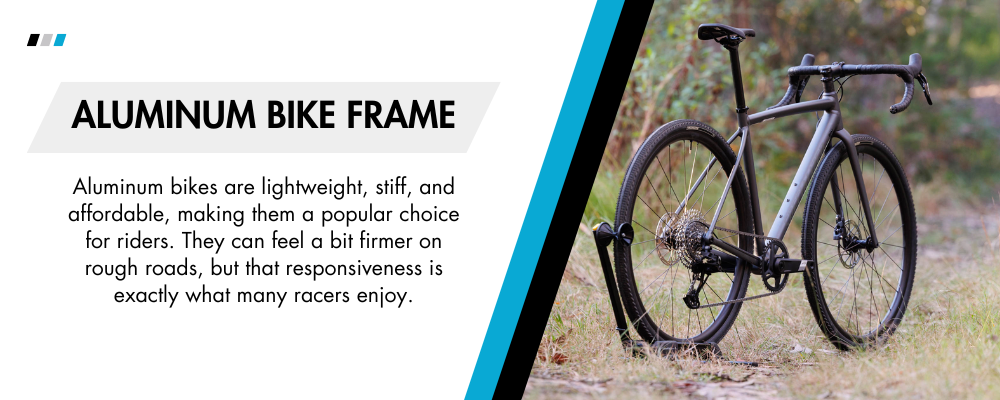
Aluminum Bike Frame
Aluminum bikes are light, stiff, and budget-friendly — a winning combination for a huge range of riders. They tend to feel sharper and more direct on rough pavement, and that snappy response is exactly what many racers love.
 Pros of Aluminum Frames
- Impressively Light: Aluminum weighs far less than steel. That means frame builders can deliver bikes that weigh significantly less, helping you climb faster and accelerate with less effort.
- Stiff and Efficient: Aluminum has an excellent stiffness-to-weight ratio. Tubes can be made larger in diameter to boost stiffness without piling on weight, because the material is light. The result is a snappy, responsive ride — when you push the pedals, an aluminum frame transfers energy rather than soaking it up.
- Resists Corrosion: Unlike steel, aluminum doesn't rust. It naturally forms a thin oxide layer that protects against moisture. That makes aluminum frames very low-maintenance in weather of all kinds.
- Affordable to Own: Aluminum frames are relatively cheap and easy to manufacture. The material is plentiful and melts at a much lower temperature, and manufacturers have decades of experience welding it. As a result, aluminum bikes usually undercut carbon or titanium bikes of a similar specification.
- Flexible in Design: Modern aluminum builders use hydroforming (shaping tubes with high-pressure fluid) and butting (varying wall thickness) to dial in ride feel. Engineers can shape aluminum tubes in ways that simply aren't possible with steel.
Cons of Aluminum Frames
- Firm Ride Feel: The flip side of aluminum's stiffness is a rougher ride on bad pavement. It doesn't absorb vibration the way steel, titanium, or tuned carbon does. There's some natural give, but bumps and road buzz reach the rider more directly. If comfort tops your list, aluminum may not be ideal without cushioning like wider tires.
- Shorter Fatigue Life: Aluminum can handle tough riding, but it has a fatigue limit just like everything else. Steel and titanium have higher thresholds, so aluminum builds up tiny stress cracks over time that eventually cause failure.
- Hard to Repair: If an aluminum frame cracks or bends, repairing it is tough. Aluminum needs specialized welding techniques and heat treatment after repair to restore strength. A cracked aluminum head tube or bottom bracket is normally the end of the road — whereas a steel frame crack could often be repaired by a skilled builder.
- Can Feel Stiff: While racers love aluminum stiffness, some riders find that the sharp flex feel can be a little skittish or unforgiving on rougher surfaces.
- Middle-of-the-Road Lifespan: An aluminum frame is often viewed as a compromise — lighter than steel, cheaper than carbon — but it may not be the frame you keep forever. Many riders start on aluminum and step up to other materials over time.
Carbon Fiber Frames
Carbon fiber is the premier choice for high-performance bikes. Unlike steel, aluminum, or titanium — all metals — carbon is a composite. It consists of extremely fine strands of carbon woven into sheets, then bonded with epoxy resin. Frame builders lay these sheets in different orientations and cure them in molds to create the frame structure. The big benefit: engineers can dial in properties by design, crafting frames that are incredibly light, stiff in targeted areas, and compliant in others. Almost every pro racer today rides carbon, but carbon is also widespread on road and mountain bikes at many price points.
Carbon Bike Frame
Carbon bikes are featherweight and can be engineered for both stiffness and comfort. They take more care than metal frames, but many riders love the unique blend of efficiency and smoothness carbon delivers on long rides.
Pros of Carbon Fiber Frames
- Lightweight With Big Stiffness: Carbon has the best strength-to-weight ratio of any bike frame material. At a given stiffness level, a carbon frame can be significantly lighter than an aluminum, steel, or titanium frame. That's why almost every Tour de France-winning bike for the past two decades has been carbon.
- Customizable Stiffness (Tough and Compliant): Carbon's trick lies in the fact that designers can orient fibers in specific directions to dial in ride feel. This targeted tuning of stiffness and comfort is much harder to achieve with metal. The result is a bike that can be stiff where you need it, but cushioned where vibration and chatter enter from the road.
- Bold Design Freedom: Because carbon sheets can be molded into nearly any shape, designers have enormous flexibility with frame geometry. This freedom lets them sculpt the material in ways that metal can't match — streamlined designs, invisible welds, and looks that visually appeal.
- Rust-Proof by Nature: Carbon frames are immune to rust and corrosion. You never worry about road salt, moisture, or sweat breaking down the material. This makes carbon a low-maintenance choice for harsh climates.
- Available at Every Level: While carbon was once exotic and pricey, it's no longer rare. Most major brands offer carbon models in their lineup, from top-tier race rigs all the way to more affordable weekend bikes.
Cons of Carbon Fiber Frames
- Premium Pricing: Carbon frames typically cost more than metal frames. While prices have dropped over time, expect to pay a premium for a carbon bike next to an aluminum bike of the same specification.
- Impact Sensitivity: Carbon is tough under normal riding stress but relatively fragile against sharp impacts. Unlike metal, which bends and dents, carbon can crack or fracture when overloaded.
- Specialized Repairs: Repairing a cracked or broken carbon frame typically involves sending the frame to a carbon fiber specialist who can re-lay fresh sheets and epoxy over the damaged area, and then reseal it. This is an expensive process — and not every bike shop handles it.
- Quality Varies: The performance of carbon frames can vary quite a bit. Cheaper carbon can feel harsh and heavy, while upscale carbon can feel smooth and lively. When shopping, it pays to stick with trusted brands and with shops that can clearly explain the carbon technology they use.
Titanium Frames
Titanium — often shortened to "Ti" in cycling — is sometimes called the dream frame material for dedicated bike enthusiasts. It's not as common as the other materials because of its cost, but a well-built titanium frame blends many of the best traits of steel and aluminum. It's light, strong, and a superb ride quality — paired with corrosion-proof toughness. Titanium is a metal, but less dense than steel and more flexible than aluminum. Most Ti frames use titanium alloys like 3Al-2.5V (meaning 3% aluminum, 2.5% vanadium, and the rest titanium), which boost strength and workability.
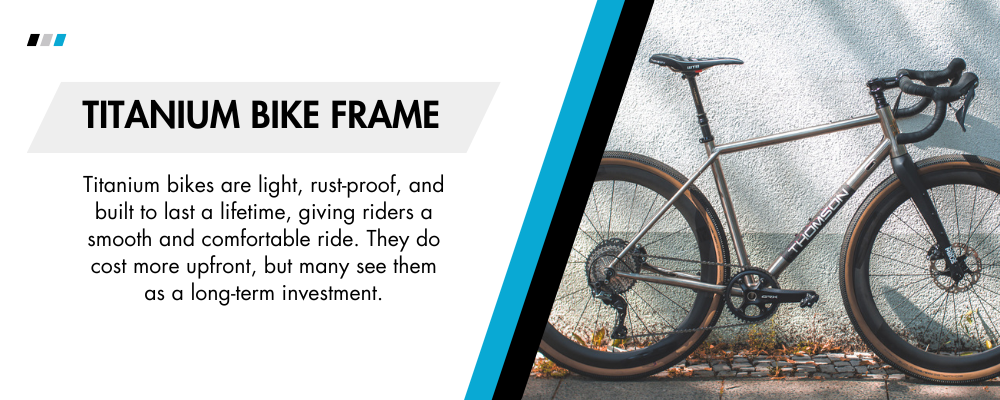
Titanium Bike Frame
Titanium bikes are light, rust-proof, and built to last a lifetime. They give riders a smooth and comfortable ride feel. They cost more up front, but many see them as a lifetime investment.
 Pros of Titanium Frames
- Light and Strong: Titanium has the best strength-to-weight ratio of any metal typically used in bikes. In practice, you can build a titanium frame that's as light as aluminum, or as strong as steel — stronger than steel.
- Outstanding Ride Feel: Like steel, Ti has a bit of flex and vibration absorption, which helps soak up bumps and road chatter. That makes titanium favored for endurance road bikes, gravel bikes, and hardtail mountain bikes where comfort over long stretches is valued. You get a nice amount of compliance without the weight drawback of steel.
- No Rust, No Problem: Titanium is completely immune to rust and corrosion. It doesn't need paint or any surface treatment to resist the elements. This is a huge plus for low-maintenance ownership.
- Long-Term Durability: A titanium frame is extremely durable and resists fatigue well over time. It's highly resistant to metal fatigue. Many riders describe titanium frames as nearly indestructible under normal riding conditions — it's not unusual to hear of Ti bikes still spinning after 20+ years.
- Balanced Performance: Titanium delivers a very balanced ride performance. It's not quite as stiff as carbon or some aluminum frames, but it's stiffer and more responsive than many steel frames of comparable weight.
- Beauty and Character: Many riders love the look of raw titanium. That natural gray sheen and the knowledge that it's an exotic aerospace material add a touch of character. Ti doesn't need flashy paint — its timeless, rugged finish is part of the appeal.
Cons of Titanium Frames
- Costs a Lot: Titanium is an expensive material and very labor-intensive to work with. The raw titanium tubes themselves cost far more than steel or aluminum tubing. It also requires careful welding in an oxygen-free environment because the metal is sensitive to contamination when hot.
- Limited Availability: Because of the cost and niche demand, titanium frames are less common in bike shops. You normally won't find a cheap Ti bike. They're mostly offered by boutique frame builders or custom workshops. This means fewer model choices and sometimes longer wait times.
- Not the Absolute Stiffest: While titanium is reasonably stiff, it's true that a sprint or the stiffest carbon racing frame or an aluminum one will win. The raw stiffness is lower, so to hit the same rigidity, builders may use larger-diameter tubes or thicker walls.
- Harder to Repair (But Rarely Needed): If a titanium frame does take damage, repair options are limited to specialized frame builders. The good news is that such damage is rare. Ti doesn't crack easily unless under extreme stress.
Ride Carbon Fiber Excellence
Built for speed and built to last, the Cervelo Soloist 700c with Rival AXS brings aerodynamic carbon engineering, race-ready geometry, and modern electronic shifting into one striking Dried Amaranth package — available now at Backyard Provider.
Shop Cervelo Soloist