

A multi-games table is a fantastic addition to any home lounge, games room, or family space — combining several favorite games into a single space-saving design. Whether you're a casual player looking for weekend fun or someone hunting for a versatile centerpiece, this guide walks you through everything you need to know before you buy.
What You'll Find in This Guide
- Overview
- The Most Common Styles of Multi-Games Tables
- How Much Space Do I Need to Play?
- How Much Space Do I Need to Store It?
- What Accessories Come in the Box?
- Are Multi-Games Tables a Fit for Public or Commercial Spaces?
- Delivery Details
- Getting the Table Set Up
Overview
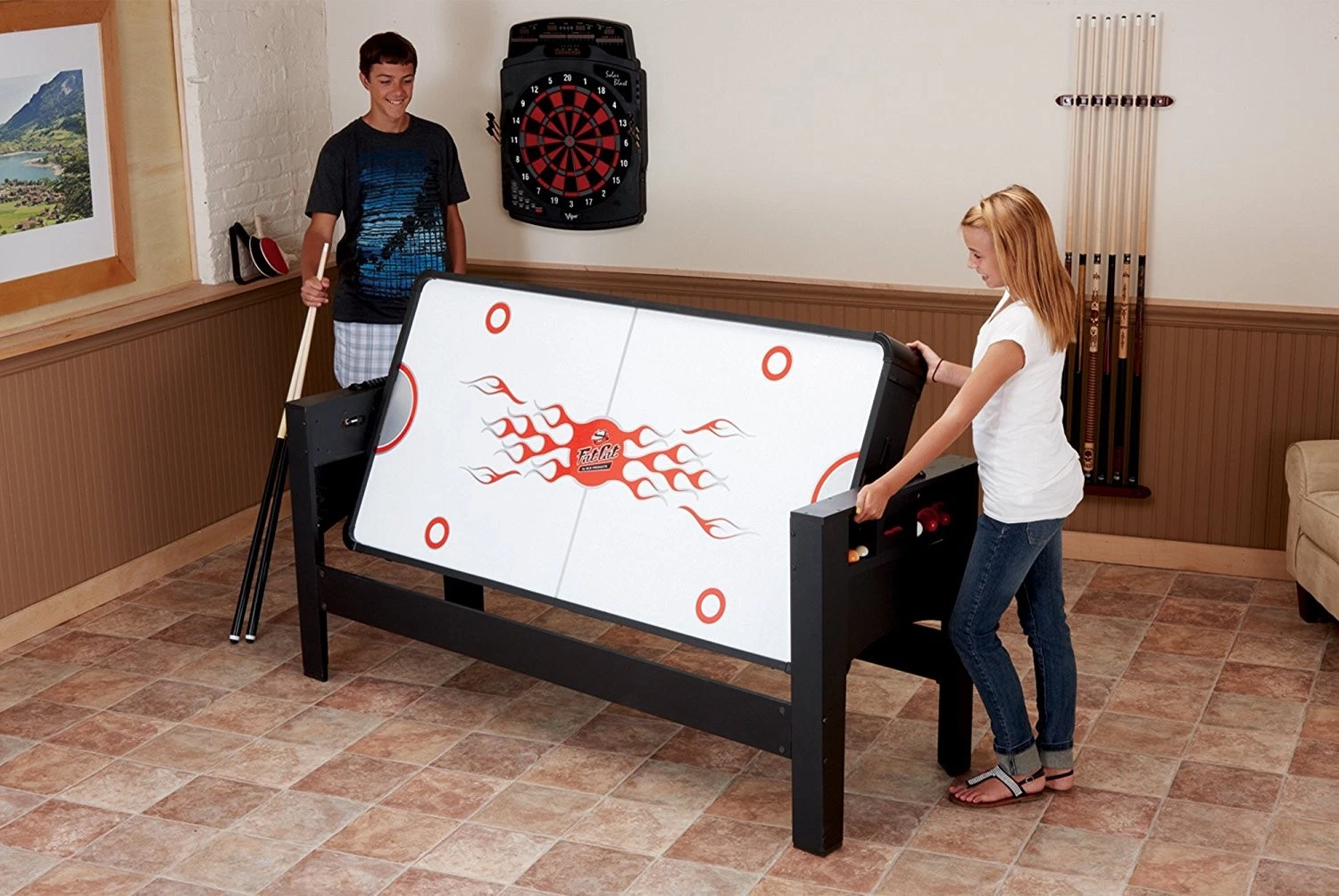
A multi-games table is a compact piece of furniture that rolls two or more games into one package. Some are four-in-one units blending billiards with ping pong, air hockey, and foosball, while larger picks come with a dozen or more configurations — chess, cards, roulette, shuffleboard, and beyond. The real draw? You get a full arcade of options without dedicating a separate room for each.
What Exactly is a Multi-Games Table?
A multi-games table is a hybrid unit designed to swap between multiple games through removable tops, interchangeable playing surfaces, or clever flip-over mechanisms. Most sit at standard game-table height and are sized to work comfortably in a home setting — making them ideal for families, shared households, or anyone short on room.

A multi-games table is the ultimate answer to "what should we play tonight?" — giving everyone in the household something to enjoy in one footprint.
The Most Common Styles
Not every multi-games table looks the same. Some prioritize a sleek, furniture-ready finish that blends into a living room, while others are built for rugged play with reinforced frames and heavy-duty tops. Below are the most common styles you'll run across while shopping.

A large share of multi-games tables on the market today swap between three to seven games. Smaller tabletop versions are great for kids and tight spaces, while freestanding full-size models bring the feel of a true games room into your home. Look at build material, finish, and the quality of the changeover system — these factors decide how long the table actually lasts.
How Much Space Do I Need to Play?
Giving your multi-games table enough breathing room is just as important as the table itself. Cramped surroundings make shots awkward and kill the fun fast. Here's a straightforward way to figure out how much play space you actually need before you place an order.
Ideally, you want a clear zone around all sides of the table so players can move, cue up, and swing paddles without bumping into walls or furniture. As a rule of thumb, a playing area should stretch well beyond the edges of the table itself. For a typical full-size multi-games table, plan around the dimensions below — they'll give you a realistic idea of what room you'll need.

Add the extra playing-zone measurements to the table dimensions you'll find on each product listing to get the total minimum footprint required. If you're working with a smaller-than-recommended gap, don't worry — you can still enjoy the table, though you may need to adapt how you play in certain spots. For best results, aim for at least 150cm of clearance on every side so cues and paddles swing freely.
Remember that extra room around the table isn't just for comfort — it also gives spectators somewhere to stand and keeps cues from colliding with walls during long shots. A well-placed table with breathing room always plays better than a cramped one in a bigger room.
| Table Size | Playing Surface | Minimum Room Size | Comfortable Room Size | Tournament Room Size |
|---|---|---|---|---|
| 4ft Multi-Games Table | 112cm × 56cm | 360cm × 300cm | 400cm × 340cm | 440cm × 380cm |
| 5ft Multi-Games Table | 140cm × 70cm | 390cm × 320cm | 430cm × 360cm | 470cm × 400cm |
| 6ft Multi-Games Table | 170cm × 85cm | 430cm × 350cm | 470cm × 390cm | 510cm × 430cm |
| 7ft Multi-Games Table | 200cm × 100cm | 470cm × 380cm | 510cm × 420cm | 550cm × 460cm |
How Much Space Do I Need to Store It?
When it's not in use, some multi-games tables fold up, stack on end, or tuck neatly against a wall. Others are built to stay put as a permanent feature in your games room. Your storage strategy depends on the type of table you choose, so here's what to keep in mind.
The two most popular options are fold-away models and fixed freestanding tables. Fold-away tables are ideal for homes where the space doubles as something else — a dining area, office, or lounge — since the table can be moved aside when not in play. Fixed tables, on the other hand, are built to stay in position and usually offer the steadiest play experience.
Folding multi-games tables are a fantastic pick if you need that flexibility. Many fold down to a fraction of their playing footprint and store flat against a wall or slot into a closet. Just measure the folded dimensions against your available storage spot before you commit.
For permanent setups, think about how the table sits within the room's overall traffic flow. You want room to circle the table comfortably even when it's in storage mode — otherwise, you'll end up dragging it around every time you want to use it. A well-placed permanent table almost always gets played more.
What Accessories Are Included?
Your multi-games table should arrive ready to play — but the "ready to play" bundle varies a lot depending on the model. Here's what you can typically expect to find in the box when your new table turns up.

Most multi-games tables ship with a starter accessory kit covering every included game. For a typical combo table, that usually means cues and billiard balls for the pool surface, paddles and balls for the table tennis, pucks and strikers for air hockey, and — depending on the model — foosball players, cards, chess pieces, or roulette wheels. Higher-end tables often throw in a triangle rack, chalk, a brush, and occasionally a protective cover to keep the playing surface looking sharp.
Always check the product listing to confirm exactly what's bundled. If a specific accessory matters to you — say, a particular style of cue or a full chess set — it's worth verifying before you order, since some manufacturers supply only the essentials and leave premium add-ons as optional extras.
Are Multi-Games Tables Suitable for Public or Commercial Spaces?
Most home-grade multi-games tables are designed for domestic use and aren't built to stand up to the punishment of a bar, club, or community center. If you're outfitting a commercial venue, look for tables specifically marketed as commercial-grade — they use sturdier frames, harder-wearing surfaces, and coin or token mechanisms where relevant.
For lighter commercial use — think office break rooms, small hotel game lounges, or staff recreation areas — a well-built residential multi-games table can still perform nicely for years. Just stay on top of maintenance: wipe surfaces down regularly, tighten hardware occasionally, and keep drinks well away from felt playing surfaces to extend its lifespan.
Delivery
All multi-games tables are usually boxed up in flat-packed form, meaning the product is ready to assemble at your end. Because of their size and weight, most arrive via a specialist courier rather than a standard parcel service — and you'll typically receive a delivery window ahead of the drop-off so you can plan for it.
Before delivery day, measure your doorways, hallways, and stairs to make sure the packaged table can actually get into its final room. Most couriers deliver to the curbside or the first room of your home, so having an extra pair of hands on standby is a smart move if you're planning to take it upstairs or through tight turns.
Assembly
Multi-games tables generally arrive ready for self-assembly and include step-by-step instructions, all required fasteners, and — in most cases — the tools you'll need. Plan to set aside an hour or two for the build, and grab a helper for the bigger stages like fitting the main playing surface.
Take your time. Snug up each bolt gradually and do a final tightening pass only once everything is aligned — this keeps the frame square and ensures the playing surfaces sit perfectly level. A rushed build is the single biggest cause of wobbly tables and uneven play, so follow the sequence in the manual rather than trying to freestyle it.
Still Have Questions?
- What's the right multi-games table for my household?
- Will I need any extra accessories for daily play?
- What's the difference between a home-grade and a commercial-grade table?