

When dependable and compact energy storage is the goal, few options can match the versatility of the 6 volt battery. Whether you're building out an off-grid solar setup, outfitting a camper, or designing a long-lasting battery bank, getting a solid grasp on how a 6 volt battery works is a must.
These batteries have earned their place in small-scale solar systems thanks to their efficiency, extended service life, and straightforward integration. In this guide, we'll break down how a 6 volt battery operates, what it's built from, how it stacks up against other battery options, and how to use and care for one properly inside your solar installation.
What Is a 6 Volt Battery?
A 6 volt battery is an energy storage unit engineered to deliver a nominal output of 6 volts. You'll commonly see them powering golf carts, RVs, emergency lighting systems, and of course solar setups. A single unit provides only 6 volts on its own, but pairing multiple batteries in series or parallel lets you scale the voltage or capacity to match your system's demands.
Most 6 volt batteries are deep-cycle designs, meaning they're built to deliver steady power output over extended periods and then recharge through repeated use cycles without degrading.
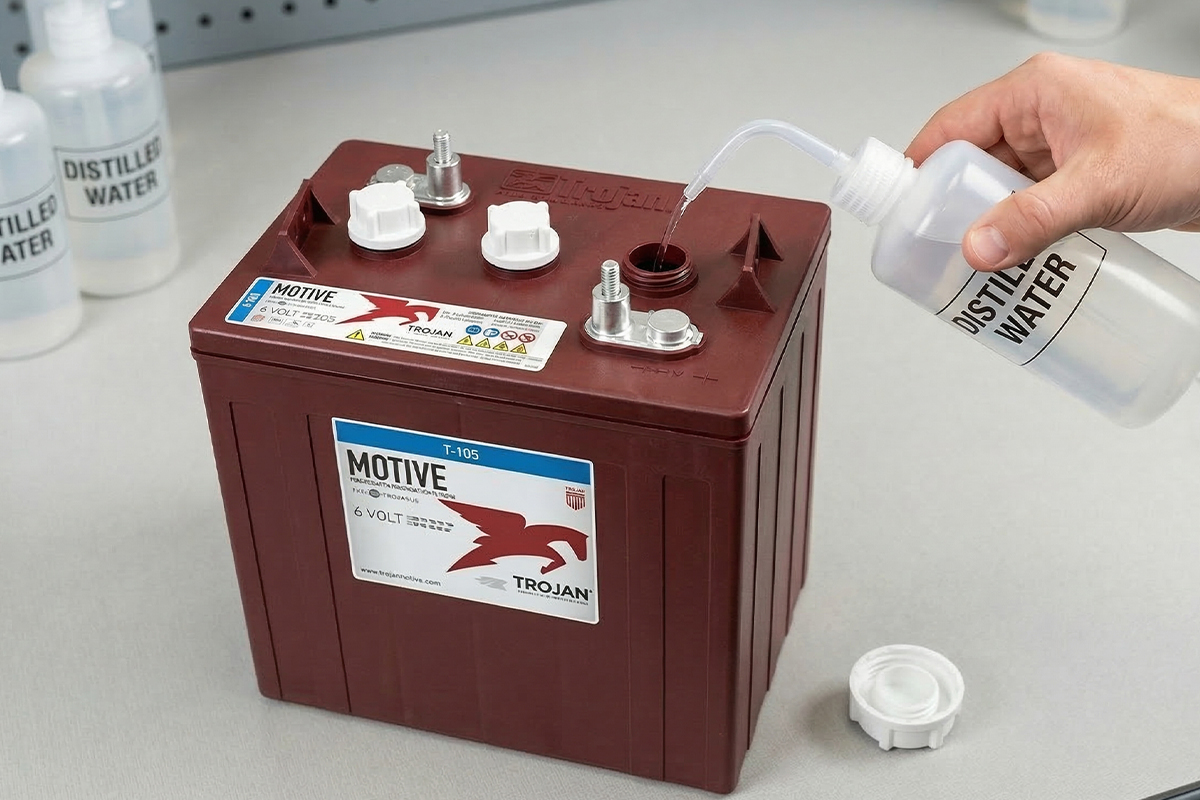
What's Inside a 6 Volt Battery?
To really understand how a 6 volt battery functions, it helps to peek under the casing. Every internal component has a distinct job when it comes to storing and releasing electrical energy.
Electrochemical Cells
These cells are the core of the battery, converting stored chemical energy into usable electricity. A 6 volt battery generally houses three 2-volt cells connected in series, each contributing to the full 6 volt output.
Electrolyte
The electrolyte is a chemical solution — typically sulfuric acid in lead-acid batteries — that moves ions between the plates. That ion flow is what makes electrical current possible; without a healthy electrolyte, power generation comes to a halt.
Plates
The plates are flat sheets of conductive material (usually lead or lead-based alloys) that interact with the electrolyte to release energy. Positive and negative plates sit within every cell, submerged in the electrolyte, and their reaction is what actually produces electricity.
Separator
A separator sits between the positive and negative plates to block short circuits. This non-conductive layer lets the chemical reaction continue safely while keeping the plates from ever touching directly.
Terminals
Terminals are the battery's outer contact points — where your wiring connects to move power to a device. One is the positive terminal, the other negative, and together they form the electrical pathway that feeds your application.
How Does a 6 Volt Battery Work?
Once you connect a 6 volt battery to a device or solar setup, a chemical reaction kicks off inside it. Here's a step-by-step look at what actually happens:
- Chemical reaction: The electrolyte reacts with the battery plates. In a lead-acid design, sulfuric acid interacts with the lead plates to form lead sulfate, water, and energy.
- Ion movement: That reaction produces ions, which travel between the positive and negative plates through the electrolyte. This flow of charged particles is what creates an electric current.
- Voltage buildup: Each of the three 2-volt cells works in series, combining to hit the full 6 volts.
- Power output: The resulting current exits through the terminals and feeds power to whatever device or system is connected.
The cycle keeps running until the battery's charge runs low. From there, a solar panel or battery charger brings it back up to full capacity.
Pros and Cons of Using a 6 Volt Battery
Like every energy storage option, 6 volt batteries carry both strengths and trade-offs. Here's what to weigh before deciding whether they suit your system.
Pros
- Cost-effective: Generally more affordable than higher-voltage options.
- Compact and portable: Their size suits mobile builds and smaller-scale solar systems.
- Long lifespan: Most quality 6 volt deep-cycle units last between 4 and 8 years with proper care.
- Flexible use: Pair them in series or parallel to dial in exactly the voltage and capacity you need.
Cons
- Limited power: A single 6 volt battery can't handle high-demand devices or larger systems on its own.
- Requires configuration: Bigger setups need several batteries wired correctly to reach the required voltage or capacity.
- Lower efficiency: Compared with higher-voltage batteries, 6 volt units may fall short on energy density.
Series vs. Parallel: How to Connect 6 Volt Batteries
To expand your system's capability, 6 volt batteries can be wired in different configurations depending on what you're trying to accomplish.
In Series
Wiring batteries in series raises the total voltage. For instance, linking two 6 volt batteries in series produces a 12 volt system. To do it, run the positive terminal of one battery to the negative terminal of the next. The remaining terminals then connect to your device.
In Parallel
Wiring in parallel bumps up amp-hour capacity while voltage stays put. For a parallel connection, tie the positive terminals together and do the same with the negative terminals. This approach is ideal when you want longer runtime without raising voltage — two 6 volt batteries in parallel still output 6 volts, just for much longer.
6 Volt Battery vs. 12 Volt Battery: Which Is Better?
The right battery really comes down to what your system needs. While 12 volt batteries push out more voltage, 6 volt options generally run longer and tend to be easier to manage in off-grid builds.
6 Volt Batteries
Thicker internal plates, deeper discharge capabilities, lighter individual weight, and a longer cycle life when maintained properly.
12 Volt Batteries
If your system demands higher voltage with less configuration effort, a 12 volt battery can be the simpler route.
Maintenance Tips for a Longer Battery Life
To squeeze the most value out of your 6 volt battery, stay consistent with these key care habits:
Charge Regularly
Steer clear of deep discharges. Keep your battery topped up to the charge level the manufacturer recommends.
Clean the Terminals
Corrosion and dirt can block current flow. A wire brush or contact cleaner does a solid job of keeping terminals clear.
Store Safely
Park the battery somewhere dry and cool to shield it from moisture damage and temperature extremes.
Ready to Power Your Solar Setup?
The Trojan Motive L16G-AC is a heavy-duty 6V 390Ah flooded lead-acid deep cycle battery engineered for demanding solar, RV, and off-grid applications — delivering reliability you can build a full battery bank around.
Trojan L16G-AC 6V BatteryFinal Thoughts
A 6 volt battery is a dependable, adaptable energy solution — a strong fit for solar builds, RVs, and off-grid systems. Understanding how it functions, how to wire it in, and how to keep it in good shape all add up to long-lasting, efficient performance.
Whether you're running a single 6 volt battery or stacking multiple units into a larger bank, this compact workhouse can carry a big share of the load when it comes to powering your energy needs.