

Storing wine properly isn't just about finding a dark corner in your home — it's about creating an environment where temperature and humidity stay perfectly controlled. Even a small fluctuation can compromise flavor, aroma, and long-term value. That's where a dedicated wine cellar cooling unit steps in, and no, a standard air conditioner won't do the job.
Regular air conditioners are built to cool rooms for human comfort. They strip moisture from the air, which is the opposite of what wine needs. Wine cellars demand a system designed specifically to maintain stable, cool temperatures alongside the right level of humidity. Without that balance, corks dry out, labels peel, and your prized bottles age far too quickly.
Below, we break down the four main categories of wine cellar cooling systems so you can decide which one fits your space, your budget, and your collection.
Jump To
◆ The Four Types of Wine Cellar Cooling Units
◆ Through-the-Wall Systems
◆ Ducted Self-Contained Units
◆ Ducted Split Systems
◆ Ductless Split Systems
◆ How to Choose the Right Unit
Why Standard Air Conditioners Fall Short for Wine Storage
It's a common question — can't you just use a window unit or portable AC to keep your wine cool? Technically, an air conditioner can lower the temperature, but that's where the similarities end. A conventional AC system is engineered for human comfort, not for the precise conditions wine requires.
Wine thrives in environments between 55°F and 58°F with humidity hovering around 60–70%. Standard air conditioners cool to around 68°F at best and aggressively dehumidify — exactly the opposite of what your cellar needs. Over time, low humidity dries out corks and invites oxidation, while temperature swings accelerate aging in unpredictable ways.
Purpose-built wine cooling units maintain those tight parameters and are designed for continuous, quiet operation in insulated spaces. They're an investment, but one that directly protects the value and quality of your collection.

The Four Types of Wine Cellar Cooling Units
Not every wine room is alike, and the right cooling system depends on your cellar's size, layout, and how much flexibility you need during installation. Here are the four primary options available today.
Through-the-Wall Units
This is the most familiar style of wine cellar cooler — similar in concept to a window-mounted air conditioner but purpose-built for wine storage. The unit sits inside a hole cut through the cellar wall, pulling warm air from the room and venting it into an adjacent space on the other side.
Through-the-wall systems are generally the most affordable option and don't require HVAC professionals for installation. They work best for small to medium cellars and are simple to maintain. However, they do need an adjacent room for heat exhaust, occupy wall space, and can generate some noise.

Pros
Most affordable option available. No HVAC technician required for setup. Works well in smaller wine rooms. Generally simple to maintain and replace.
Cons
Needs an adjacent room for exhaust heat. Visible unit takes up wall space. Noise may be noticeable. Not ideal for very large cellars or challenging climates.
Ducted Self-Contained Units
A ducted self-contained system offers more flexibility than a simple through-the-wall model. All the mechanical components — the compressor, condenser, and evaporator — are housed in a single unit. However, instead of sitting in the wall, it connects through ductwork to channel cool air into the cellar and exhaust warm air elsewhere.
This design means you can install the unit remotely — in an adjacent closet, basement utility area, or above a ceiling — and route ducts into the cellar. It's quieter inside the wine room itself, handles more volume than a wall unit, and keeps your cellar looking clean and uncluttered. On the downside, ductwork adds complexity and cost, and you may need a professional for setup.

Pros
Greater flexibility in placement. Keeps cellar interior clean and quiet. Handles larger rooms than wall units. Flexible ducting allows creative installation.
Cons
Requires extra space nearby for the unit. Ductwork adds to installation complexity. May need HVAC expertise for installation. More expensive than through-the-wall models.
Ducted Split Systems
A ducted split system separates the cooling process into two parts: the evaporator sits near or inside the cellar, while the condenser is placed remotely — often outdoors or in a mechanical room. Refrigerant lines connect the two components, and ductwork distributes the cooled air throughout the wine room.
This configuration excels in larger wine rooms and demanding climates. Because the noisy condenser sits far from the cellar, the wine room stays whisper-quiet. It's also highly effective at maintaining precise temperatures even in extreme conditions. The tradeoff is cost and complexity — you'll definitely need a licensed HVAC contractor, and this is one of the pricier options on the market.

Pros
Ideal for large or multi-room cellars. Extremely quiet inside the wine room. Handles extreme temperatures and climates. Available for even the most demanding setups.
Cons
Requires a licensed HVAC technician. Higher upfront investment. Installation is more involved and time-consuming. One of the more expensive categories overall.
Ductless Split Systems
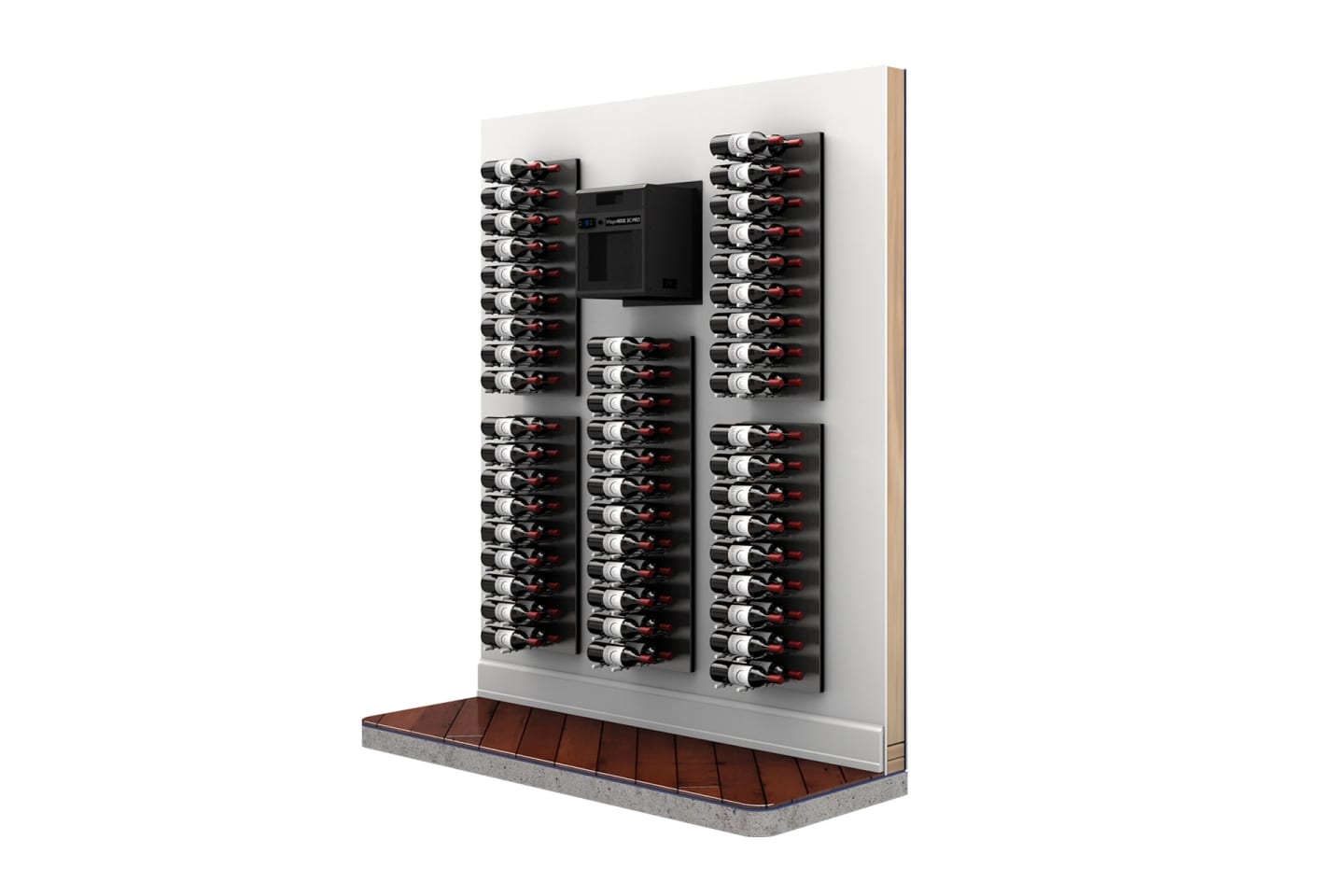
The ductless split system works much like its ducted counterpart — with an indoor evaporator and a remote outdoor condenser — but eliminates the need for any ductwork entirely. The indoor unit mounts directly on the cellar wall or ceiling and cools the space right where it sits. A small conduit through the wall connects the two components via refrigerant lines.
This makes ductless splits incredibly versatile. They can be installed in almost any room — even spaces where running ductwork would be impossible. Like the through-the-wall system, it doesn't take up much visual real estate, but it offers significantly more cooling power. The indoor unit is compact and relatively quiet, though it does produce some sound. You'll still need a professional to handle the refrigerant lines and electrical connections.
Pros
Works in nearly any cellar layout. No ductwork required — simpler installation. Compact and unobtrusive indoor unit. Well-suited for large rooms and tough climates.
Cons
Indoor unit is visible inside the cellar. Requires a certified HVAC technician. Produces more noise than ducted split models. Higher cost compared to wall and self-contained systems.
How to Choose the Right Wine Cooling Unit
With four distinct options available, the decision comes down to a few critical variables. There's no one-size-fits-all answer — each cellar has its own personality, and the best cooling system is the one tailored to your specific setup.
Cellar Size
Smaller collections work fine with through-the-wall units. Larger rooms need ducted or split systems for adequate coverage.
Budget
Through-the-wall is the most budget-friendly. Split systems cost more upfront but deliver superior long-term performance.
Noise Level
If silence matters, ducted splits place the loud components far away. Wall units and ductless models will be audible inside the room.
Climate
Hot or humid environments demand more powerful systems. Split systems handle extremes far better than through-the-wall options.
Insulation
Proper insulation and vapor barrier installation reduce the load on your cooling unit, regardless of which type you choose.
Installation Access
Consider whether you have adjacent space for exhaust, room for ductwork, or exterior access for a remote condenser unit.
When in doubt, consulting with a professional is always a smart move. A specialist can evaluate your cellar's dimensions, insulation quality, ambient conditions, and collection goals to recommend the right fit. The right cooling system isn't just equipment — it's peace of mind that your wine is aging exactly as nature intended.
Quick Comparison at a Glance
Featured Product
Equip Your Backyard With the Right Gear
Building the perfect outdoor space? Don't forget a reliable way to haul equipment, supplies, and materials around your property.