

In This Guide
① What Is a Hydraulic Pump? · ② How Do They Work? · ③ Gear Pumps · ④ Piston Pumps · ⑤ Vane Pumps · ⑥ Gerotor Pumps · ⑦ Frequently Asked Questions
What Exactly Is a Hydraulic Pump?
A hydraulic pump is a mechanical device engineered to transform mechanical energy into hydraulic energy. It accomplishes this by creating flow with sufficient force to overcome the pressure generated by a connected load. Every hydraulic system depends on one or more pumps to keep fluid moving through the circuit, making them the beating heart of any hydraulic setup.
At its core, a hydraulic pump operates on a straightforward principle: it draws fluid from a reservoir, pressurizes it, and pushes it through the system to perform useful work — whether that means lifting a boom arm, splitting a log, or driving a motor. Understanding the basics of fluid mechanics is the first step toward selecting the right pump for any application.
How Do Hydraulic Pumps Work?
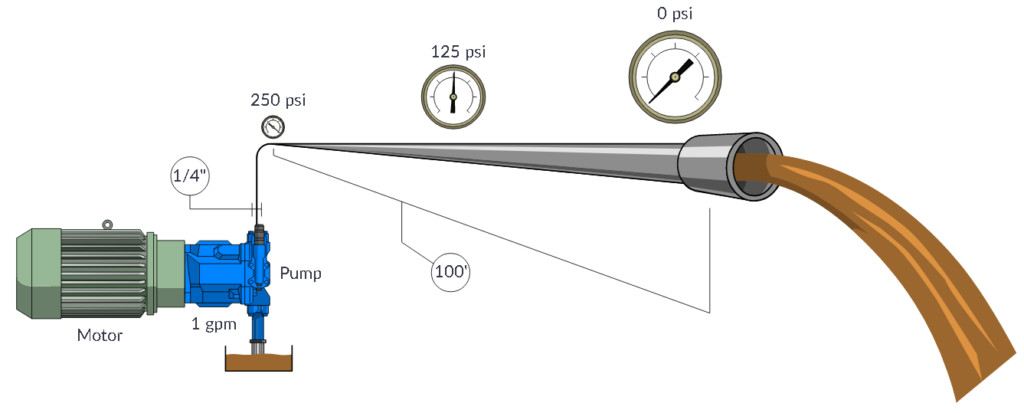
When a hydraulic pump is activated, it creates a partial vacuum at the inlet port. Atmospheric pressure then forces fluid from the reservoir into the pump's inlet line. The pump's internal mechanism — whether gears, pistons, or vanes — captures that fluid and transfers it to the outlet side under pressure.
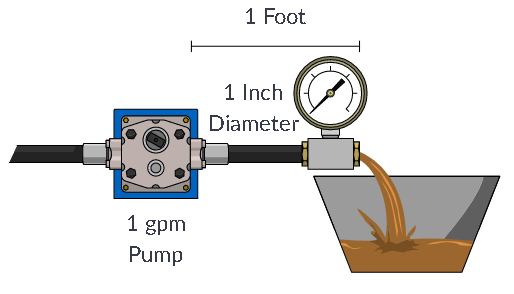
It is a common misunderstanding that the pump itself generates pressure. In reality, the pump only generates flow. Pressure is the result of resistance to that flow within the hydraulic circuit. A pump pushing fluid against a closed valve, for example, will cause pressure to rise until the system's relief valve opens or the load gives way.
Hydraulic pumps are critical components in countless systems — from compact log splitters and skid-steer loaders to massive industrial presses. They deliver the reliable, controllable power that makes modern heavy equipment possible.
Key Insight: Pumps create flow, not pressure. Pressure results from the load resisting that flow. This distinction is fundamental to understanding every hydraulic system.
Common Types of Hydraulic Pumps
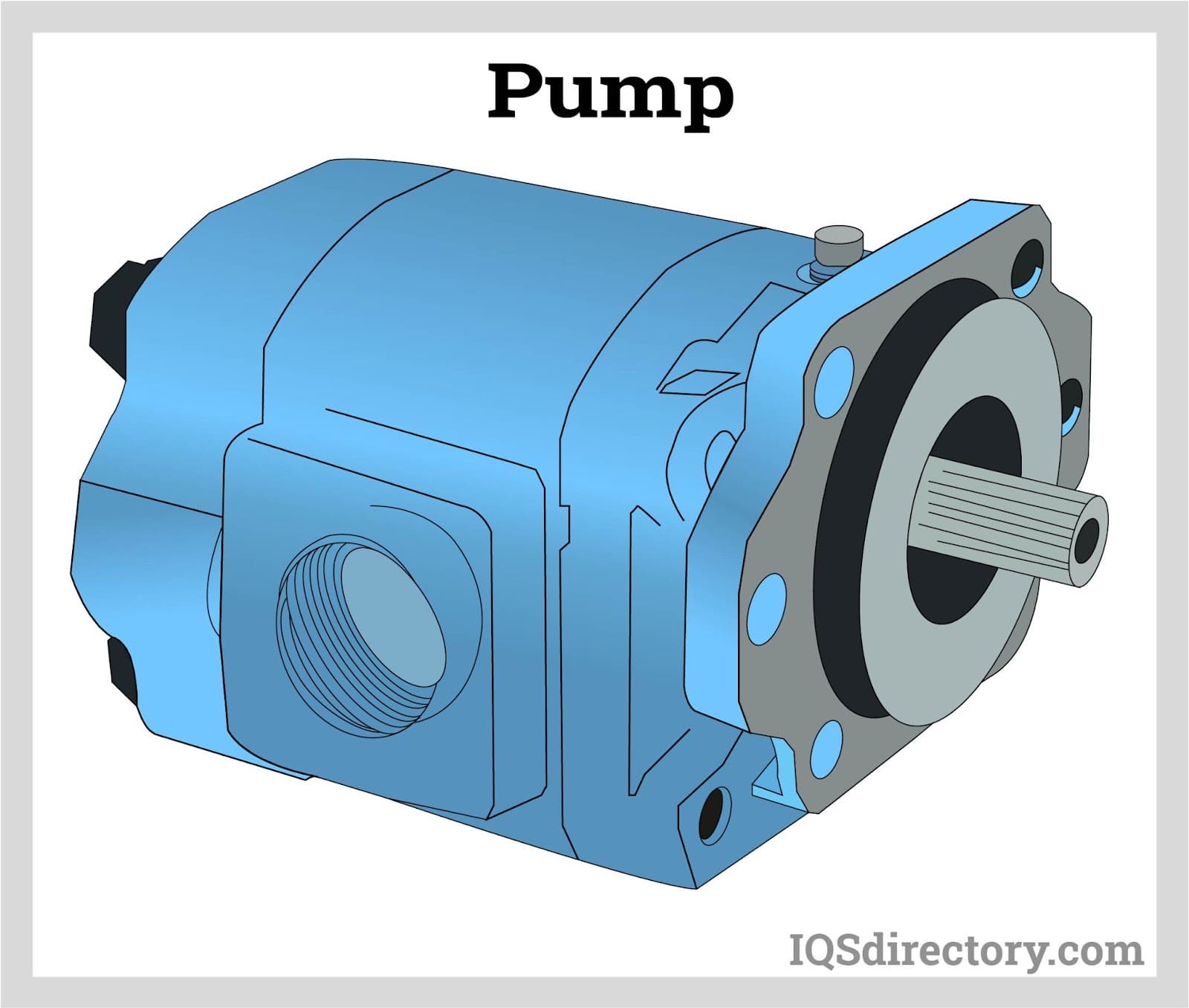
There are several hydraulic pump designs, each offering distinct advantages depending on the application. The four most widely used types are gear pumps, piston pumps, vane pumps, and gerotor pumps. Below, we break each one down in detail so you can determine which design fits your needs.
Gear Pumps
Simple, reliable, and affordable — ideal for lower-pressure applications.
Piston Pumps
High-pressure champions used in heavy construction and industrial settings.
Vane Pumps
Quiet, smooth operation — perfect for mid-range pressure needs.
Gerotor Pumps
Compact internal gear design — great for low-noise, steady-flow tasks.
Gear Pumps — The Workhorse of Hydraulics
How Does a Gear Pump Operate?
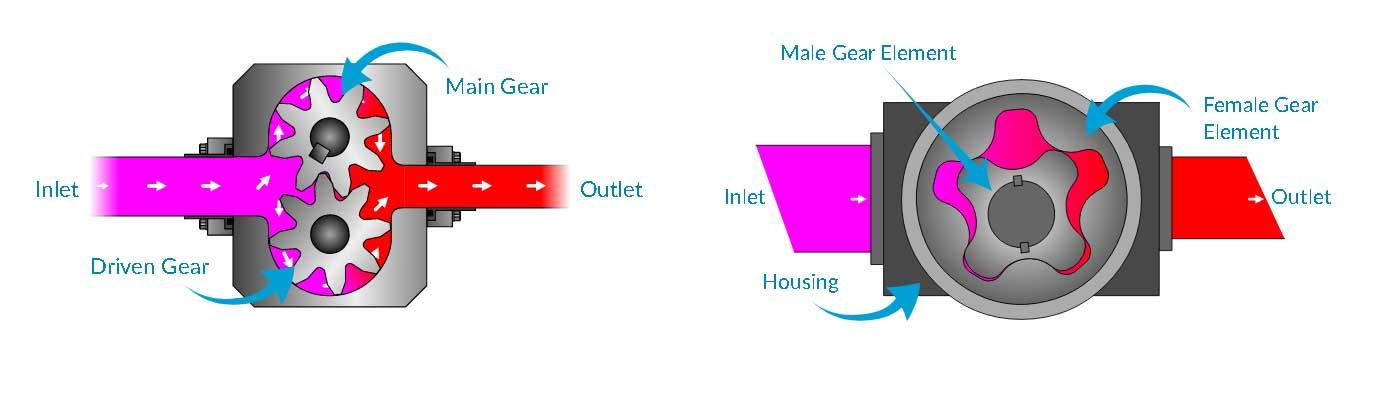
Gear pumps function through the meshing and unmeshing of two tightly toleranced gears housed inside a casing. As the gears rotate, they separate at the inlet — creating suction that draws hydraulic fluid into the pump. The fluid is then trapped between the gear teeth and the housing wall, carried around the perimeter, and expelled at the outlet as the teeth mesh back together.
This design is celebrated for its simplicity. With fewer moving parts than piston or vane designs, gear pumps require less maintenance and are generally more affordable. They perform best in applications where pressures remain moderate and a steady, predictable flow rate is needed.
The Two Main Styles of Gear Pumps
External Gear Pumps use two identical spur gears that mesh together. One gear is driven by the motor, and the other rotates freely. Fluid enters on the suction side, gets carried between the gear teeth and the housing, and is forced out on the discharge side. External gear pumps are by far the most popular style and are found in everything from log splitters to agricultural equipment.
Internal Gear Pumps feature a smaller gear rotating inside a larger ring gear. The crescent-shaped gap between the two gears traps and moves fluid from inlet to outlet. Internal gear pumps tend to run quieter than their external counterparts and handle higher-viscosity fluids with ease, making them a solid choice for industrial lubrication systems and fuel transfer duties.
Where Are Gear Pumps Commonly Used?
Gear pumps are among the most versatile hydraulic pumps on the market. You will find them powering log splitters, agricultural machinery, mobile construction equipment, chemical transfer systems, and countless other fixed and mobile applications. Their durability, low cost, and ease of servicing make them an excellent all-around choice for anyone working with moderate-pressure hydraulic circuits.
Need Hydraulic Power for Your Next Project?
We carry professional-grade hydraulic power packs built for demanding outdoor and construction work — ready to ship.
Piston Pumps — Built for High-Pressure Performance
When the job calls for serious pressure, piston pumps deliver. These pumps use reciprocating pistons housed in a cylinder block to draw in and expel hydraulic fluid. Because each piston creates a tight seal within its bore, piston pumps can achieve pressures far exceeding what gear or vane pumps offer — often surpassing 5,000 PSI.
Piston pumps come in two primary configurations: axial and radial. Axial piston pumps position the pistons parallel to the drive shaft, while radial piston pumps arrange them perpendicular. Axial designs are far more common in mobile and industrial hydraulics.
Features of an Axial Piston Pump
In an axial piston pump, a rotating cylinder block holds multiple pistons. A swashplate — an angled plate against which the pistons ride — controls the stroke length. As the block rotates, each piston is pushed in and pulled out by the swashplate angle, creating alternating suction and discharge strokes. Variable-displacement axial piston pumps allow you to adjust the swashplate angle on the fly, changing the output volume without altering engine speed. This makes them exceptionally efficient in applications where demand fluctuates.
How Does a Bent-Axis Piston Pump Work?
A bent-axis piston pump operates similarly, but instead of a flat swashplate, the entire cylinder block is angled relative to the drive shaft. This angular offset causes the pistons to stroke in and out as the shaft turns. Bent-axis designs are known for outstanding efficiency at high pressures and are frequently used in heavy-duty construction machinery and marine equipment.
Radial Piston Pumps
Radial piston pumps arrange their pistons in a star pattern around a central cam or eccentric shaft. As the shaft rotates, pistons move outward and inward, drawing in and pushing out fluid. These pumps excel at delivering very high pressures at lower flow rates and are often found in presses, injection molding machines, and precision machine tool applications.
Bottom Line: If your hydraulic system demands high pressure, exceptional efficiency, and variable displacement — a piston pump is your best bet. They cost more upfront but deliver unmatched performance in demanding environments.
Vane Pumps — Smooth, Quiet, and Reliable
Vane pumps stand out for their remarkably smooth and quiet operation. Inside the pump, a slotted rotor spins within a cam ring. Rectangular vanes slide in and out of the rotor slots, pressed outward against the cam ring by centrifugal force and hydraulic pressure. As the rotor turns, the volume between adjacent vanes increases on the suction side and decreases on the discharge side — drawing fluid in and pushing it out.
Because the vanes maintain continuous contact with the cam ring, these pumps produce a consistent, low-pulsation flow. This makes them ideal for applications where noise reduction and flow smoothness matter — think factory automation, material handling equipment, and automotive power steering systems.
Fixed vs. Variable Displacement Vane Pumps
Fixed-displacement vane pumps deliver a constant volume of fluid per revolution. Variable-displacement models allow the cam ring to shift position, changing the effective stroke of the vanes and therefore the output volume. Variable-displacement vane pumps are energy-efficient choices for systems where demand changes frequently, since the pump adjusts its output rather than dumping excess flow over a relief valve.
Vane pumps strike an excellent balance between the simplicity of gear pumps and the high-pressure capability of piston pumps. They handle medium-pressure duties with grace and tend to last a long time when operated within their design parameters. If your application calls for quiet operation and a smooth flow at moderate pressures, a vane pump is well worth considering.
Gerotor Pumps — Compact Internal Gear Design
Gerotor pumps are a specialized type of internal gear pump that use an inner rotor and an outer rotor with one additional tooth. As the inner rotor turns, it drives the outer rotor. The changing volume between the lobes of the two rotors creates suction and discharge — pulling fluid in on one side and pushing it out on the other.
What sets gerotor pumps apart is their compact form factor and exceptionally quiet operation. They produce very low pulsation and handle a range of fluid viscosities well. Gerotor pumps are commonly used in automotive lubrication systems, low-pressure hydraulic circuits, and fuel delivery applications where space is limited and noise must be kept to a minimum.
While they cannot match piston pumps for raw pressure output, gerotor pumps deliver reliable, consistent performance in low-to-moderate-pressure applications. Their simplicity translates to low maintenance costs and long service life — both attractive qualities for anyone running hydraulic equipment day in and day out.
Frequently Asked Questions About Hydraulic Pumps
What determines the right hydraulic pump for my needs?
The selection depends on several factors: the required flow rate, maximum operating pressure, fluid type, duty cycle, noise tolerance, and budget. Gear pumps cover most moderate-duty applications, while piston pumps are essential when pressures exceed 3,000 PSI. Consulting with a hydraulic specialist is always a smart move for critical systems.
Can I use a hydraulic pump as a motor?
Some hydraulic pump designs — particularly gear and piston types — can be run in reverse to function as hydraulic motors. However, not every pump is designed for bidirectional use. Always verify with the manufacturer before using a pump as a motor to avoid damage and warranty issues.
How long do hydraulic pumps typically last?
A well-maintained hydraulic pump can last thousands of hours. Lifespan depends on operating conditions, fluid cleanliness, proper filtration, maintaining correct fluid levels, and staying within the pump's rated pressure and RPM limits. Contaminated fluid is the number-one killer of hydraulic pumps.
What is the difference between fixed and variable displacement?
A fixed-displacement pump delivers the same volume of fluid with every revolution of the shaft. A variable-displacement pump can adjust its output on demand — by changing the swashplate angle on a piston pump or the cam ring position on a vane pump — which saves energy and reduces heat in systems with varying loads.
Is a hydraulic pump the same as a hydraulic power unit?
Not exactly. A hydraulic power unit (HPU) is a complete assembly that includes a pump, a reservoir, a motor, valves, and filters — everything needed to generate and regulate hydraulic power. The pump is just one component within that larger system. A product like the BravePro® Hydra Buddy™ is an example of a complete skid-mount hydraulic power pack designed for field use.
Backyard Provider
Ready to Power Your Hydraulic Setup?
Browse our selection of professional hydraulic power packs and outdoor equipment engineered for the toughest jobs.
BravePro® Hydra Buddy™ Power Pack