

A 12V portable fridge is one of the smartest investments an overlander or camper can make — but nothing ruins a trip faster than a dead battery and warm food. Whether you're heading out for a weekend or a month-long expedition, mastering your fridge's power consumption is the difference between a successful trip and a very disappointing cooler full of warm drinks.
How Much Power Does a 12V Fridge Need?

Most 12-volt compressor fridges draw between 1 and 5 amps per hour when running — but they don't run continuously. Thanks to a built-in thermostat, the compressor cycles on and off depending on the ambient temperature and how often the lid is opened. In moderate conditions, expect a real-world duty cycle of around 30–60%, meaning your effective consumption is considerably lower than the peak draw suggests.
Understanding this is critical for properly sizing your battery bank and planning your charging strategy before you leave the driveway.

Measuring Your Fridge's Real Consumption
The manufacturer's spec sheet gives you a starting point, but real-world usage varies. The best way to understand your actual consumption is to use a battery monitor or inline ammeter over a 24-hour period under your typical conditions. Track ambient temperature, how often you open the lid, and what temperature you're targeting.
Run the test at home before your trip. You'll get a much more accurate picture of your fridge's actual draw — and avoid unpleasant surprises in the field.
What Battery Should a 12V Fridge Run Off?
Not all batteries are created equal. Your standard starter battery is designed for short, powerful bursts — not sustained deep draws. Running a fridge from your starter battery is a reliable way to strand yourself. Instead, invest in a dedicated deep-cycle battery system that can comfortably deliver sustained current without damaging the cells.
AGM / Lead-Acid
Affordable and widely available. AGM batteries offer decent capacity but should only be discharged to 50% to protect longevity. Factor in that limitation when sizing your bank.
Lithium (LiFePO4)
More expensive upfront but a game-changer. Lithium batteries discharge safely to 80–90%, charge faster, and last far longer than lead-acid alternatives. Worth every dollar for serious adventurers.
As a general rule, budget at least 100Ah of usable capacity for every 24 hours of off-grid fridge use. More is always better.
How Low Can You Go With the Battery?
Most quality 12V fridges include a low-voltage cut-off to protect your battery from dropping too low. Typically, this kicks in around 11.5–11.8V for lead-acid and around 11.0V for lithium. Discharging below these thresholds can permanently damage a battery — so set your fridge's protection level conservatively and don't override it.
If you're running accessories alongside your fridge — lighting, a CPAP, a phone charger — calculate their combined draw to make sure you're not draining your bank faster than expected.
10 Proven Ways to Run Your 12V Fridge Longer
Cool Your Items Before Leaving Home
Your fridge shouldn't be doing the initial cooling — your kitchen should. Pre-chill everything in your home refrigerator before packing. A fridge that starts at temperature uses a fraction of the power required to bring warm items down to safe storage temps. This single step can meaningfully extend your battery life from day one of the trip.

Crack the Lid Slowly
Every time you open the lid, you invite warm ambient air to flood the cavity. The compressor then has to work to expel that heat. Make a habit of opening the fridge with intention — know what you want before you open it, grab it quickly, and close the lid firmly. On a hot day, unnecessary lid openings can be a surprising drain on your battery bank.
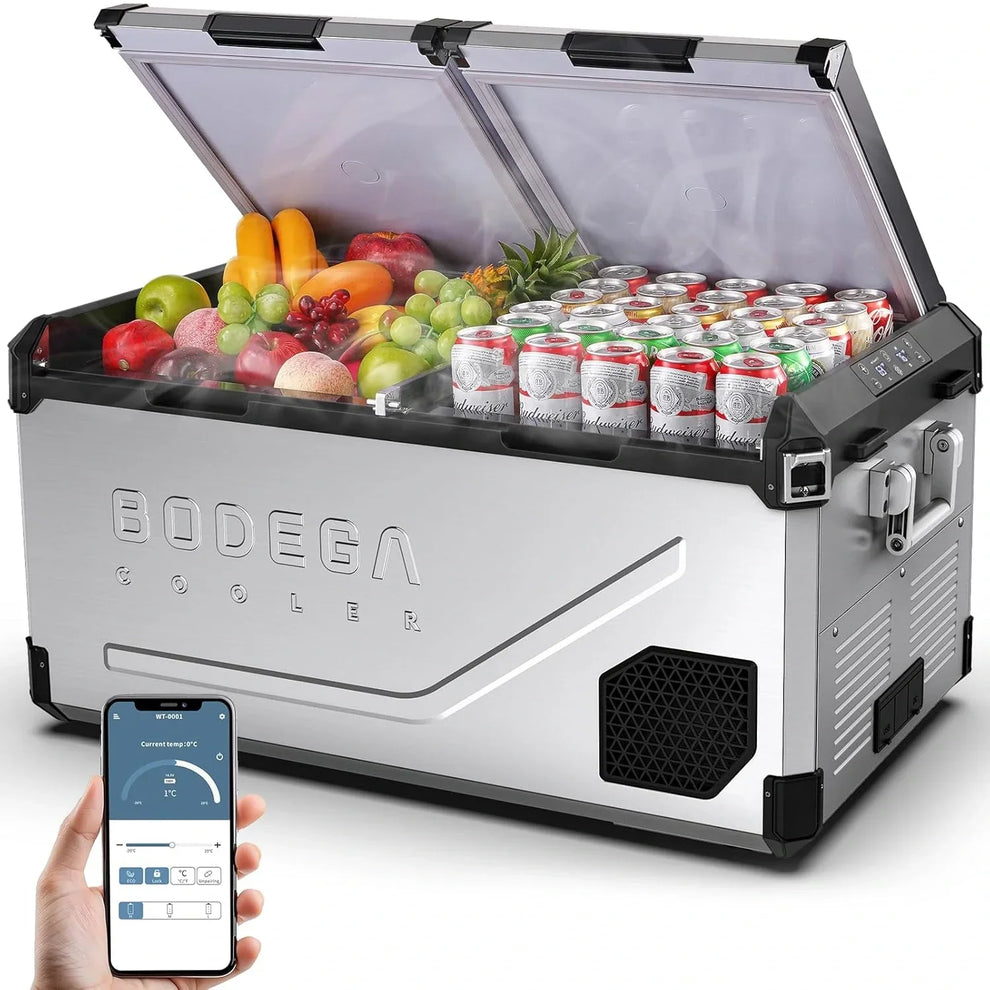
Fridges with separate freezer and refrigerator zones — like the BodegaCooler 100QT — let you access the fridge section without exposing the freezer zone (and vice versa), dramatically reducing heat ingress with every opening.

"The best off-grid fridge is the one you use smartly — proper habits multiply battery life more effectively than any upgrade."
— Backyard Provider Field GuideKeep the Fridge Full
A half-empty fridge has more air volume to cool. Thermal mass works in your favour — the more food and drinks packed in, the less air space there is to warm up when you open the lid. If you're running low on supplies, fill the gaps with water bottles or ice packs. They act as thermal ballast, stabilising the internal temperature and reducing compressor cycles.
Keep Your Fridge as Cool as Possible
Ambient temperature is one of the biggest factors affecting compressor run time. A fridge sitting in direct sunlight in the back of a black-painted ute tray is working far harder than one stored in the shade. Position your fridge out of direct sun whenever possible, allow airflow around the unit, and consider a fridge cover or insulating blanket — especially for overnight storage when you're not using it.
Defrost as Necessary
Frost and ice build-up inside the fridge acts as an insulating layer between the cooling plate and your food. This forces the compressor to work harder and longer to achieve the same internal temperature. Periodically defrost your fridge — particularly on longer trips — to keep it running at peak efficiency.
Fridge Covers
A quality insulated fridge cover is one of the simplest and most cost-effective upgrades you can make. By reducing the thermal load on the fridge walls, a cover significantly cuts down compressor run time — especially in high-ambient-temperature environments. Many manufacturers offer purpose-built covers; it's an accessory that genuinely pays for itself in extended battery life.
Time and Number of Times Opened
Discipline around lid openings compounds over the course of a trip. Assign a "fridge manager" on group trips, batch your access (grab everything you need in one go), and consider decanting frequently-needed items like drinks into a smaller cooler with ice. Small behavioural habits add up to significantly reduced runtime — and a battery that lasts the whole trip.
Use the Lid Properly
It sounds obvious, but ensure the lid is always seated and sealed properly. A partially closed lid is a continuous thermal leak — the compressor will run almost constantly trying to compensate. Check the seal regularly for debris or damage. On corrugated tracks, vibration can loosen a lid that wasn't pushed fully shut; make it a habit to check before driving away.
Check the Wiring
Undersized or degraded wiring between your battery and fridge creates resistance — and resistance means voltage drop. Even a small drop in supply voltage forces the compressor to draw more current to compensate, shortening battery life and potentially damaging the compressor over time. Use appropriately rated cable, quality connectors, and inspect your wiring regularly for signs of corrosion or wear.
Use a Quality Fridge
All of the above tips assume your fridge has a quality compressor at its heart. Cheap, inefficient compressors can consume two to three times the power of a premium unit for the same cooling performance. Investing in a well-engineered 12V fridge with a proven compressor, excellent insulation, and smart features like dual-zone cooling pays dividends on every trip you take.
Ready to Upgrade Your Setup?
The BodegaCooler 12V is built for exactly this kind of adventure — dual zone, 100QT capacity, and engineered for genuine off-grid efficiency.
BodegaCooler 100QTQuick Reference: Enjoy Your Fridge to the Fullest
- Pre-chill all food and drinks before departure
- Size your battery bank generously — at least 100Ah usable capacity per 24 hours
- Use a lithium (LiFePO4) battery for maximum usable capacity and longevity
- Keep the fridge shaded and allow airflow around the unit
- Fill empty space with water bottles to reduce air volume
- Invest in an insulated fridge cover for hot climates
- Check wiring gauge and connections before every trip
- Set your temperature conservatively — 3°C is the sweet spot for most foods
- Defrost regularly on extended trips
- Choose a quality dual-zone fridge with a proven compressor
