

Pool heat pumps are among the smartest, most cost-efficient ways to keep your swimming pool warm and inviting. They let you stretch your swim season further while keeping energy costs refreshingly low.
There is a wide range of pool heat pumps available on the market today, each with different capacities and features. Before making a purchase, it is essential to determine the correct size so that you get the best performance and value for your investment.
In this guide, we will walk you through how pool heat pumps operate, explore the different types, and provide a handy sizing table to help you choose the right unit. We will also cover the key factors that play a role in determining the ideal heat pump size for your pool.
Why Choose a Heat Pump for Your Pool?
A heat pump is one of the best options for warming your swimming pool, and here are several compelling reasons to consider one:
1. Reliable, Consistent Heating
A pool heat pump delivers steady, even warmth that keeps your water at the perfect temperature throughout the entire swimming season. These units perform well even when outside temperatures dip, ensuring year-round comfort and enjoyment for you and your family.
2. Environmentally Friendly
Pool heat pumps carry a much smaller carbon footprint compared to traditional heating methods. Instead of burning fossil fuels, they harness renewable energy from the surrounding air or ground, making them one of the greenest choices available for pool heating.
3. Superior Energy Efficiency
Heat pumps require only a small amount of electrical input to transfer a large amount of heat from the ambient air into your pool water. This makes them remarkably cost-effective to run, dramatically reducing your monthly energy bills compared to gas or electric resistance heaters.
4. Long-Lasting Durability
With proper care and maintenance, a quality pool heat pump can last 15 to 20 years or even longer. That means many seasons of warm, comfortable swimming without worrying about frequent replacements or costly repairs.
How Do Pool Heat Pumps Work?
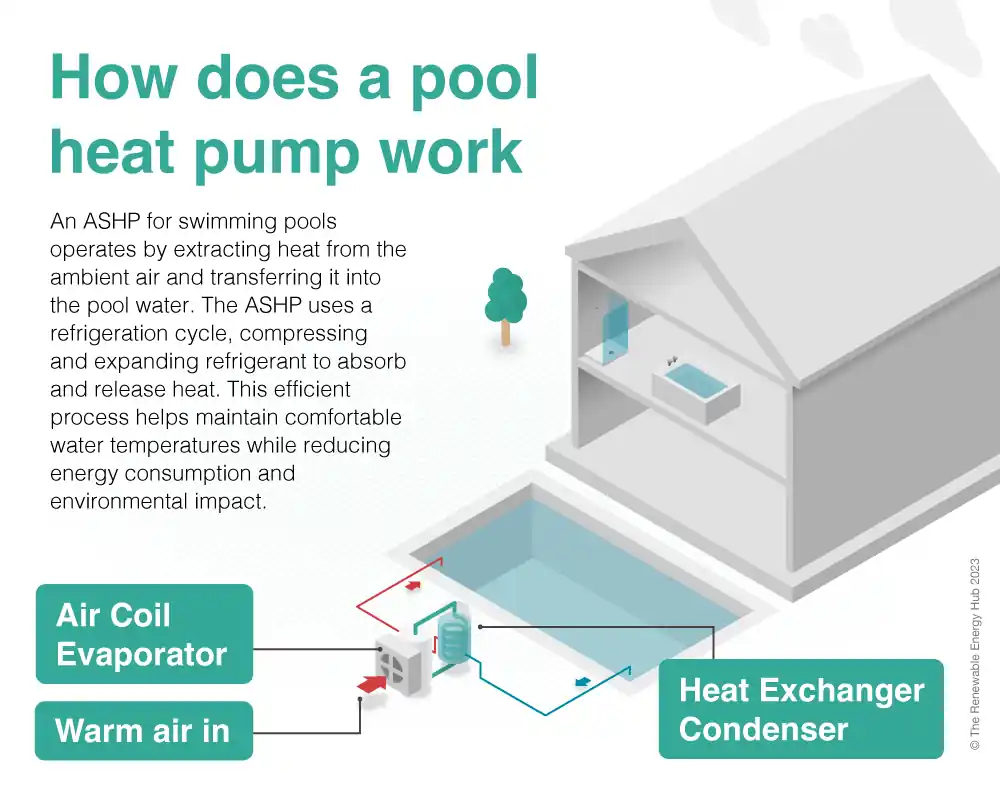
A pool heat pump is an energy-savvy appliance designed to warm your swimming pool to the ideal temperature while reducing operational costs by as much as 75%. Here is a step-by-step look at how an air-source pool heat pump operates:

Drawing In Ambient Air
The heat pump uses a built-in fan to pull in air from the surrounding environment, regardless of the outside temperature. This outdoor air is the primary energy source that powers the entire heating process.
Compressing and Heating
The captured air passes over an evaporator coil containing a liquid refrigerant. The refrigerant absorbs the heat from the air, causing it to evaporate and transform into a warm gas. A compressor then increases the temperature of this gas significantly.
Transferring Heat to Pool Water
The superheated refrigerant gas flows through a heat exchanger, where its thermal energy is passed into the cooler pool water circulating through the system. This gradually raises the water temperature until it reaches your desired level.
The Cycle Repeats
Once the refrigerant has released its heat, it passes through an expansion valve and returns to its liquid state. The cycle then begins again, continuously and efficiently warming your pool water to the perfect swimming temperature.
On/Off vs. Inverter Pool Heat Pumps
Two main types of pool heat pumps share the same core principles but differ significantly in how they operate. Understanding the distinction can help you make a better buying decision.
On/Off Heat Pumps
Traditional on/off (fixed output) heat pumps operate in a straightforward manner. The compressor runs at a single, constant speed, typically between 50Hz and 60Hz, and cycles on and off repeatedly to maintain pool temperature.
Because they always run at full power, they tend to be noisier during operation. This technology has been the industry standard for many years and remains a reliable, proven option for pool owners.
Inverter Heat Pumps
Inverter heat pumps represent the newer generation of pool heating technology. Their fan and compressor can adjust speed dynamically, allowing the unit to precisely and quickly reach your target temperature.
Once the pool reaches the desired warmth, the system scales back its power usage by 25–50%, resulting in a quieter, greener, and more cost-effective operation. Inverter models offer clear advantages in efficiency, noise levels, and long-term savings.
Factors That Affect Pool Heat Pump Sizing
When we talk about heat pump "sizing," we are referring to the unit's energy output, not its physical dimensions. Several important factors determine which size is right for your pool:
Pool Size (Volume)
The most critical factor is the volume of water in your pool. A larger body of water requires more energy to heat, which means you will need a more powerful heat pump to get the job done effectively.
Swimming Habits and Frequency
How often you use the pool and during which seasons matters greatly. If you plan on swimming year-round or through the colder months, you may need a larger unit capable of maintaining consistent warmth under more demanding conditions.
Local Climate
Air-source heat pumps draw warmth from the surrounding air. If you live in a region with colder average temperatures, the unit must work harder to reach your target water temperature (around 82°F / 28°C). In that scenario, opting for a larger-capacity heat pump is the smarter move.
Pool Type
Whether your pool is indoor or outdoor, above-ground or in-ground, each configuration has unique heating requirements. Outdoor pools, for example, lose heat more quickly to wind and evaporation, often requiring a higher-capacity unit than a comparable indoor pool.
How to Calculate Pool Heat Pump Sizing
The heating capacity of a pool heat pump is measured in kilowatts (kW). A higher kW rating means faster heating, making it more suitable for larger pools. Use the reference table below to find the approximate heat pump size your pool needs, based on water volume and your local air temperature:
| Pool Volume (m³) | Sizing in Cold Air (15°C / 59°F) | Sizing in Warm Air (26°C / 79°F) |
|---|---|---|
| 20 to 40 | 8 kW | 6 kW |
| 40 to 60 | 13 kW | 9.5 kW |
| 60 to 80 | 25 kW | 15 kW |
| 80 to 100 | 30 kW | 18 kW |
Keep in mind that a slightly larger heat pump will heat your pool faster and then only need minimal energy to maintain the temperature. Oversizing slightly is generally a smart strategy that pays off in the long run.
Final Thoughts
Investing in a pool heat pump is a significant decision, and choosing the right size is the key to getting the best performance and efficiency from your unit. Proper sizing ensures that your heat pump works optimally, heats your pool quickly, and keeps running costs to a minimum.
To recap, the main factors that influence heat pump sizing are your pool's water volume, how frequently you swim, the climate in your area, and the type of pool you own. By taking all of these into account, you can confidently choose the perfect heat pump to enjoy warm, comfortable swims all season long.