

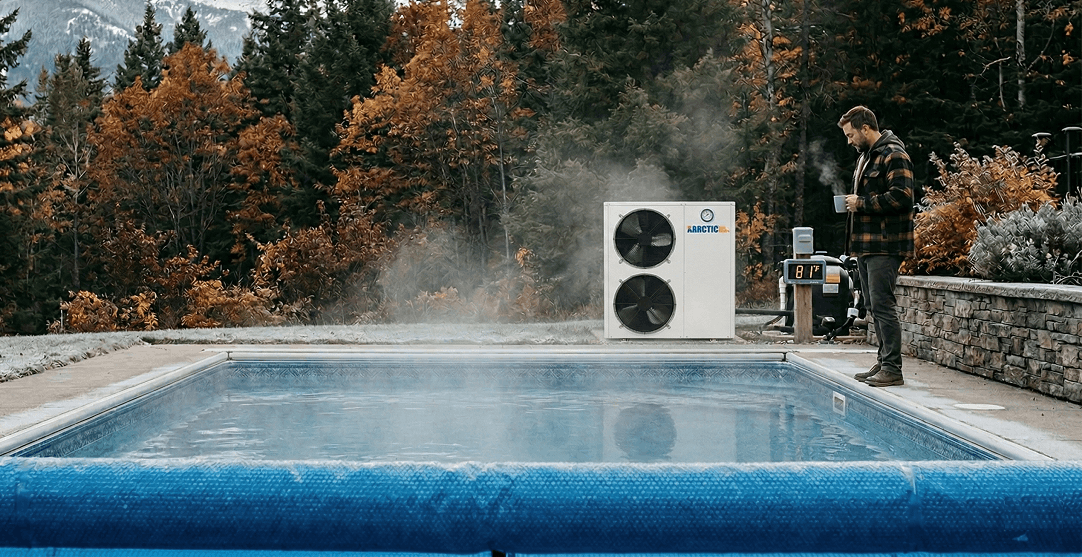
 Nobody enjoys jumping into a freezing pool, especially when a quality pool heater can solve the problem entirely. And if you've already invested in one, the last thing you want is to stand around guessing when the water will finally be swim-ready. Once considered a luxury, pool heaters have shifted into must-have territory for homeowners who want comfort and a longer swim season — sometimes adding weeks of usable pool time each year.
One of the most common questions we hear from pool owners is, "How long does it take to heat a pool?" It's an important one, because the answer shapes which heater size makes sense for your pool and how far in advance you'll need to switch it on for water to be warm by the time guests arrive.
Buying a heater that's underpowered for your pool is almost always a losing move. Even from a purely financial angle, knowing exactly how long it'll take to warm your water saves money, time, and frustration.
Heater or Heat Pump — Which One Are You Buying?
How long it takes to warm your pool depends on a few moving parts. The first thing to figure out is whether you're going with a traditional gas heater or a heat pump. Both will heat your water — but they go about it in very different ways. Let's break it down.
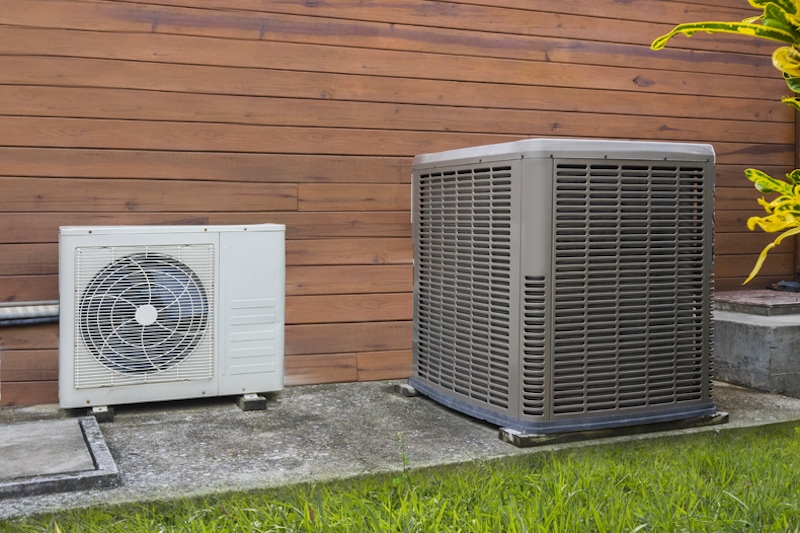
Heat pumps are clever pieces of equipment because they don't actually generate heat on their own. Instead, they pull warmth from the surrounding air and transfer it into your pool water. If you live somewhere with cooler weather, you can see where this gets tricky. Heat pumps work best when outside temperatures sit above 50°F. Below that, their efficiency drops significantly, which means longer run times to reach your desired water temperature. That's why it's important to look at the typical air temperatures in your area, especially during the shoulder months, before buying a heat pump.
An undersized heat pump has to grind for hours to bring a pool up to temperature. Longer run times mean lower efficiency and a higher electric bill. In short — wrong size, wrong outcome. In some climates, pairing a heat pump with a gas heater (or going gas-only) makes more sense.
Built for Mid-Size Pools, Built to Last
The Blue Torrent 65,000 BTU Pool Heat Pump (CFT 65) is engineered to efficiently heat pools up to 13,000 gallons — a smart match for homeowners who want consistent warmth without overspending on operating costs.
Shop Blue Torrent CFT 65 →How to Calculate Heat Run Time
Both heaters and heat pumps are rated by their British Thermal Units (BTUs) per hour. One BTU raises a single pound of water by 1°F. One gallon of water weighs 8.34 pounds — which means 8.34 BTUs are needed to raise a single gallon of water by 1°F. From there, the math is straightforward.
Step 1 — Find the total water weight in your pool:
Step 2 — Calculate how long it takes to raise 1°F:
A Real-World Example
Say you have a 20,000-gallon pool and a 125,000 BTU heater. Your water is currently at 70°F, but you'd like it at 80°F before everyone shows up. How long will that take?
Keep in mind: for heat pumps, real-world performance varies with the surrounding air temperature, so the math tends to be optimistic and doesn't always account for cooler conditions. The BTU figure on the spec sheet is typically measured when the air is comfortably warm.
Gas heaters are more consistent — but they're also less efficient. Most operate at around 80% efficiency, which you'll want to factor into your timing. You should also expect some overnight heat loss, which adds to the total run time. After running these numbers, it's always wise to round up a bit to account for inefficiency and ambient heat loss. The formula gives you a solid estimate — not an exact stopwatch reading.
Why the Blue Torrent CFT 65 Stands Out
65,000 BTU Output
Plenty of heating power for pools up to 13,000 gallons without overworking the unit.
Energy-Efficient Design
Pulls heat from the surrounding air to deliver low operating costs compared to gas heaters.
Durable Build
Corrosion-resistant components designed for years of seasonal outdoor use.
Quiet Operation
Engineered to run without disturbing your backyard or neighbors.
Estimating Costs and Running Time
If you'd rather skip the manual math, a heat pump sizing calculator can give you a quick read on what your pool actually needs. The good ones ask for your pool's location, surface area, desired temperature, whether you use a pool cover, and other environmental conditions — then they spit out a recommended unit, expected monthly run hours, and projected operating costs versus a gas heater.
For a typical mid-size pool in a warm-weather state, the data usually shows that heat pumps stay idle in peak summer months and only kick in during the cooler shoulder months — which is exactly where the savings versus gas show up most clearly.
 Final Thoughts
The best part about owning a pool heater or heat pump is that it gives you full control over your swimming season — regardless of what the weather feels like outside. The only thing worse than hosting a pool party is watching everyone show up to a freezing pool. We always recommend planning ahead. Even after you've crunched the numbers, remember there are real-world variables that affect timing — ambient temperature, heater efficiency, and evaporative heat loss can all push your numbers around. Rounding up your run time gives you a little buffer for the unexpected.
Ready to extend your swim season? The Blue Torrent CFT 65 is built specifically for pools up to 13,000 gallons and is one of the most efficient ways to keep your water swim-ready well past summer.
Blue Torrent Pool Heat Pump — 65,000 BTU
Efficient, quiet, and built to last — the smart choice for pools up to 13,000 gallons.
Shop Blue Torrent CFT 65 →