

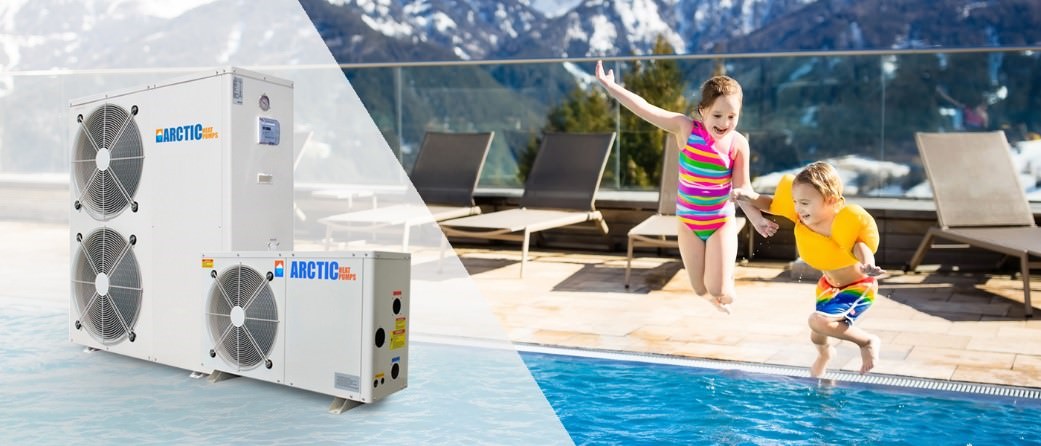
Installing a swimming pool heat pump is one of the smartest, most efficient ways to keep your pool at a comfortable temperature — and it will dramatically cut your running costs compared to most other heating options on the market.
Swimming pool heat pumps don't generate heat directly. Instead, they use a small amount of electricity to pull the naturally available warmth from the surrounding air and transfer it straight into your pool water. Paired with your pool's filtration and circulation system, the heat pump continuously moves water through a sand filter and then through its heat exchanger, cleaning and warming it in a single loop.
Heat pumps have quickly become the go-to energy-efficient solution for pool owners who want control over their water temperature all season long. In this guide, we'll walk through the key factors that matter most — energy efficiency, cost of ownership, environmental impact, and day-to-day usability.
How Does an Air-Source Heat Pump for a Swimming Pool Work?
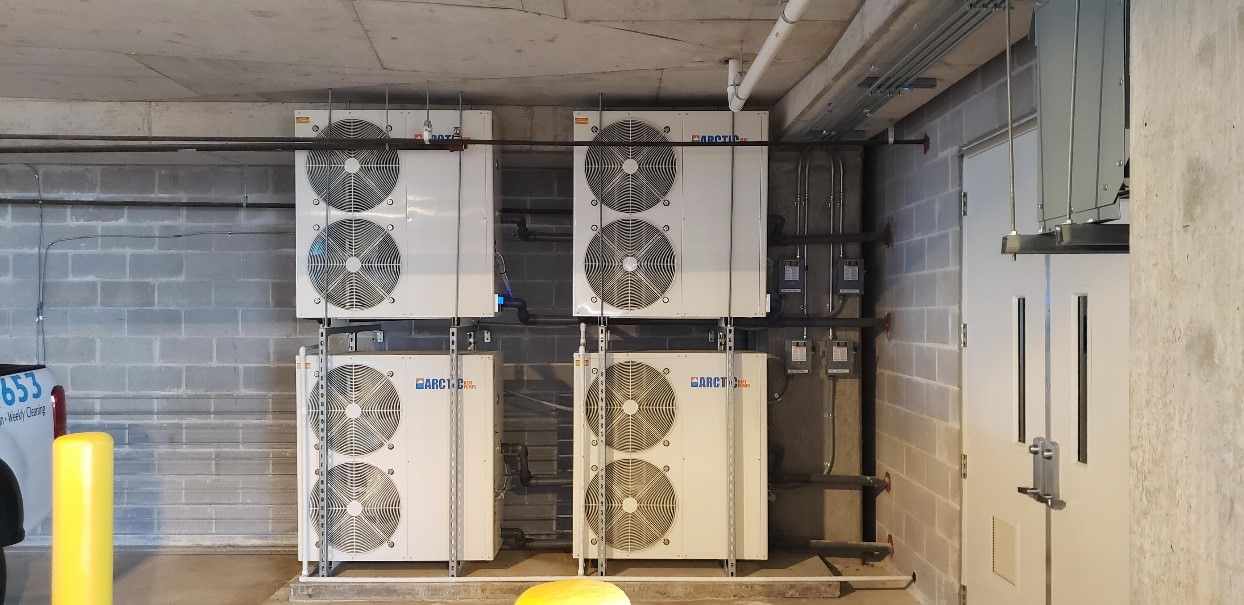
Inside every air-source pool heater is a fan that pulls outside air across an evaporator coil. That coil holds a liquid refrigerant which absorbs heat from the incoming air and converts into a gas. The warm gas travels into the compressor, which pressurizes it and raises its temperature significantly, creating a hot vapor that then flows into the condenser. At the condenser, that heat is transferred to the cooler pool water circulating through the unit.
Once the water has absorbed the heat, it's sent back to the pool. Meanwhile, the hot gas cools as it passes through the condenser coil, turns back into liquid refrigerant, and returns to the evaporator — ready to begin the cycle again. It's a closed loop that repeats endlessly while the pump is running.
Why This Matters
Because the heat is extracted from ambient air rather than generated from scratch, a quality heat pump can deliver 4 to 5 units of heat for every 1 unit of electricity it consumes — a level of efficiency traditional gas and electric heaters simply can't match.
Why Choose a Heat Pump Over Other Pool Heaters?
Lower Running Costs
Dramatically reduced monthly energy bills compared to propane, natural gas, or resistive electric pool heaters.
Year-Round Control
Maintain a swim-ready temperature from early spring through late fall, regardless of weather swings.
Eco-Friendly Operation
No direct combustion and no on-site emissions — just efficient transfer of ambient heat into your water.
Long Service Life
With routine maintenance, a well-built pool heat pump can reliably run for 10 to 15 years or more.
Heat Pump vs. Other Pool Heating Methods
When weighing your options, it helps to compare the three most common pool heating technologies side by side. Each has its place, but the differences in efficiency and long-term cost are significant.
| Feature | Heat Pump | Gas Heater | Electric Resistance |
|---|---|---|---|
| Energy Efficiency | Very High | Moderate | Low |
| Monthly Running Cost | Low | High | Very High |
| Upfront Cost | Moderate | Low–Moderate | Low |
| Environmental Impact | Minimal | Higher Emissions | Varies by Grid |
| Typical Lifespan | 10–15+ Years | 5–10 Years | 5–10 Years |
What to Look for When Choosing a Pool Heat Pump
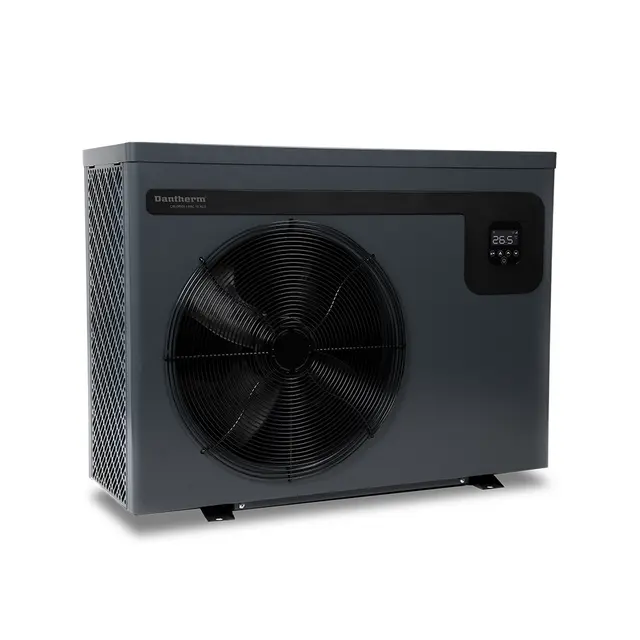
Not every pool heat pump is built the same. Before you commit to a unit, pay close attention to the BTU output, which determines how quickly the heater can warm your pool volume. For most residential in-ground and large above-ground pools, a unit in the 100,000 to 125,000 BTU range strikes an ideal balance of heat-up speed and efficiency.
You'll also want to look at the Coefficient of Performance (COP) — this is the efficiency ratio that tells you how many units of heat the pump produces per unit of electricity consumed. Higher is better. A titanium heat exchanger is another feature worth prioritizing since it resists corrosion from chlorinated and salt pool water, substantially extending the life of the unit.
Our Recommended Pool Heat Pump
If you're in the market for a reliable, powerful, and efficient heat pump that covers most residential pool sizes, the Blue Torrent 125K BTU Heat Pump is one of the strongest performers we stock. It's engineered for North American climates, built with a durable heat exchanger, and delivers ample heating capacity for pools up to around 30,000 gallons.
Blue Torrent 125K BTU Heat Pump
High-capacity heating for residential pools — efficient, durable, and built for long-season performance.
Installation and Ongoing Maintenance
Once installed, a pool heat pump needs very little hands-on attention. Keep the area around the unit clear so the fan can pull in air freely, rinse the evaporator coil periodically to clear leaves and debris, and schedule an annual inspection to check refrigerant pressure and electrical connections. Follow those basics and your heat pump will deliver consistent, low-cost heating for years.
Pro Tip
Pairing your heat pump with a quality pool cover can reduce heat loss by up to 75%, making your pump even more efficient and shortening recovery time after cold nights.
Final Thoughts
A swimming pool heat pump is one of the best long-term investments you can make in your backyard. It lengthens your swim season, keeps running costs predictable, and does it all without the carbon footprint of gas-burning alternatives. Whether you're heating a family-sized in-ground pool or a large above-ground setup, choosing the right-sized, properly engineered unit will pay for itself in comfort and savings.
Ready to Heat Your Pool Efficiently?
Explore our top-rated pool heat pump and bring year-round comfort to your backyard with one of the most efficient heating solutions available.
Shop Blue Torrent 125K