

A heat pump is a device that transfers heat from one place to another using a small amount of electricity. When used for pool heating, it pulls warmth from the outside air. Because heat pumps move existing heat instead of generating it by burning natural gas or propane, they run on cleaner energy and produce no carbon monoxide in operation.
Why Use a Heat Pump for Water Heating?
1You Want to Enjoy Your Pool Year-Round
Heat pumps shine in warmer climates. They operate most efficiently when the outdoor temperature sits above 50°F. Anything below that and efficiency begins to drop. Put simply, heat pumps perform their best when the weather is already mild.
2Heat Pumps Deliver Better Energy Savings
If trimming your energy bill matters, a heat pump is excellent value. Compare it to a bicycle versus a motorcycle: a gas heater will heat your pool faster, but you'll pay for that speed. A heat pump, on the other hand, delivers consistent, reliable warmth once it reaches your target temperature, costing roughly $400 a year in energy use.
3Some Heat Pumps Can Cool Your Pool, Too
If you're shopping for a heater, odds are you've already invested in your pool and you want to enjoy it fully. Why not go one step further? Premium heat pump models do more than heat — they can also keep the water cool when outdoor conditions turn too hot for comfort.
How a Heat Pump Pool Heater Works
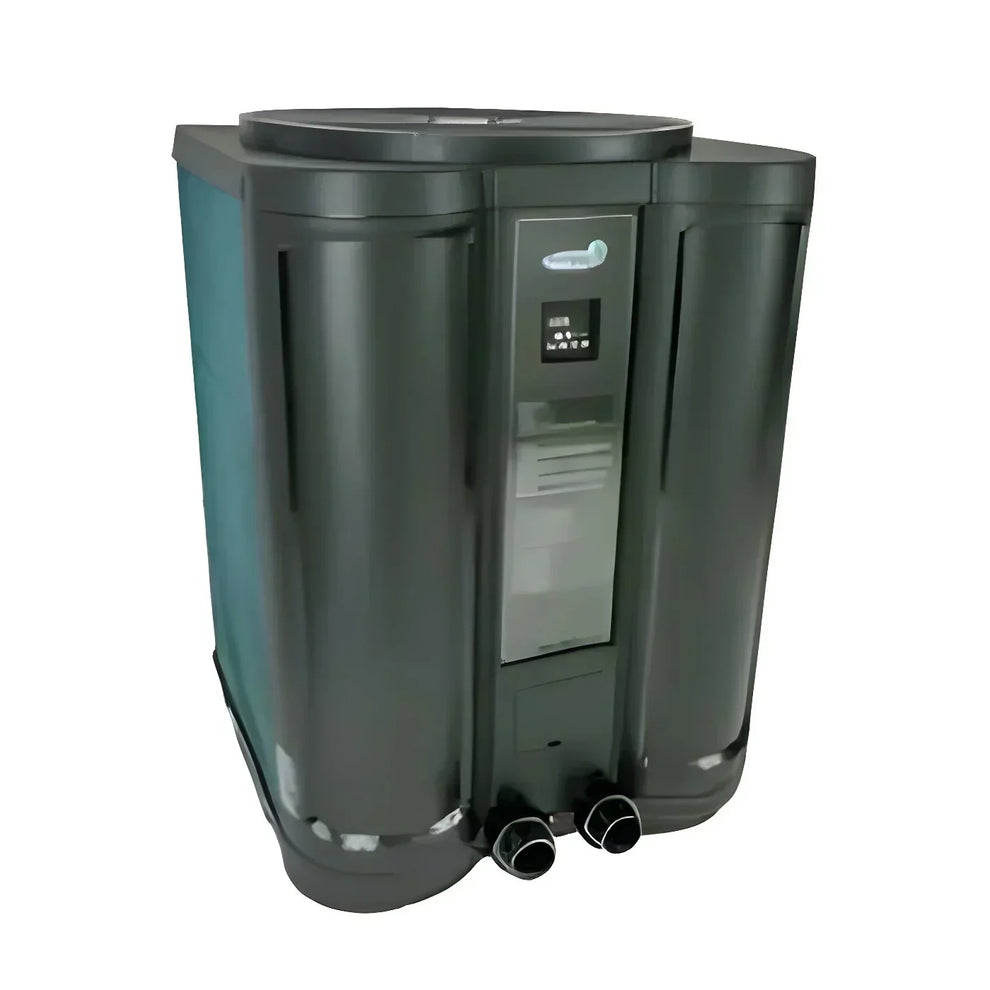
As pool water circulates through the pump system, it passes through a filter and then into the heat pump heater. The heater's fan pulls in outside air and directs it across the evaporator coil. Inside that coil, liquid refrigerant absorbs warmth from the incoming air, turning into a gas. The compressor then pressurizes this warm gas, raising its temperature considerably before sending it to the condenser.
Inside the condenser, heat from the hot gas is transferred to the pool water as it flows through, warming it up. Meanwhile, the refrigerant, now giving up its heat, returns to liquid form and cycles back to the evaporator to start all over again.
Heat pumps built with high-efficiency designs typically use scroll compressors instead of the older reciprocating kind. These models work well as long as the outside temperature stays within the 45°F to 50°F range or higher. The colder the air outside, the harder the unit must work to extract heat. This is why pool heat pumps are most popular in climates that stay warm and mild year-round.
Selecting a Heat Pump Pool Heater
Heat pump pool heaters carry a higher upfront price tag than gas heaters, but their annual running costs are far lower. They also tend to outlast gas units. Over the long haul, the savings more than make up for the initial outlay.

When shopping, keep these three factors in mind:
- Size — match the unit to your pool's surface area and conditions
- Efficiency — look for a high Coefficient of Performance (COP)
- Cost — weigh upfront pricing against long-term energy savings
Looking for a proven, efficient heat pump built for pools?
Shop Blue Torrent 125K BTU Heat PumpSizing a Heat Pump Pool Heater
Proper sizing should ideally be handled by a trained pool professional who can run a complete analysis for your specific pool. Sizing a heat pump comes down to a few core factors: the surface area of the pool and the gap between the water's desired temperature and the average air temperature in the coldest month you plan to swim. Other variables like wind exposure, nighttime humidity, and the pool's heat loss also come into play. Cooler regions, exposed locations, and higher evaporation rates all point toward needing a larger unit.
Heat pump output is rated in Btu and horsepower (hp). Standard sizes you'll commonly find include 3.5 hp / 75,000 Btu, 5 hp / 100,000 Btu, and 6 hp / 125,000 Btu.
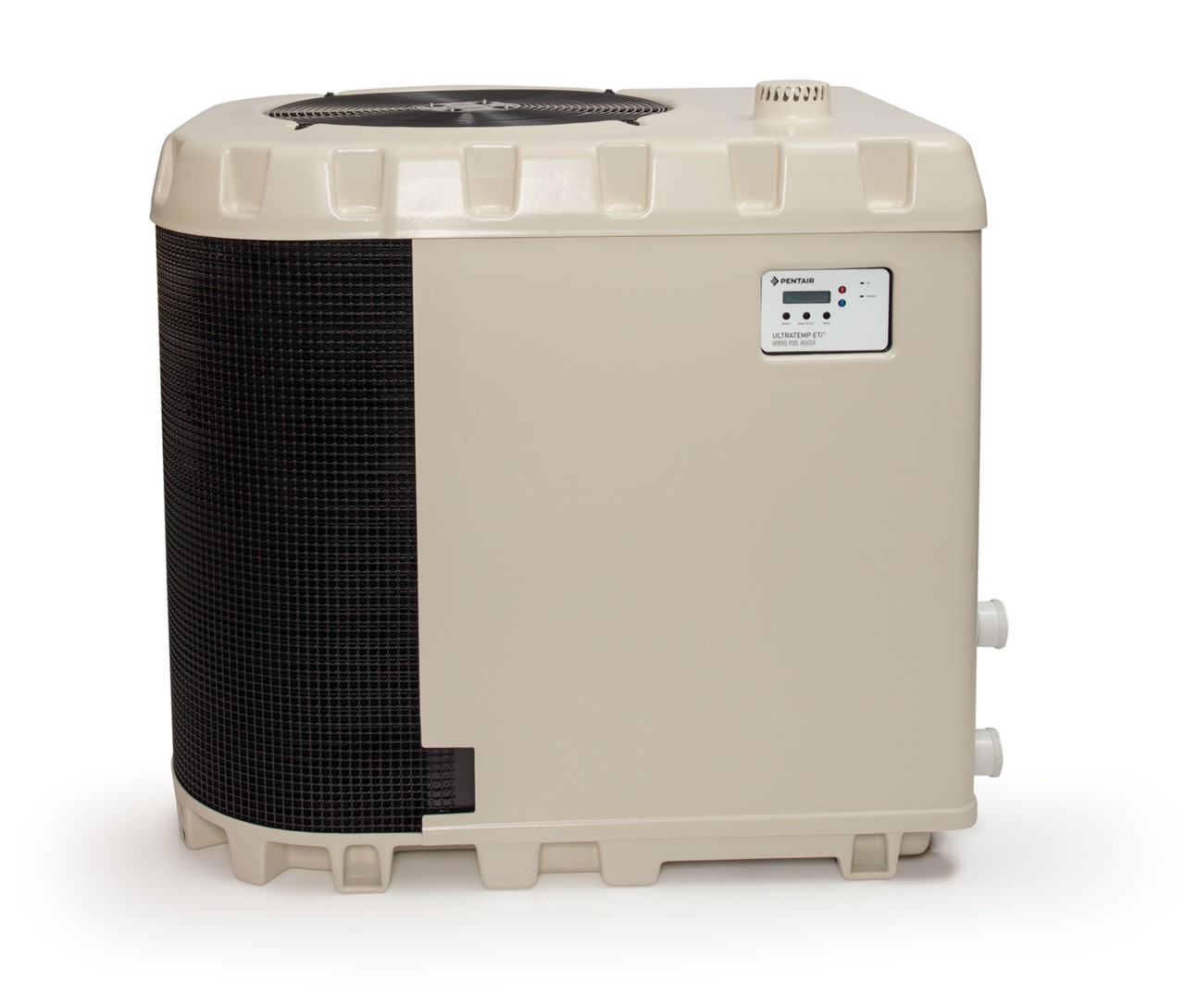
To approximate the right size for an outdoor pool, follow these steps:
- Decide on the water temperature you want.
- Find the average outside temperature for the coldest month you plan to use the pool — this gives you the temperature rise required.
- Measure the surface area of your pool in square feet.
- Use the formula below to calculate your required Btu per hour output.
This formula assumes a 1°F to 1¼°F rise per hour and a 3½ mph average wind at the water's surface. For a rise of 1½°F, multiply by 1.5; for a 2°F rise, multiply by 2.
Determining Heat Pump Pool Heater Efficiency
The efficiency of a heat pump pool heater is measured using its Coefficient of Performance (COP). The higher the COP, the more efficient the unit. Because the industry doesn't apply a single universal testing standard, COP figures vary across manufacturers. Test conditions typically run at 80°F ambient air temperature, 80% relative humidity, and 80°F water temperature. Typical COP values fall between 3.0 and 7.0, which translates to efficiency ratings of roughly 300% to 700%. In plain terms, for every unit of electricity used to run the compressor, you get between three and seven units of heat delivered to your pool.
Estimating Heat Pump Pool Heater Costs and Savings
For an outdoor pool, the tables below help you estimate yearly heat pump operating costs and savings compared to an electric resistance heater or a gas pool heater.
| Location | Season | Temperature | ||
|---|---|---|---|---|
| 78° | 80° | 82° | ||
| Miami | 1/1–12/31 | $1,488 | $1,988 | $2,514 |
| w/ cover | 1/1–12/31 | $293 | $409 | $559 |
| Phoenix | 3/1–10/31 | $627 | $1,110 | $1,685 |
| w/ cover | 3/1–10/31 | $49 | $116 | $158 |
| Dallas | 4/1–10/31 | $481 | $1,101 | $1,590 |
| w/ cover | 4/1–10/31 | $103 | $181 | $279 |
| Atlanta | 4/1–10/31 | $743 | $1,512 | $1,942 |
| w/ cover | 4/1–10/31 | $211 | $279 | $395 |
| Los Angeles | 3/1–10/31 | $1,034 | $1,448 | $2,023 |
| w/ cover | 3/1–10/31 | $116 | $211 | $327 |
| Kansas City | 5/1–10/31 | $874 | $1,574 | $1,935 |
| w/ cover | 5/1–10/31 | $198 | $279 | $366 |
| New York | 5/1–9/30 | $1,028 | $1,328 | $1,662 |
| w/ cover | 5/1–9/30 | $143 | $224 | $273 |
| Chicago | 5/1–9/30 | $1,104 | $1,410 | $1,730 |
| w/ cover | 5/1–9/30 | $143 | $204 | $266 |
| Denver | 5/1–9/30 | $1,192 | $1,437 | $1,696 |
| w/ cover | 5/1–9/30 | $85 | $136 | $204 |
| Boston | 5/1–9/30 | $1,192 | $1,465 | $1,744 |
| w/ cover | 5/1–9/30 | $164 | $225 | $320 |
| Minneapolis | 6/1–9/30 | $899 | $1,158 | $1,417 |
| w/ cover | 6/1–9/30 | $136 | $170 | $259 |
| San Francisco | 6/1–8/31 | $1,080 | $1,294 | $1,512 |
| w/ cover | 6/1–8/31 | $128 | $225 | $327 |
| Seattle | 6/1–8/31 | $1,049 | $1,526 | $1,410 |
| w/ cover | 6/1–8/31 | $204 | $292 | $382 |
*Figures based on a 1,000 square foot outdoor pool heated with air or water heat pump with an average COP of 5.0 at $0.1305/kWh.
| Efficiency | Annual Cost | Cost w/ 5.0 COP | Heat Pump Savings |
|---|---|---|---|
| Gas Pool Heater | |||
| 55% | $1,000 | $700 | $300 |
| 60% | $915 | $700 | $215 |
| 65% | $845 | $700 | $145 |
| 70% | $785 | $700 | $85 |
| 75% | $730 | $700 | $30 |
| Electric Resistance | |||
| 100% | $1,000 | $200 | $800 |
*Based on an electric resistance heated pool, using $1,000 per year at an electric cost of $0.1305/kWh. A seasonal COP of 5.0 was used to calculate heat pump savings.
Installation and Maintenance
Professional Installation
Correct installation and upkeep are key to getting peak performance from your heat pump. Always use a qualified pool professional to install the unit — especially for the electrical hookup and anything involving repairs or complicated maintenance.
Regular Maintenance
Read through the owner's manual for the recommended service schedule. You'll likely need to have the heat pump checked annually. When a unit has many moving parts and electrical components, periodic servicing by an HVAC technician is worth every penny.
With thorough installation and consistent maintenance, heat pump pool heaters can easily deliver 10 or more years of reliable service.
Ready to Heat Your Pool the Efficient Way?
The Blue Torrent 125K BTU Heat Pump delivers dependable warmth, lower running costs, and a longer swim season — all in one durable package.
Shop Blue Torrent 125K BTU Heat Pump