

Pool heat pumps are among the most cost-effective ways to extend your swimming season. Rather than generating heat directly, they transfer warmth from the surrounding air into your pool water — delivering comfort all season long while keeping your energy bills manageable.
Before you invest, it's essential to choose the right size. This guide walks you through how pool heat pumps work, what factors affect sizing, and how to match the right unit to your pool.

Why Choose a Heat Pump for Your Pool?
Pool heat pumps offer a compelling combination of reliability, efficiency, and longevity. Here's what makes them stand out:
Consistent Heating
Maintains a stable, comfortable water temperature even when outdoor conditions fluctuate.
Eco-Friendly
Uses renewable energy from the air — no fossil fuels burned, significantly lower carbon footprint.
Energy Efficient
Transfers heat rather than producing it, requiring minimal energy input to achieve optimal results.
Long Lifespan
With proper maintenance, a quality unit can last 15 to 25 years — a smart long-term investment.
How Pool Heat Pumps Work
Understanding the mechanism behind your heat pump helps you get the most out of it. The process is simple and remarkably efficient:
Drawing in ambient air
A fan pulls in outside air across the evaporator coil, regardless of temperature. This is the energy source — free and renewable.
Compression raises the temperature
A compressor pressurizes the refrigerant, dramatically increasing its temperature before passing it through the system.
Heat transfer to the pool water
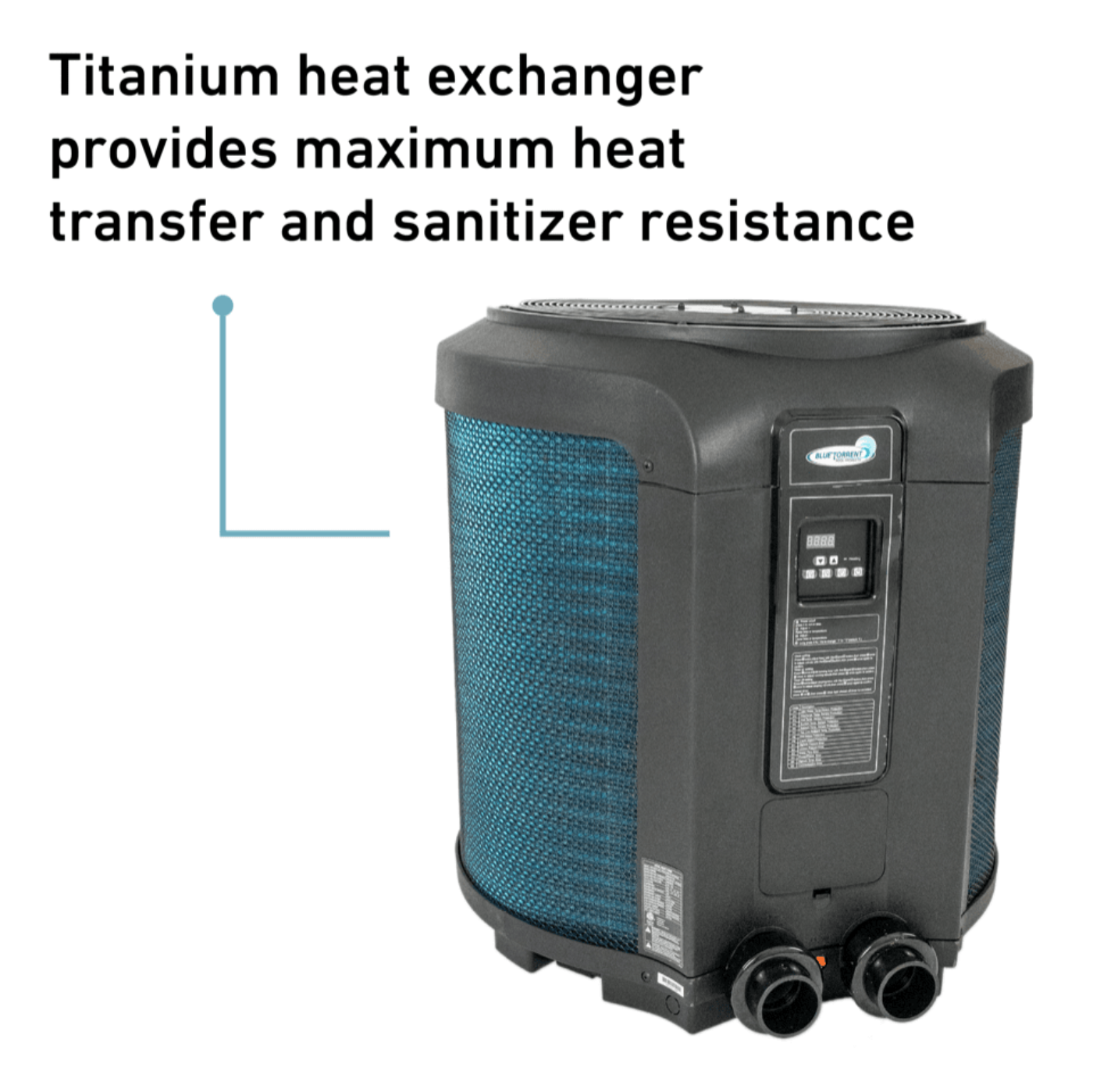
The now-heated refrigerant passes through a heat exchanger, transferring thermal energy directly into your pool water.
The cycle repeats continuously
After releasing its heat, the refrigerant returns to liquid state and the process starts again — gradually raising your pool to the perfect temperature.
On/Off Heat Pumps vs. Inverter Heat Pumps
There are two main types of pool heat pumps available. Knowing the difference helps you choose wisely.
On/Off Heat Pumps
These units operate at a single fixed speed — fully on or completely off. The compressor cycles as needed to maintain your target temperature. They are reliable and time-tested but tend to run noisier and consume more energy during each cycle.
Inverter Heat Pumps
A newer technology that adjusts fan and compressor speed in real time. Once your pool reaches the target temperature, power consumption can drop by up to 50%. They are quieter, more energy-efficient, and more cost-effective over time.
Factors That Affect Pool Heat Pump Sizing
Sizing a heat pump isn't just about picking a number — it's about matching output capacity (measured in kilowatts) to the specific demands of your pool and environment.
Key sizing factors to consider:
- Pool size: The larger the water volume, the more heating capacity you need. This is the single most important variable.
- Usage patterns and frequency: A pool used daily year-round benefits from a larger, more powerful unit capable of rapid recovery.
- Your climate: Air-source heat pumps depend on ambient air temperature. In colder regions, a unit with greater capacity is essential to compensate.
- Pool type: Indoor pools, outdoor pools, and in-ground vs. above-ground pools all have different thermal retention and loss profiles.
How to Calculate the Right Heat Pump Size
Heating capacity is measured in kilowatts (kW). The higher the kW output, the faster your pool heats up — and the better it maintains temperature in cooler conditions.
Use the table below as a practical starting point. Pool volumes are compared at 15°C (cold air) and 28°C (warm air) to show how climate affects your needs:
| Pool Volume (m³) | Cold Air (15°C) | Warm Air (28°C) |
|---|---|---|
| 20 to 40 m³ | 8 kW | 6 kW |
| 40 to 60 m³ | 13 kW | 8.5 kW |
| 60 to 90 m³ | 25 kW | 13 kW |
| 90 to 100 m³ | 30 kW | 19 kW |
Once your pool reaches its desired temperature, a correctly sized heat pump requires very little energy to keep it there — making upfront sizing decisions critical for long-term savings.
Ready to Heat Your Pool?
The Blue Torrent CFT 95 is built for pools up to 18,000 gallons — a powerful, efficient choice for the serious pool owner.
Conclusion
Choosing the right pool heat pump is one of the best investments you can make for your backyard. When sized correctly, it delivers consistent warmth, lower energy costs, and seasons of uninterrupted swimming enjoyment.
To summarize, the core factors that influence your ideal heat pump size are: your pool's water volume, how frequently you swim, your local climate, and whether your pool is indoor or outdoor. Taking all four into account ensures you select a unit that performs efficiently for years to come.
When in doubt, size up slightly — a heat pump that's marginally oversized runs more efficiently than one that's constantly working at maximum capacity just to keep up.