

Everything you need to know about extending your swimming season, cutting energy costs, and choosing the right pool heat pump for your backyard.
In This Guide
1. What Is a Pool Heat Pump & How Does It Work?
2. Why Heat Pumps Are Worth It for Your Pool
3. Air-Source vs. Ground-Source: Which Is Right for You?
4. Top Pool Heat Pump Brands to Consider
5. Estimated Costs & Running Expenses
6. Key Factors When Choosing a Pool Heat Pump
7. Installation: What to Expect
8. Maintenance Tips for Longevity
9. Pros & Cons at a Glance
10. Frequently Asked Questions
A swimming pool is one of the finest additions to any backyard — but keeping the water comfortable throughout the year can become expensive if you rely on traditional gas or electric heaters. That is where pool heat pumps come into play. These ingenious devices harness ambient thermal energy from the surrounding air or ground and transfer it into your pool water, delivering consistent warmth at a fraction of the operating cost.
In this 2026 guide from Backyard Provider, we walk you through every aspect of pool heat pumps — from the science behind them, to the leading brands, real-world costs, installation timelines, and maintenance best practices — so you can make a confident, informed decision and start enjoying your pool all year round.

1. What Is a Pool Heat Pump & How Does It Work?
A pool heat pump is a mechanical heating system that regulates the temperature of your swimming pool water. Rather than generating heat by burning fuel, it works by extracting warmth from the outside environment — either the ambient air (air-source) or the ground beneath your property (ground-source) — and transferring that energy into the water flowing through your pool's circulation system.
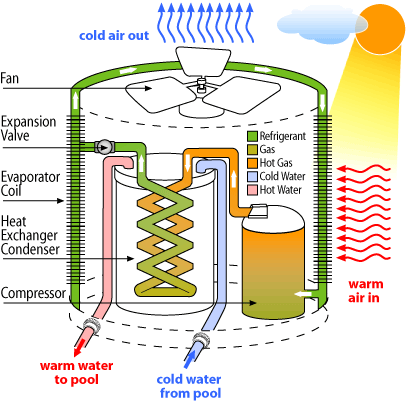
The process relies on a refrigeration cycle that operates in reverse. Here is a simplified breakdown of the four core steps:
Air Intake
A fan draws in outdoor air and passes it over an evaporator coil containing cold liquid refrigerant.
Heat Absorption
The refrigerant absorbs ambient heat, causing it to transform from a liquid into a warm gas.
Compression
The compressor intensifies the temperature of the gas, raising it significantly higher than the pool water.
Heat Transfer
The hot gas passes through a heat exchanger, warming the pool water before the refrigerant cycles back.
Once the heated water returns to the pool and the refrigerant cools back into a liquid, the entire process begins again. This continuous loop is what allows a heat pump to maintain your desired pool temperature with remarkable efficiency — using far less electricity than a direct electric heater would consume.
2. Why Heat Pumps Are Worth It for Your Pool
Pool heat pumps have surged in popularity for very good reasons. They sit at the intersection of economy, ecology, and convenience — three priorities that matter to every modern pool owner. Here is why they deserve serious consideration:
Energy Efficiency
For every unit of electricity a heat pump consumes, it can transfer three to six units of heat into your pool. This exceptional coefficient of performance (COP) translates to significantly lower running costs compared to gas or resistance heaters.
Extended Season
A heat pump lets you open your pool earlier in spring and keep it running well into autumn — or even year-round, depending on your climate and setup. The additional months of use dramatically improve your return on investment.
Lower Carbon Footprint
Because heat pumps move heat rather than create it, they require substantially less fossil-fuel-derived electricity. This makes them one of the greenest pool-heating options available today.
Long Lifespan
With proper maintenance, a quality pool heat pump can last 15 to 20 years or more. That durability, paired with low annual operating expenses, makes it one of the most economical long-term heating investments.
Taken together, these advantages explain why heat pumps have become the go-to recommendation among pool professionals and backyard enthusiasts alike. The upfront cost is higher than a simple gas heater, but the savings compound year after year.
3. Air-Source vs. Ground-Source: Which Is Right for You?
There are two primary types of heat pumps used for swimming pools. Both accomplish the same goal — warming your water — but they draw their energy from different sources and come with distinct cost and installation profiles.
| Feature | Air-Source Heat Pump | Ground-Source Heat Pump |
|---|---|---|
| Energy Source | Outdoor ambient air | Stable underground temperature |
| Upfront Cost | $2,500 – $7,500 | $10,000 – $25,000+ |
| Installation | Straightforward; 1–2 days | Complex; requires boreholes or ground loops |
| Annual Running Cost | $500 – $1,000 | $550 – $750 |
| Efficiency (COP) | 3.0 – 6.0 typical | 4.0 – 5.5 typical |
| Climate Sensitivity | Performance drops in very cold air | Consistent regardless of air temp |
| Best For | Most residential pool owners | Properties with land; colder regions |
For the vast majority of backyard pool owners, an air-source heat pump offers the best balance of affordability, ease of installation, and performance. Ground-source systems are superior in colder climates and deliver slightly lower running costs, but their substantial upfront investment and complex installation make them a better fit for larger properties or commercial facilities.
4. Top Pool Heat Pump Brands to Consider
The market offers an array of reputable manufacturers. Below are some of the most trusted names in pool heat pump technology across both air-source and ground-source categories.
Leading Air-Source Brands
Leading Ground-Source Brands

Featured Product
Blue Torrent Pool Heat Pump — 110,000 BTU
Designed to efficiently heat pools up to 25,000 gallons. Energy-saving technology meets powerful performance for your backyard oasis.
Blue Torrent 110K BTU Heat Pump →5. Estimated Costs & Running Expenses
Budget is naturally a top concern. The total price you will pay depends on the type of heat pump, the capacity required for your pool size, and the complexity of the installation. Below is a general pricing overview to help you plan.
Air-Source Heat Pump Costs
Air-source models tend to be the more affordable option. For a residential pool, expect unit costs in the range of $2,500 to $7,500, with installation adding another $1,000 to $3,000 depending on the complexity of your existing plumbing and electrical setup. Annual running costs typically fall between $500 and $1,000, though this can vary with your local electricity rates and pool usage patterns.
Ground-Source Heat Pump Costs
Ground-source systems carry a higher price tag because of the earthworks involved. Unit and installation costs combined typically land between $10,000 and $25,000+, depending on soil conditions and system capacity. However, ground-source models reward this investment with lower annual running costs — generally $550 to $750 per year — and greater consistency in extreme weather.
| Cost Category | Air-Source | Ground-Source |
|---|---|---|
| Unit Price | $2,500 – $7,500 | $10,000 – $25,000+ |
| Installation | $1,000 – $3,000 | $5,000 – $15,000 |
| Annual Running Cost | $500 – $1,000 | $550 – $750 |
* All figures are estimates and may vary based on pool size, local rates, geographic location, and specific product selection. Always obtain multiple quotes before committing.
6. Key Factors When Choosing a Pool Heat Pump
Not all heat pumps are created equal. When shopping for the right model, keep the following considerations front of mind:
Sizing It Correctly
An undersized unit will struggle to maintain temperature, while an oversized one wastes energy and money. Pool volume, surface area, desired temperature rise, and your local climate all factor into the calculation. Use manufacturer sizing charts or consult a professional installer for accurate recommendations.
Efficiency Rating (COP)
The Coefficient of Performance tells you how many units of heat the pump delivers per unit of electricity consumed. A COP of 5.0 means the pump produces five times as much heat energy as the electrical energy it draws. Higher COP ratings translate directly into lower monthly bills.
Noise Output
If your pool sits near a patio, bedroom window, or property boundary, decibel levels matter. Look for models with insulated compressor housings, variable-speed fans, and noise ratings below 55 dB — roughly the level of a quiet conversation.
Warranty Coverage
A strong warranty protects your investment. Compare the length of coverage for the compressor, heat exchanger, and parts/labor separately. Top-tier brands often offer 5 to 10 years on the compressor and 2 to 5 years on parts and labor.
Build Material & Corrosion Resistance
Pool environments are humid and chemically aggressive (chlorine, salt). Titanium heat exchangers and powder-coated cabinets resist corrosion far better than standard metals and will extend your unit's functional life by years.
7. Installation: What to Expect
For a standard air-source pool heat pump, installation typically takes one to two days. The unit needs to be positioned near the pool with adequate airflow on all sides. Your installer will connect it to the pool's existing filtration and plumbing loop, wire it into an appropriate electrical supply, and configure the thermostat controls.
Ground-source installations are more involved. They require either horizontal trenches or vertical boreholes to lay the ground-loop piping, which can take several additional days. This extra groundwork is what drives the higher installation cost, but the trade-off is steadier performance year-round.
💡 Pro Tip
Always obtain at least three itemized quotes before choosing an installer. Ask each contractor about their licensing, insurance, and warranty support. Check the decibel rating of each proposed model — some units are noticeably louder than others, and placement matters.

8. Maintenance Tips for Longevity
One of the great advantages of pool heat pumps is their low-maintenance nature. That said, a little routine care goes a long way in protecting your investment and keeping efficiency high:
Schedule an annual professional check-up. A qualified technician can inspect refrigerant levels (handling refrigerant is regulated and should not be attempted as a DIY task), test electrical connections, and verify that the compressor and fan motor are performing within specification.
Keep the evaporator coil and surrounding area clean. Clear away leaves, grass clippings, and debris regularly. Blocked airflow forces the unit to work harder and reduces efficiency.
Inspect electrical connections periodically. Look for signs of corrosion, loose wiring, or wear. Address issues early before they escalate into costly repairs.
Maintain balanced pool chemistry. Keeping pH, chlorine, and alkalinity within recommended ranges protects the heat exchanger from scale build-up and corrosion — extending its life and preserving heating efficiency.
9. Pros & Cons at a Glance
Ready to Heat Your Pool the Smart Way?
Explore our energy-saving Blue Torrent Pool Heat Pump, rated at 110,000 BTU and built to efficiently warm pools up to 25,000 gallons.
Blue Torrent 110K BTU Heat Pump →10. Frequently Asked Questions
Is a pool heat pump actually worth the investment?
For most pool owners, yes. The energy savings accumulate substantially over the pump's 15–20 year lifespan, and the ability to swim comfortably from early spring through late autumn (or even year-round) adds measurable value to your property and your lifestyle.
How long does it take a heat pump to warm the pool?
This depends on the starting water temperature, your target temperature, and the unit's BTU rating. As a rough guide, most heat pumps raise the water temperature by about 1°F to 2°F per hour. Heating a pool from a cold start may take one to three days, while maintaining temperature is nearly instantaneous once you reach the desired level.
Are pool heat pumps expensive to operate?
Compared to gas heaters, pool heat pumps are considerably cheaper to run. Because they transfer heat rather than generate it, they deliver multiple units of warmth for every unit of electricity used. Typical annual operating costs range from $500 to $1,000 for air-source models, depending on pool size and climate.
Can a heat pump also cool my pool?
Many modern heat pumps feature a reversible cycle that allows them to extract heat from the pool water and release it into the air, effectively cooling the pool during hot summer months. Check the specifications of any model you are considering to confirm this capability.
What size heat pump do I need for my pool?
Sizing depends on your pool's surface area, volume, desired temperature increase, and geographic location. As a general starting point, you will need roughly 50,000 BTU for every 10,000 gallons of water. So a 25,000-gallon pool would benefit from a unit in the 100,000–125,000 BTU range. Always verify with manufacturer guidelines or a professional installer.
Do heat pumps work in cold weather?
Air-source heat pumps can operate in temperatures as low as 40°F–50°F, though their efficiency decreases as the mercury drops. Ground-source models are far less affected by cold air temperatures because they draw heat from the stable underground environment. If you live in a region with harsh winters and want to swim year-round, a ground-source system or a supplemental heater may be the better path.
Final Thoughts
A pool heat pump is one of the smartest investments you can make for your backyard. It extends your swimming season, slashes your heating bills, and reduces your environmental impact — all while delivering the consistent, comfortable water temperatures that make a pool truly enjoyable. Whether you choose an air-source unit for its affordability and easy installation or a ground-source system for its superior cold-weather consistency, you are investing in years of reliable warmth.
At Backyard Provider, we are committed to helping you build the outdoor space of your dreams. Explore our curated selection of pool heat pumps and other backyard essentials — and enjoy your pool the way it was meant to be enjoyed: warm, inviting, and ready whenever you are.