

A heat pump is a device that uses a small amount of energy to transfer heat from one place to another. Rather than generating heat through combustion like gas or propane heaters, heat pump pool heaters pull warmth from the surrounding air and deliver it directly into your pool water. The result? Clean, efficient heating with no carbon monoxide and significantly lower operating costs.
Why Choose a Heat Pump for Pool Heating?
Swim All Year Long
Heat pumps are ideal for warmer climates and perform at their best when the outdoor air temperature sits above 50°F. Below that threshold, efficiency starts to drop — but in most regions, a heat pump keeps your pool comfortable well beyond the typical swim season. The warmer the air, the more efficiently they operate.
Superior Energy Savings
If reducing your energy bill is a priority, heat pumps deliver exceptional value. While a gas heater heats water faster, it also costs more to run. A heat pump provides steady, consistent warmth at a fraction of the cost. According to the U.S. Department of Energy, running a heat pump pool heater at 85°F can save you up to $400 per year compared to gas alternatives.
Heat and Cool Your Pool
Some premium heat pump models do more than just warm things up — they can also cool your pool water down when summer temperatures soar. If you have already invested in your backyard oasis, a reversible heat pump adds an extra layer of comfort throughout every season.
How Does a Heat Pump Pool Heater Work?
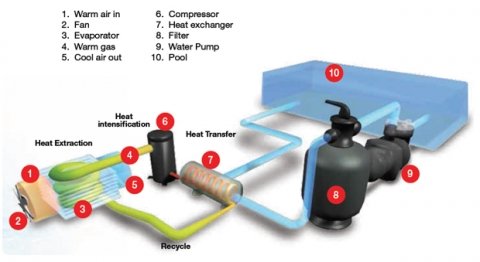
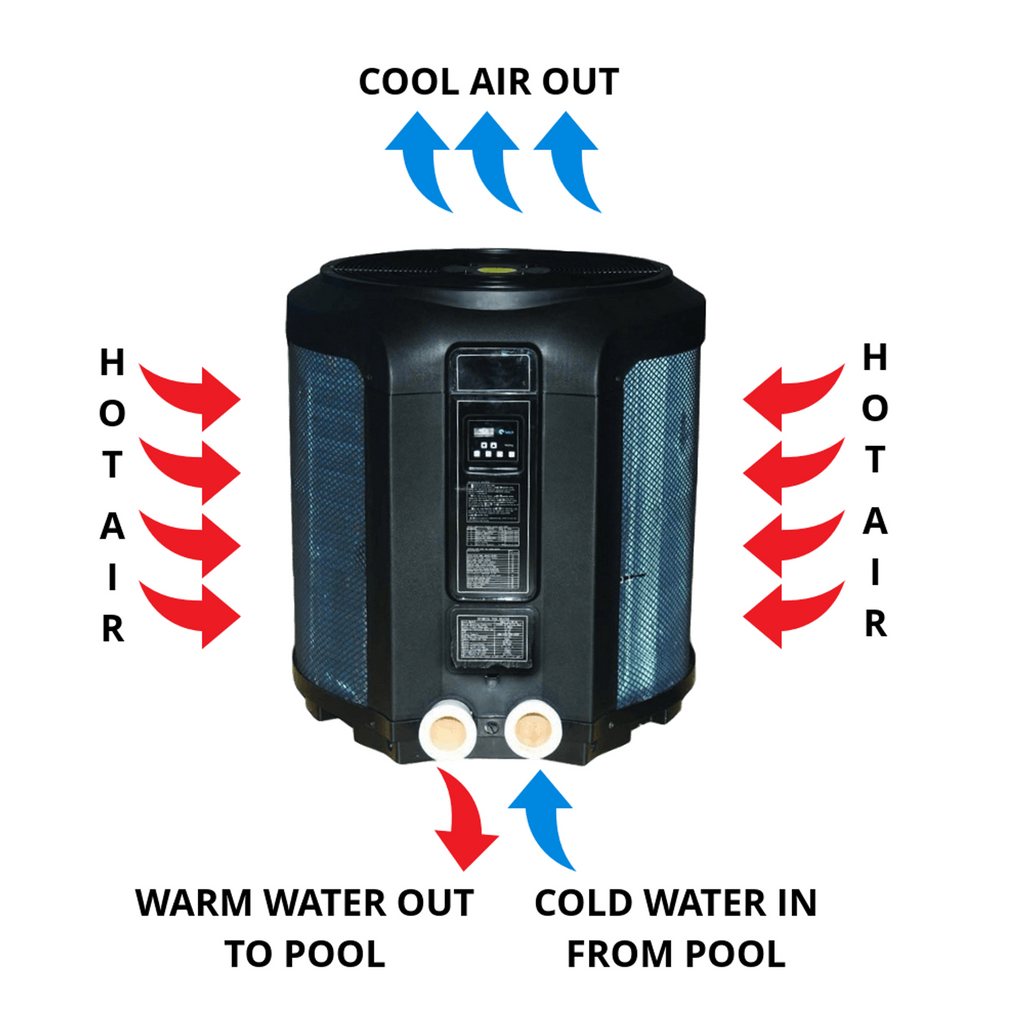
As pool water flows through the system, it first passes through a filter and then enters the heat pump heater. Inside the unit, a fan draws in ambient outdoor air and directs it over an evaporator coil. Liquid refrigerant within that coil absorbs the heat from the air and transforms into a warm gas.
This heated gas then moves into the compressor, where it is pressurized and its temperature increases significantly. From there, the superheated gas travels through a condenser, which transfers the heat to the cooler pool water circulating through the heater. Once heated, the water flows back into your pool.
After releasing its heat, the hot gas cools down, returns to liquid form, and cycles back to the evaporator to begin the process all over again. Higher efficiency models typically use scroll compressors rather than reciprocating ones, which contributes to quieter and more reliable performance.
Heat pump pool heaters operate most efficiently when outdoor temperatures stay above the 45°F–50°F range. The cooler the air they pull from, the harder they work, which can lead to increased energy use. However, since most pool owners swim during warm and mild weather, this is rarely a concern.
Choosing the Right Heat Pump Pool Heater
Although heat pump pool heaters carry a higher upfront price tag compared to gas pool heaters, their lower annual operating costs and longer lifespan more than make up for it over time. With the right maintenance, a quality heat pump will outlast most gas heaters and keep delivering consistent savings year after year.
When shopping for a heat pump pool heater, there are three critical factors to evaluate:
📐
Size
⚡
Efficiency
💰
Costs
Sizing a Heat Pump Pool Heater
It is always advisable to work with a trained pool professional who can perform a proper sizing analysis for your specific pool. Correct sizing ensures optimal performance and avoids wasted energy.
Sizing a pool heater depends on several variables. At its core, a heater is sized based on the surface area of the pool and the temperature difference between the water and the average air temperature. Additional factors like wind exposure, humidity, nighttime cooling rates, and whether you use a pool cover also come into play. Pools in areas with higher average wind speeds, lower humidity, and cooler nights will generally need a larger unit.
Heat pump pool heaters are rated by BTU output and horsepower. Standard residential sizes include 3.5 hp/75,000 BTU, 5 hp/100,000 BTU, and 6 hp/125,000 BTU.
To estimate the ideal heater size for an outdoor pool:
Determine your desired swimming pool temperature.
Find the average temperature for the coldest month of pool use.
Subtract the average air temperature for that month from your desired pool temperature to get the temperature rise you need.
Calculate pool surface area to determine the BTU/hour output requirement of the heater.
Sizing Formula
Pool Area × Temperature Rise × 12
Based on 1°F to 1-1/4°F temperature rise per hour and a 3-1/2 mph average wind speed at the pool surface. For a 1-1/2°F rise, multiply by 1.5. For a 2°F rise, multiply by 2.0.
Understanding Heat Pump Pool Heater Efficiency
The efficiency of a heat pump pool heater is measured using a metric called the coefficient of performance (COP). The higher the COP number, the more efficient the heater is. Standard testing for heat pump pool heaters is conducted at 80°F ambient dry bulb temperature, 63% relative humidity, and 80°F pool water temperature.
COP values for heat pump pool heaters typically range from 3.0 to 7.0, which translates to an efficiency of 300% to 700%. In practical terms, this means for every unit of electricity consumed to run the compressor, you receive 3 to 7 units of heat delivered to your pool.
Heat Pump Pool Heater Costs and Savings
For an outdoor pool, the tables below can help you estimate annual heating costs and potential savings when comparing a heat pump to an electric resistance or gas pool heater.
Table 1: Annual Heating Costs by Location for Outdoor Pools with a Heat Pump
| Location | Season | 78°F | 80°F | 82°F |
|---|---|---|---|---|
| Miami | 1/1–12/31 | $185 | $339 | $519 |
| w/ cover 11–9/18 | $93 | $229 | $398 | |
| Phoenix | 3/1–10/31 | $167 | $190 | $565 |
| w/ cover 5/1–10/26 | $49 | $116 | $193 | |
| Atlanta | 4/1–10/31 | $249 | $181 | $1,000 |
| w/ cover 4/1–10/31 | $123 | $191 | $279 | |
| Los Angeles | 5/1–10/31 | $194 | $549 | $223 |
| w/ cover 5/1–10/31 | $96 | $171 | $317 | |
| Kansas City | 5/1–9/30 | $198 | $279 | $368 |
| w/ cover 5/1–9/30 | $163 | $204 | $275 | |
| Chicago | 5/1–9/30 | $104 | $410 | $732 |
| w/ cover 5/1–9/30 | $63 | $209 | $290 | |
| Denver | 5/1–8/31 | $192 | $437 | $596 |
| w/ cover 5/1–8/31 | $56 | $136 | $204 | |
| Boston | 5/1–8/31 | $102 | $145 | $194 |
| w/ cover 5/1–8/31 | $64 | $225 | $300 | |
| Minneapolis | 6/1–9/18 | $197 | $187 | $192 |
| w/ cover 6/1–9/6/30 | $116 | $170 | $530 | |
| San Fran | 6/1–8/31 | $350 | $294 | $192 |
| w/ cover 6/1–8/31 | $179 | $225 | $327 |
*Figures based on a 1,000 square foot outdoor pool heated with an air-to-water heat pump with an average COP of 5.0 at $0.13/kWh.
Table 2: Annual Savings — Heat Pump vs Gas and Electric Resistance Heaters
| Efficiency | Annual Cost | Cost w/ 5.0 COP | Heat Pump Savings |
|---|---|---|---|
| Gas Pool Heater | |||
| 55% | $1,000 | $150 | $850 |
| 60% | $915 | $150 | $765 |
| 70% | $785 | $150 | $635 |
| 80% | $690 | $150 | $540 |
| Electric Resistance Heater | |||
| 100% | $1,000 | $250 | $800 |
*Based on an electric resistance heater costing $1,000 per year at an electric rate of $0.13/kWh and a gas pool heater with 50% efficiency (baseline) at $1.09/therm. An average COP of 5.0 was used for heat pump savings calculations.
Featured Product
Blue Torrent Pool Heat Pump — 110,000 BTU
Engineered to efficiently heat pools up to 25,000 gallons. Save energy and extend your swimming season with this high-performance heat pump.
Installation and Maintenance
Proper installation and routine maintenance are key to getting the most out of your heat pump pool heater. For best results, it is recommended that a qualified pool professional handle the installation — particularly the electrical hookup and plumbing connections. Improper setup can compromise efficiency and may lead to costly repairs.
Consult your owner's manual for a recommended maintenance schedule and follow the manufacturer's guidelines closely. Most heat pump pool heaters will benefit from an annual tune-up. Due to the complexity of these units — which include moving parts and electrical components — it is a good idea to have servicing performed by an air conditioning technician or certified pool specialist.
When properly installed and well maintained, a heat pump pool heater can deliver reliable performance for 10 years or more, making it one of the best long-term investments for your backyard swimming pool.