

Introduction
Looking for a reliable, eco-friendly way to heat and cool your home? Air source heat pumps are rapidly becoming one of the most popular choices for homeowners who want to cut energy bills while keeping their spaces comfortable year-round. Whether you're building a new home or upgrading your current HVAC system, understanding how these systems work can help you make a smarter investment.
Heat pump adoption has surged across North America and Europe, driven by rising energy costs and environmental awareness. These systems use electricity far more efficiently than traditional furnaces and central air conditioners, making them a go-to solution for budget-conscious and eco-minded homeowners alike.
In this comprehensive guide, we'll break down everything from basic components and operating principles to system types, benefits, maintenance, and costs — so you can decide if an air source heat pump is the right move for your property.
What Is an Air Source Heat Pump?
An air source heat pump (ASHP) is a versatile climate control system that transfers heat between the inside and outside of a building. Unlike furnaces that generate warmth by burning fuel, heat pumps move existing thermal energy from one place to another — making them significantly more energy efficient.
There are two primary categories you should know about. Air-to-air heat pumps pull warmth from outdoor air and distribute it inside through ductwork or blowers. Air-to-water heat pumps capture ambient outdoor heat and transfer it to a water-based system, such as underfloor heating or radiators.
These systems can also take heat from inside your home and move it outdoors during warmer months, effectively doubling as an air conditioning unit. It's this dual-purpose functionality that makes ASHPs so attractive to homeowners looking for a single, cost-effective solution.
Essential Heat Pump System Components
Every ASHP relies on a handful of core parts working in harmony. Here are the critical pieces that make the system run.
🌀 Outdoor Unit (Evaporator & Compressor)
The outdoor unit houses the evaporator coil and compressor. The evaporator absorbs thermal energy from outside air, even at low temperatures. The compressor then pressurizes the refrigerant, raising its temperature significantly before sending it indoors.
🏠 Indoor Unit (Condenser)
The indoor condenser receives the hot, pressurized refrigerant and releases its stored heat into your living space. Depending on your setup, this can happen through forced-air ducts, a fan coil unit, or a hydronic (water-based) distribution system.
🔄 Refrigerant Pipeline
Copper refrigerant lines connect the indoor and outdoor units, circulating the refrigerant that carries thermal energy back and forth. These pipes must be properly insulated to maintain system efficiency and prevent energy loss during transfer.
🔀 Reversing Valve
This clever component is what allows ASHPs to both heat and cool. The reversing valve changes the direction of refrigerant flow, switching the system between heating mode and cooling mode seamlessly — giving you year-round comfort from a single unit.
⚡ Expansion Valve
The expansion valve controls the pressure and flow rate of the refrigerant entering the evaporator coil. By reducing refrigerant pressure, it lowers the temperature to enable maximum heat absorption from the surrounding air — a critical step in every cycle.
How Does an Air Source Heat Pump Heat Your Home?
When set to heating mode, an ASHP extracts thermal energy from the outdoor air — even in temperatures as low as -15°C (5°F). It accomplishes this using a refrigeration cycle powered by electricity, but instead of generating heat directly, it simply moves it from outside to inside.
Here's the step-by-step process: outdoor air passes over the evaporator coil, which contains cold refrigerant. The refrigerant absorbs warmth from the air and evaporates into a gas. The compressor then squeezes this gas, dramatically increasing its temperature and pressure.
The superheated, high-pressure refrigerant gas flows into the indoor condenser, where it releases stored heat into your home through ductwork, fan coils, or radiant systems. As it releases heat, the refrigerant cools and condenses back into a liquid, then passes through the expansion valve to restart the cycle.
This continuous loop means the system doesn't burn fuel — it simply relocates thermal energy using a small amount of electricity, making it three to four times more efficient than conventional electric heaters.
How Does an Air Source Heat Pump Cool Your Home?
During warmer months, an ASHP essentially operates in reverse. Instead of pulling heat from outdoor air and pushing it inside, the system extracts heat from your indoor air and dumps it outdoors — functioning exactly like a traditional air conditioner.
The reversing valve flips the direction of refrigerant flow so the indoor unit becomes the evaporator (absorbing heat from your rooms) and the outdoor unit becomes the condenser (releasing that heat into the outside air). The expansion valve regulates refrigerant pressure throughout, maintaining efficiency.
This dual functionality is what truly sets heat pumps apart. A single system handles both heating and cooling, eliminating the need for separate furnace and AC units. The result is simplified maintenance, lower equipment costs, and seamless seasonal transitions.
Types of Air Source Heat Pumps
Different home configurations call for different heat pump styles. Here's a breakdown of the most common types available today.
Air-to-Air Heat Pumps
The most widely installed type, air-to-air systems distribute heated or cooled air directly through ductwork. They are compatible with a broad range of configurations and are the most cost-effective option for homes that already have duct systems in place. Major brands such as Carrier, Daikin, Trane, and Mitsubishi all produce high-quality models in this category.
Air-to-Water Heat Pumps
These pumps transfer heat into a water-based distribution system — think underfloor heating, radiators, or domestic hot water supply. They are an excellent choice for hydronic heating setups and new construction where water-based systems can be planned from the start. Some models can also be connected to swimming pool heaters for year-round pool use.
Ducted Heat Pumps
Ducted systems use a central air handler connected to a network of ducts running through your home. They offer whole-house comfort with an invisible installation — no wall-mounted units in sight. They're ideal for homeowners who value a clean aesthetic and uniform temperature across all rooms.
Ductless Mini-Split Heat Pumps
Mini-splits consist of one outdoor compressor paired with one or more wall-mounted indoor units. Each indoor unit can be controlled independently, allowing zone-by-zone temperature customization. They're perfect for room additions, older homes without ductwork, garages, and outbuildings.
Monobloc Heat Pumps
With a monobloc design, all heat pump components — compressor, evaporator, and condenser — are housed in a single outdoor unit. Only insulated water pipes run into the building. Installation is simpler and there's no need for a qualified refrigerant technician to work inside your home. This type is especially popular in Europe.
Split Heat Pumps
A traditional split system divides components between an outdoor and indoor unit, connected by refrigerant lines. The system separates the evaporator and condenser stages, allowing each unit to be optimally sized. Split configurations offer flexibility and are compatible with both ducted and ductless air delivery methods.
Benefits of Choosing an Air Source Heat Pump
📦
All-in-One Package
One system handles both heating and cooling. No separate furnace and AC needed — reducing upfront equipment costs and simplifying your HVAC setup.
⚡
Exceptional Energy Efficiency
ASHPs don't generate heat — they move it. This means they can deliver 3 to 4 times more thermal energy than the electricity they consume, achieving efficiencies of 300–400%.
🌱
Eco-Friendly Operation
No combustion means zero on-site emissions. Pair your heat pump with solar panels or green electricity, and your heating carbon footprint drops to virtually zero.
🏡
Future-Proof Investment
With growing government incentives, tax credits, and rebates for energy-efficient upgrades, investing in a heat pump positions your property for long-term savings and increased resale value.
🔧
Low Maintenance
Compared to gas boilers and oil furnaces, ASHPs require minimal upkeep. Annual inspections, filter changes, and keeping the outdoor unit clear of debris are typically all that's needed.
🔇
Quiet Performance
Modern ASHPs operate at whisper-quiet levels, often under 55 decibels. You'll barely notice they're running — a welcome improvement over rumbling furnaces and window AC units.
Featured Product
Ready to experience the efficiency of a heat pump?
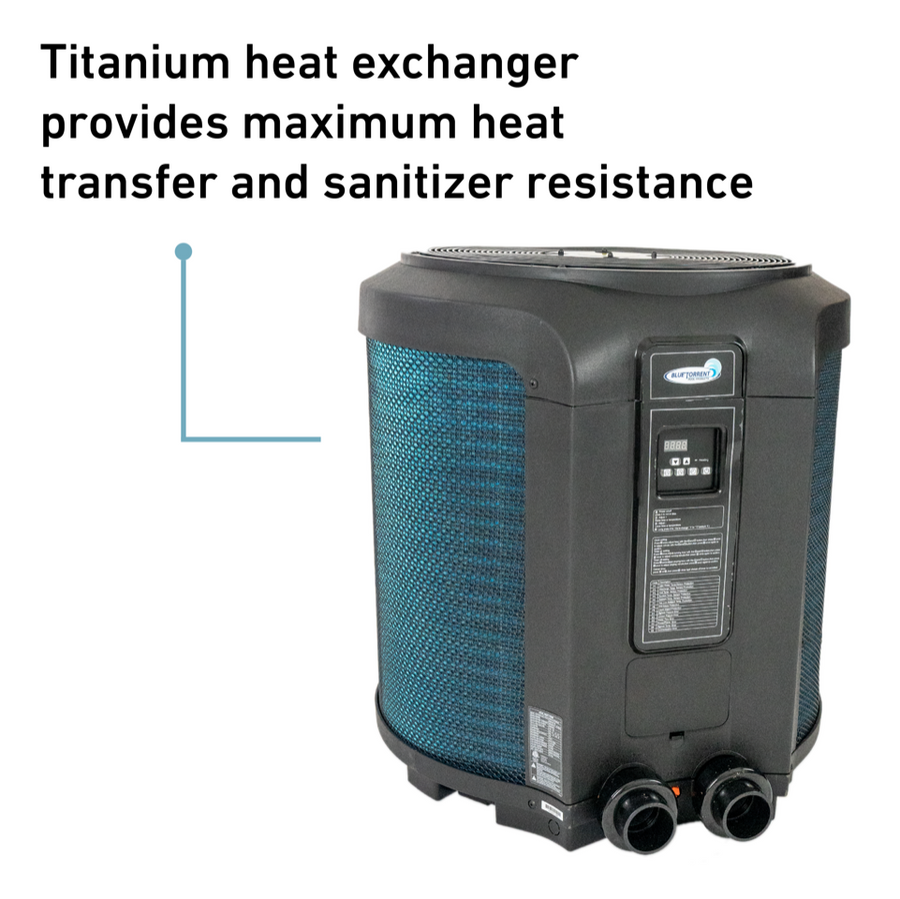
Blue Torrent Pool Heat Pump 110K BTUHow Long Do Air Source Heat Pumps Last?
A well-maintained air source heat pump typically lasts between 15 and 25 years. Some high-quality units from top manufacturers have been reported to exceed the 25-year mark with proper care. This lifespan is comparable to traditional HVAC systems, but with significantly lower fuel costs over the unit's lifetime.
To maximize longevity, schedule annual professional inspections, keep the outdoor unit clear of leaves and debris, replace or clean filters regularly, and ensure the system is properly sized for your home. Oversized or undersized heat pumps will cycle inefficiently, shortening their operational life.
Are Air Source Heat Pumps Environmentally Friendly?
Absolutely. ASHPs are considered one of the greenest residential heating and cooling technologies available today. Because they transfer heat rather than creating it through combustion, they produce no direct carbon emissions during operation.
Their electricity consumption is minimal compared to the thermal energy they deliver. When powered by renewable sources like solar or wind, the total environmental impact drops to near zero. Modern refrigerants used in today's ASHPs also have substantially lower global warming potential than older coolants.

Governments around the world are actively incentivizing heat pump adoption to meet emissions reduction targets. This means homeowners can often take advantage of substantial rebates and tax credits when making the switch.
Installation Requirements & Conditions
Before installing an ASHP, several conditions should be evaluated. Your home should have adequate insulation — poor insulation will undermine the system's efficiency regardless of its quality. The outdoor unit needs sufficient clearance for proper airflow, typically at least two to three feet of unobstructed space on all sides.
You'll also want to assess your electrical panel capacity. Heat pumps require a dedicated circuit, and older homes may need an electrical upgrade to support the added load. A qualified HVAC contractor should perform a Manual J load calculation to determine the correct system size for your square footage, climate zone, and insulation levels.
If you're replacing an existing forced-air system, your current ductwork may be compatible — but it should be inspected for leaks and proper sizing. For homes without ducts, ductless mini-split systems offer a practical alternative with minimal renovation required.
Frequently Asked Questions
Can air source heat pumps work in cold climates?
Yes, modern cold-climate ASHPs are engineered to operate effectively in temperatures as low as -25°C (-13°F). Efficiency does decrease as temperatures drop, but recent advances in inverter-driven compressors and vapor injection technology have dramatically improved cold-weather performance. In extremely harsh climates, a backup heat source may be recommended for the coldest days of the year.
What is the average cost of an air source heat pump?
The total cost — including equipment and professional installation — typically ranges from $4,000 to $8,000 for a standard residential system. High-end or multi-zone ductless mini-split systems can run higher, sometimes reaching $12,000 to $15,000. However, federal tax credits and local utility rebates can significantly offset the upfront investment.
Do air source heat pumps replace traditional heating entirely?
In many cases, yes. For homes in mild to moderate climates, an ASHP can be the sole heating and cooling source. In colder regions, a dual-fuel or hybrid setup — where the heat pump handles the bulk of heating and a gas furnace kicks in during extreme cold — offers the best of both worlds in terms of comfort and economy.
How do ASHPs compare to traditional boilers or furnaces?
ASHPs are significantly more energy-efficient because they move heat rather than create it. A modern gas furnace might reach 95–98% efficiency, meaning nearly all the fuel converts to heat — but an ASHP can deliver 300–400% efficiency by extracting multiple units of heat energy per unit of electricity consumed. Over time, this translates into substantial savings on utility bills.
Understanding Installation & Running Costs
The initial cost of an air source heat pump installation depends on the system type, brand, and the complexity of your home's setup. On average, expect to pay between $4,000 and $8,000 for a basic system, while premium multi-zone systems with advanced features can exceed $15,000.
Running costs are where ASHPs shine. Because they consume far less electricity than the thermal energy they produce, annual operating costs are typically 30–50% lower than gas or oil heating systems. A well-insulated 2,000-square-foot home might spend as little as $500–$800 annually on heat pump operation, depending on the local electricity rate and climate.
Don't forget to explore available incentives. The federal Inflation Reduction Act offers substantial tax credits for qualifying heat pump installations, and many states and utilities offer additional rebates that can reduce your out-of-pocket cost by thousands of dollars.
Conclusion
Air source heat pumps represent a smart, forward-thinking approach to home comfort. By efficiently transferring thermal energy rather than generating it from fossil fuels, ASHPs offer homeowners a cleaner, quieter, and more cost-effective alternative to traditional heating and cooling systems.
Whether you're looking to reduce energy bills, shrink your carbon footprint, or simplify your HVAC setup into one unified system, an air source heat pump is worth serious consideration. With a wide variety of types available — from ducted to ductless, monobloc to split — there's a configuration to match virtually any home, budget, and climate.
We hope this guide has given you a thorough understanding of how these systems work, what to expect in terms of cost and lifespan, and how they stack up against traditional options. The future of home heating is here — and it runs on efficiency.
© 2025 Backyard Provider — Your Trusted Source for Outdoor Living & Home Comfort Solutions