

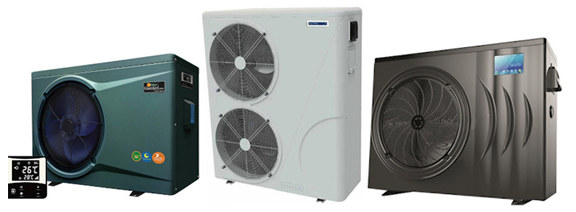
This guide walks you through how an air source heat pump operates and how to select the right unit size for your pool. Several important factors play a role in your decision, and understanding them will help you choose wisely.
Air source heat pumps deliver remarkable efficiency — far surpassing electric heaters and gas or propane boilers. That said, they do come with certain limitations that are worth keeping in mind.
If you plan to rely on a heat pump as your pool's primary heating solution, it is important to understand the technical fundamentals. Let's get into it.
How Does a Heat Pump Work?
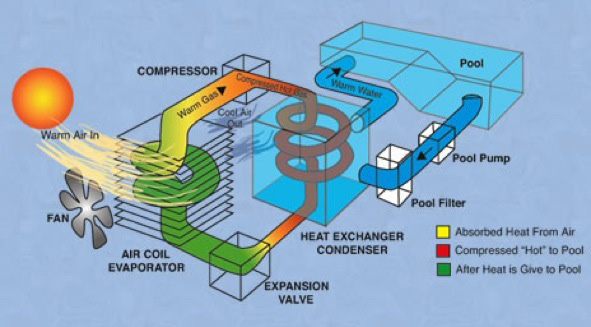
In simple terms, an air source heat pump captures warmth from the surrounding air. It achieves this by pulling air across a device that functions much like a car radiator, through which refrigerant gas circulates. As the gas is placed under pressure, it transforms into a liquid — a substance that is exceptionally effective at absorbing ambient heat.
This superheated liquid then passes through a heat exchanger, which transfers the captured thermal energy directly into your pool water. The effectiveness of this transfer is measured by what's known as a COP rating — more on that later.
The bottom line: this is not overly complex technology. When properly sized and correctly used, an air source heat pump will deliver significant savings on your energy bills.
What Size Unit Do You Need?
Choosing the correct heat pump means evaluating several variables that are specific to your pool and your usage habits. You need to understand the demands your pool places on a heating system so that you can match it with the right unit.
Manufacturer sizing suggestions typically assume ideal conditions — around 28°C ambient air temperature at 70% relative humidity. In most real-world climates, especially in cooler regions, you will rarely encounter these perfect conditions consistently.
This also assumes a target pool temperature of approximately 26°C, though many pool owners keep their water closer to 28°C or even warmer.
For these reasons, we always recommend going at least one size up from the minimum recommendation. This gives the unit breathing room to handle fluctuating temperatures and humidity levels without straining. Over time, a slightly oversized unit will actually consume less energy than an undersized one running at full capacity.
💡 Common Misconception
The KW rating of a heat pump does not represent actual energy consumption. Instead, it reflects the potential heating output the unit is capable of delivering. The actual power draw is typically much lower and can be found in each unit's specifications.
Pool Volume
You will need to know the length, width, and depth of your pool. If the depth varies — as most pools have a shallow and deep end — use an average of the two. Multiply all three dimensions together to get your total volume. For example, a pool that measures 10m x 5m x 1.2m equals 60 cubic meters, which translates to approximately 60,000 liters or roughly 15,850 gallons.
Surface Area
Your pool's surface area is essentially the length multiplied by the width — without factoring in depth. Using the same example above, that would be 10m x 5m = 50m². This measurement is critical for outdoor pools especially, because when the cover is removed, the exposed surface is where the majority of heat loss takes place — not through the pool walls or floor.
Temperature
The desired operating temperature of your pool is a personal preference. Most pool owners target somewhere between 26°C and 28°C (approximately 79°F to 82°F). Keep in mind that an air source heat pump will efficiently heat water to around 30°C (86°F), so staying within this range is both comfortable and energy-efficient.
Swimming Season
When you plan to use your pool matters significantly. The standard domestic swimming season runs from around May through September. An extended season — from April to October — is possible, and some pool owners aim for year-round use. However, year-round heating demands a heat pump rated for low ambient temperatures, typically down to at least -15°C or even -20°C, depending on where you live.
Daily Use & Pool Covers
Consider how many hours per day the pool will be uncovered and in active use. Pools should always have at least a floating solar cover to retain heat. An uncovered pool loses far more energy than a covered one, meaning your heat pump has to work significantly harder — which increases both runtime and electricity costs.
Putting It All Together: Sizing Your Unit
Once you have gathered the information above — pool volume, surface area, target temperature, season length, and daily usage patterns — you can begin estimating the right unit capacity. If you are switching from an electric heater, do not assume the KW rating translates directly; heat pumps and plant room heaters operate on entirely different principles.
Remember, the KW rating reflects maximum output under ideal environmental conditions — typically around 28°C air temperature at 60% humidity. An electric heater delivers constant heat to the water regardless of surroundings; a heat pump's performance fluctuates with outside conditions.
📊 Sizing Example
Suppose your pool needs 100KW of energy to maintain your desired temperature at X ambient air conditions. An 18KW heat pump with a power input of 2.51KW would run for about 3.6 hours to heat a 100-gallon equivalent (scaled to your pool). A 13KW unit drawing 1.86KW would need approximately 7.7 hours for the same job.
While total energy consumption ends up roughly similar, the larger pump heats the pool about 30% faster. This means you can time heating during the warmest part of the day when the unit runs most efficiently, rather than running a smaller pump over cooler evening hours when performance dips. This is why we generally recommend sizing up — it heats faster, not necessarily more.
Why Choose Backyard Provider?
We have built our reputation on being a trusted destination for pool and outdoor living equipment, offering solutions for every budget without sacrificing quality. Our product partners are carefully vetted to ensure you receive reliable, high-performing units backed by solid service and warranty coverage.
Air source heat pumps are a significant investment, and the market has seen an influx of cheaper, lower-quality options in recent years. Many of these products promise big results but fail to deliver on longevity and performance. We stock only units from established, reputable manufacturers — so you can buy with confidence that your investment is protected.
Key Features to Look For
Inverter Motor Technology
An inverter-driven system allows the unit to operate anywhere between 20% and 100% of its maximum output, adjusting dynamically to maintain your target pool temperature. This results in lower energy consumption, quieter operation, and the elimination of the power spike that non-inverter units produce at startup. Always prioritize fully inverted motors when shopping.
R32 Refrigerant
New regulations are phasing out older refrigerant types in favor of R32, which is more environmentally friendly and energy efficient. When selecting a heat pump, ensure it uses R32 — this is quickly becoming the industry standard, and most larger commercial-grade units already comply.
Defrost Functions
If you plan to operate your heat pump year-round or during an extended season, look for a unit with hot gas recirculation defrost. Unlike basic heated tray models, gas recirculation actively prevents the unit from freezing by passing hot refrigerant back through the system when the water is not being heated. This keeps the unit frost-free without wasting energy — a must-have for colder climates.
Heat Exchanger Material
Opt for a titanium heat exchanger over stainless steel or nickel-plated alternatives. Titanium offers superior resistance to poor water chemistry — including low pH and salt chlorination systems — and lasts significantly longer. The latest twisted-tube designs provide even greater surface area for heat transfer, boosting overall efficiency.
Understanding COP (Coefficient of Performance)
The COP rating is one of the most important metrics when evaluating a heat pump. Put simply, it tells you how effectively the unit harvests heat from the surrounding air relative to the electricity it consumes. The calculation divides the number of kilowatts of heat produced by the number of kilowatts of electricity used.

At moderate ambient temperatures of 10–15°C, a quality heat pump can achieve COP ratios in the range of 5 to 7. This means that for every 1KW of electricity consumed, the unit returns between 5 and 7KW of heat energy. That makes air source heat pumps far more efficient than even a condensing boiler.
Many budget units on the market lack this level of performance. If you are unsure about your specific needs, consulting with a specialist is always a smart move before committing to a purchase.