

When it comes to exterior cleaning, most homeowners and professionals instinctively reach for a high-pressure washer. While pressure washing certainly has its place, there is a superior technique that delivers remarkable results without the risk of surface damage. That technique is called soft washing — and it is quickly becoming the preferred cleaning method for residential and commercial properties alike.
Soft washing combines low-pressure water delivery with specialized cleaning solutions to eliminate mold, mildew, algae, bacteria, and other organic contaminants at their root. Unlike traditional pressure washing, which merely blasts grime off the surface, soft washing treats the underlying cause — meaning your results last significantly longer and your surfaces stay protected throughout the process.

What Exactly Is Soft Washing?
Soft washing is an exterior cleaning method that relies on low-pressure water output — typically around 300 PSI or less — combined with biodegradable chemical solutions to safely and thoroughly clean delicate surfaces. The process was originally developed to address the shortcomings of traditional pressure washing, which can crack vinyl siding, strip paint, damage shingles, and etch concrete when used improperly.
The cleaning agents used in soft washing do the heavy lifting. These solutions penetrate deep into surfaces, killing organic growth such as algae, moss, lichen, and mildew at the cellular level. Because the chemicals handle the actual cleaning, there is no need for aggressive water pressure. The gentle rinse simply washes everything away, leaving surfaces spotless and sanitized.
This approach is particularly effective on roofing materials, stucco, wood fences, painted surfaces, outdoor furniture, and any other area where high pressure could cause costly damage. Professionals across the country have adopted soft washing as their go-to method because it delivers superior results with far less risk.
Key Benefits of Soft Washing
Surface Safe
Low-pressure application prevents cracking, chipping, and stripping of delicate materials including vinyl, wood, and painted surfaces.
Long-Lasting Results
By eliminating organic growth at its source, soft washing keeps surfaces cleaner four to six times longer than standard pressure washing.
Eco-Friendly
Biodegradable cleaning solutions break down safely in the environment, making soft washing a responsible choice for any property.
Versatile Use
From rooftops and siding to driveways and patios, soft washing handles virtually any exterior surface with confidence.
How Does the Soft Washing Process Work?
The soft washing process is straightforward yet highly effective. It begins with a thorough assessment of the surfaces to be cleaned. A trained operator identifies the types of contaminants present — whether algae, mold, mildew, or general grime — and selects the appropriate cleaning solution for the job.

Next, the cleaning solution is applied evenly across the surface using a low-pressure delivery system. The solution is allowed to dwell for a short period, typically between five and fifteen minutes, depending on the severity of the buildup. During this dwell time, the active ingredients break down organic matter and dissolve stubborn stains at the molecular level.
Finally, the surface is rinsed with a gentle stream of water, washing away all the dissolved contaminants and leaving behind a thoroughly clean and sanitized finish. The entire process is efficient, taking less time than traditional pressure washing while producing dramatically better outcomes.
Soft Washing vs. Pressure Washing: Understanding the Difference
Many people use the terms interchangeably, but soft washing and pressure washing are fundamentally different techniques. Understanding when to use each method is critical for protecting your property and achieving the best possible clean.
Soft Washing
Operates at approximately 150–300 PSI, relying on specially formulated cleaning solutions rather than water force. Ideal for roofs, siding, stucco, wood, and any surface that could be damaged by excessive pressure.
Results typically last four to six times longer because the root cause of organic growth is eliminated rather than just blasted off the surface.
Pressure Washing
Operates at 1,500–4,000 PSI or higher, using raw water force to strip away dirt, grime, and surface contaminants. Best suited for hard, durable surfaces like concrete driveways, brick walkways, and stone patios.
While effective for heavy-duty cleaning, pressure washing does not treat organic growth at the source and can damage softer materials if not handled carefully.
The smartest approach is to have access to both capabilities. Many professionals use a soft wash system as their primary tool and reserve traditional pressure washing for the toughest surfaces. Owning the right equipment means you can handle any cleaning challenge with confidence.
Choosing the Right Soft Wash Equipment
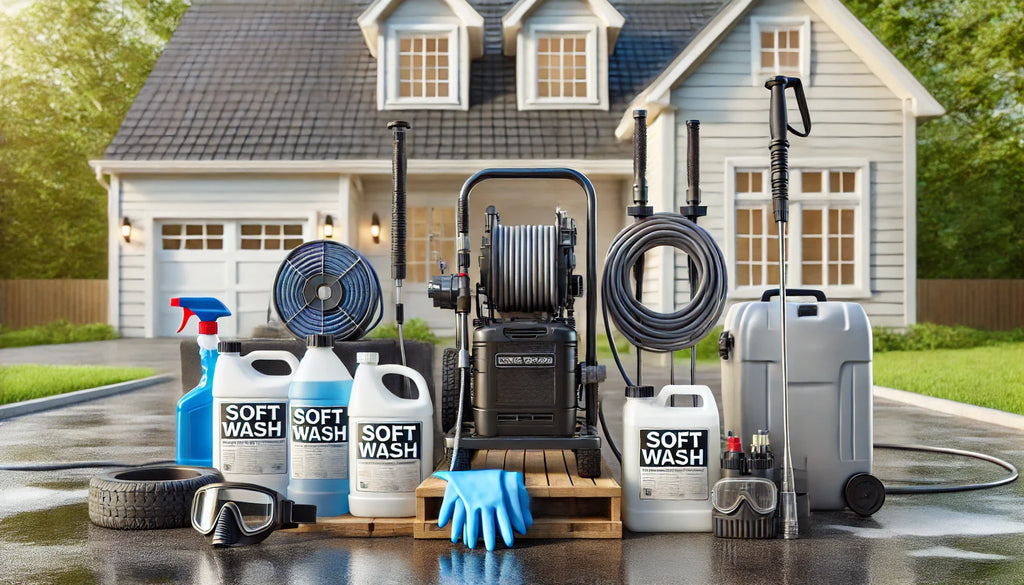
Having the right equipment is essential for achieving professional soft washing results. The core of any soft wash setup is a reliable pump system paired with a dependable engine that can deliver consistent low-pressure output over extended working sessions. You also need chemical-resistant hoses, a quality spray gun, and appropriate nozzles designed for wide-fan, low-pressure application.
One of the most important considerations when selecting a soft wash unit is the gallons-per-minute flow rate. A higher GPM means you can cover larger areas more quickly and rinse more efficiently. For professional applications, a flow rate in the range of 8 to 11 GPM is considered ideal — providing the volume needed to handle commercial jobs while still being manageable for residential work.
The engine powering your unit matters just as much. Look for trusted brands that offer proven reliability and easy maintenance. A well-built soft wash system is an investment that pays for itself many times over through faster job completion, reduced surface damage, and happier customers.
Featured Equipment
BE Power 11.0 GPM Soft Wash Unit with Honda GX200 Engine
For those who demand professional-grade performance, the BE Power 11.0 GPM – 300 PSI Gas Soft Wash Unit stands out as an exceptional choice. Powered by the legendary Honda GX200 engine and equipped with a Comet diaphragm pump, this machine is engineered to handle the toughest soft washing jobs with ease and reliability.
With an impressive 11.0 gallons-per-minute flow rate and a gentle 300 PSI operating pressure, this unit delivers the perfect balance of volume and control. The Honda engine ensures dependable starts and long-lasting performance, while the Comet diaphragm pump is specifically designed to handle the chemical solutions used in soft washing without corrosion or premature wear.
Whether you are a seasoned professional looking to upgrade your equipment or a property owner ready to invest in commercial-quality cleaning capability, this unit is built to exceed expectations.
Common Applications for Soft Washing
Soft washing is remarkably versatile and can be applied to virtually any exterior surface on residential, commercial, or industrial properties. Homeowners frequently use soft washing to clean roof shingles, vinyl and aluminum siding, wood fences and decks, brick and stone facades, gutters, outdoor furniture, screen enclosures, and pool cages.
On the commercial side, soft washing is the preferred method for cleaning office building exteriors, retail storefronts, restaurant patios, parking structures, and multi-unit residential complexes. Property managers rely on soft washing to maintain curb appeal and protect their investment without the risks associated with high-pressure cleaning.
Agricultural applications are growing as well. Farm buildings, barns, greenhouses, and storage facilities all benefit from regular soft washing to control mold and bacteria that can compromise structural integrity and hygiene standards.

Getting Started with Soft Washing
If you are new to soft washing, the best way to start is by investing in quality equipment and taking the time to learn proper technique. Begin with smaller residential jobs to build your confidence and understanding of how different surfaces respond to various cleaning solutions and dwell times.
Safety is paramount when working with chemical cleaning agents. Always wear appropriate personal protective equipment including chemical-resistant gloves, safety goggles, and protective clothing. Make sure to protect surrounding landscaping and vegetation by pre-wetting plants and covering sensitive areas before applying cleaning solutions.
Start with manufacturer-recommended dilution ratios and adjust as needed based on the severity of the contamination. Over-application wastes product and can leave residue, while under-application reduces effectiveness. With practice, you will quickly develop an instinct for the right balance on every job.
Ready to Upgrade Your Cleaning Game?
Soft washing is not just a trend — it is the future of exterior property maintenance. Equip yourself with the right tools and start delivering results that speak for themselves.