

If you already own a pressure washer, or you are thinking about adding one to your home or professional setup, a few smart habits go a long way. Knowing how to start it up, how to care for it, and how to handle routine maintenance is what keeps your machine running at peak performance for years.
Below you'll find straightforward advice to help you get the most out of every clean.
How a Pressure Washer Actually Works
Ever wondered how a pressure cleaner lifts even stubborn grime off a surface? Here's a simple walk-through of the working principle, paired with a clear technical diagram to tie it all together.
The machine hooks up to a water source (1), pulling in cold water that passes through a filter (3) before entering the pump (10). That pump is driven by either an electric motor or an endothermic engine (11), i.e. a combustion engine. When the supply line is drinking water, it must first run through a "Backflow" device (2) that prevents any backflow before it reaches the pump.
Key Components
- 1Water source
- 2Backflow device
- 3Filter
- 4Internal tank
- 5Flow from tank
- 6Direct flow
- 7Detergent tank
- 8Low-pressure detergent
- 9High-pressure detergent
- 10Pump
- 11Motor
- 12By-pass valve
- 13High-pressure hose
- 14Lance
- 15Head with nozzle
The pump pushes out a high-pressure jet, which is regulated and capped by a by-pass valve (12) before running through a hose (13) and finishing its path at a rigid lance (14) tipped with a nozzle (15). Detergent stored in a tank (7) can be mixed into the flow either upstream (8) or downstream (9) of the pump.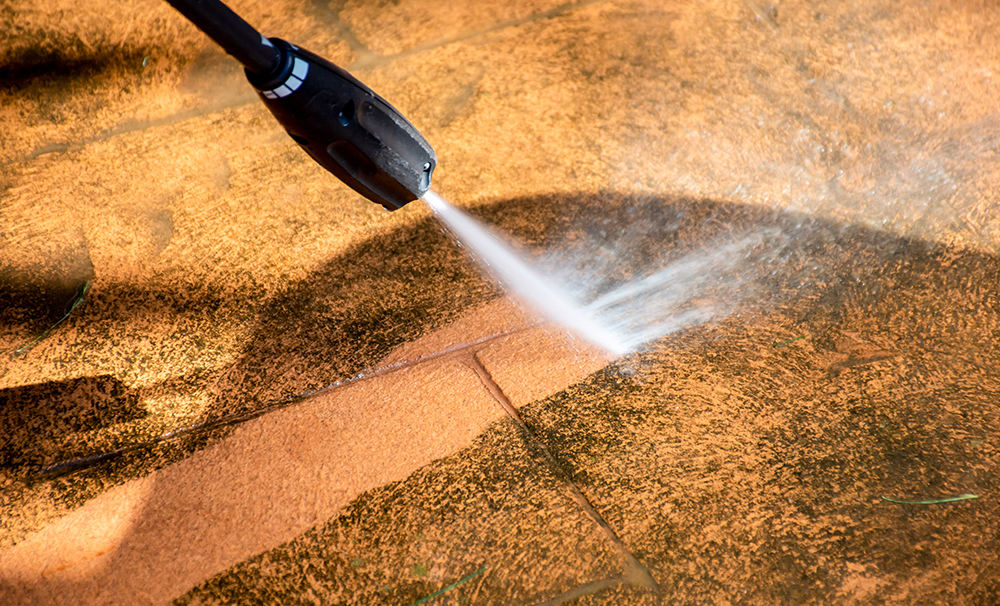
When detergent is fed in upstream of the pump (typical on units with an internal water tank), this is called high-pressure detergent delivery. In this setup the detergent is simply drawn in by connecting hose (9) to the pump suction. The upside is no pressure drop; the trade-off is a weaker foam effect.
When detergent is added downstream of the pump (8), this is known as low-pressure detergent delivery. The pump is fed directly (6) from the water source (1), and the detergent is pulled in through a Venturi system, producing an excellent foam effect. The catch is that the detergent is drawn through a narrow nozzle, which creates a small drop in pump pressure.
Upgrade Your Cleaning Power
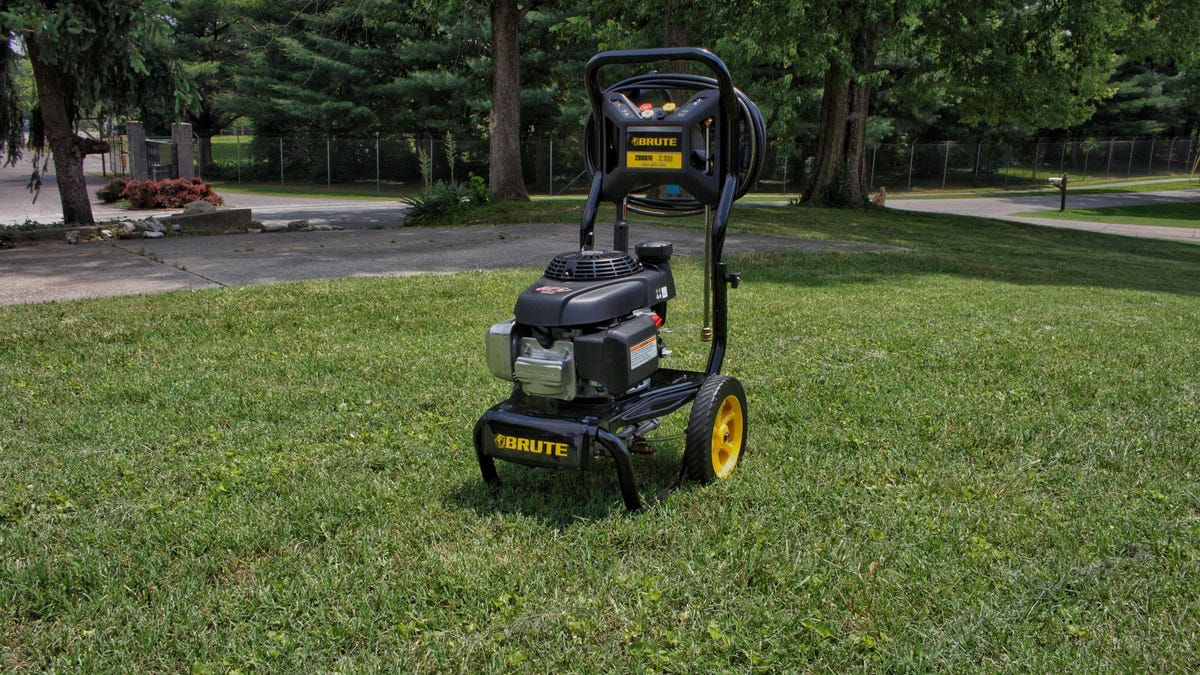
Reliable pressure, American-built performance, and the muscle to handle your toughest jobs.
Using Your Pressure Washer Safely
A pressure washer is an incredibly versatile tool in both home and professional settings — driveways, patios, drains, gutters, machinery, and vehicles all fall within its range. That said, a handful of general precautions will keep your cleaning sessions productive and risk-free.
Read More: Cleaning the Garden — Easier and Quicker with a Pressure WasherHere's a practical checklist to guide correct and responsible use:
Safety First
Follow all local safety codes and directives. While a pressure washer can clean almost anything, it should never be aimed at people, pets, live appliances, or delicate objects.
Read the Manual
Before the first start-up, take time to go through the owner's manual thoroughly — understanding the machine is the fastest path to using it well.
Use Common Sense
Never operate the unit while under the influence of medication, drugs, or alcohol. It is not intended for use by children or anyone with reduced physical, sensory, or mental capacity.
Electrical Safety
Always cut the power before touching any electrical component. Don't run the machine if the cable or any critical part looks damaged, or if you spot visible water leaks.
Respect the Environment
Stick to biodegradable detergents and use only the amount recommended. Overusing cleaning agents adds no benefit and places needless strain on the surrounding environment.
Mind the Temperature
Never run a hot-water unit above the temperature range listed in the manual. Excessive heat can destroy seals and cause lasting damage to the pump.
Combustion Engine Warnings
Never operate a gas-powered pressure washer indoors, and keep it well away from vents, people, and pets. Always use the fuel type specified for your unit.
Hot Water Models
Avoid touching the boiler or other heated parts to prevent burns. Don't pair the machine with accessories that aren't rated for high heat, and after each use let it run for a couple of minutes with cold water.