

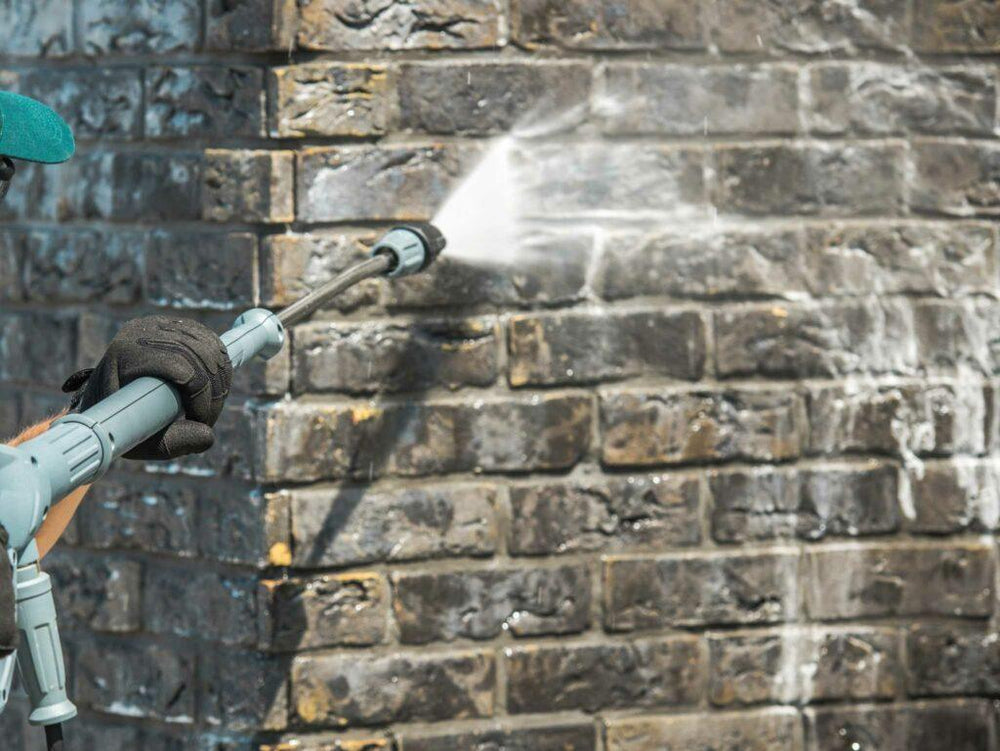
Soft washing is an exterior cleaning technique that relies on low-pressure water application instead of aggressive mechanical force. A successful treatment blends specialist surfactants, sanitisers, and water to lift away organic buildup and stains in a controlled manner. It offers a gentler, and in many cases more effective, route to cleaning the outside of a property compared to traditional high-pressure methods.
What is a Softwashing System?
A softwashing system is a purpose-built pump setup designed to deliver a sanitising soap solution onto building exteriors, rooftops, fencing, and façades. The soft washing method combines low pressure with a biodegradable disinfecting cleaning solution that breaks down and neutralises mildew, mould, moss, bacteria, algae, and fungus at the source.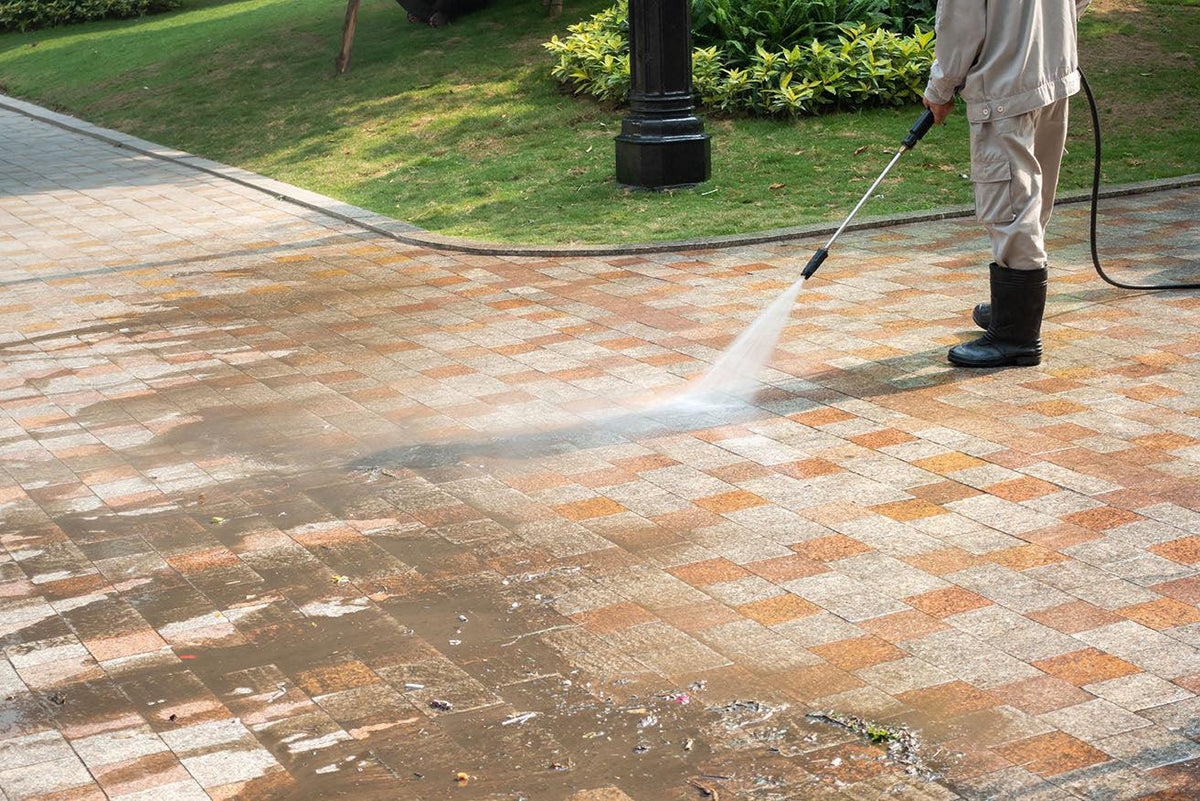
These rigs can range from entry-level batch-style units, ideal for operators getting started, all the way through to advanced configurations featuring blending manifolds for precise chemical dosing and controlled rinse cycles. A 150L batch system is a solid example of a simpler setup, while our low-volume and high/low systems represent the more refined, application-ready end of the spectrum.
Softwashing doesn't just remove grime — it treats the surface so growth takes longer to return, extending the life of every clean.
The Benefits of Softwashing
Softwashing is a fast and efficient way to restore exterior surfaces. The combination of high-volume output and low pressure delivers a gentler, more considered clean that respects the substrate underneath. Because cleaning agents can be broadcast across wide areas rapidly, even surfaces several storeys up — which would otherwise demand scaffolding or a lift — can be treated safely from the ground.
Softwashing vs. Power / Pressure Washing
At first glance, soft washing and pressure washing can look like the same job. Anyone working in the trade, though, will tell you they differ in technique, equipment, pressure, and the chemistry involved.
As noted, soft washing is a low-pressure, high-volume process. A bespoke solution is mixed to suit the surface, applied, and then rinsed away. Pressure washing, by contrast, is a low-volume, high-pressure process where stains and contamination are physically blasted off the surface by water force alone.
Effectiveness & Costs
With soft washing, stains aren't just removed — the surface is sanitised at the same time. That means cleaning cycles can be spaced out further, saving both time and money over the long term. It's one of the key reasons professionals and homeowners alike are increasingly leaning toward the soft wash method.
While soft washing tends to be the gentler and more appropriate route for structural cleaning, pressure washing still has a clear place in the industry. It remains the go-to for hard-surface work, fleet cleaning, gum and graffiti removal, oil-stain extraction, and pre-paint preparation.
Each approach has its own trade-offs in application, performance, and cost — so it's ultimately the cleaning professional's call to know when to reach for which.
Ideal Applications of Softwash Cleaning
Softwashing shines across a wide range of exterior cleaning jobs, including:
House Washing
Building Wash Downs
Roof Cleaning
Canvas, Sails & Awnings
Water Towers & Silos
Playground Equipment
The Science Behind Softwash Cleaning
Understanding the chemistry is central to getting soft washing right. We take real pride in that science, because it's what separates a surface-level rinse from a proper, lasting clean.
Formulating the correct cleaning solution starts with identifying the staining on the substrate. In most cases, the culprit is organic — mould, algae, mildew, and lichen are the usual suspects.
Choosing sodium hypochlorite as the lead sanitiser allows the chemistry to immediately target and corrode these simple organic structures. When paired with a surfactant and supporting cleaning agents, such as an EBC multi-purpose cleaner, the solution works on the staining in several reinforcing ways:
- The sodium hypochlorite breaks down the molecular structure of the organic element — mould, mildew, and similar growths — eliminating them at the root.
- The surfactant acts as a wetting agent, pulling the sanitising solution deep into the surface and breaking the bond between the stain and the substrate it's clinging to.
- The supporting environmental cleaner (EBC) lifts non-organic contributors to the staining and works alongside the sanitiser like a true cleaning agent.
- The final element — water — carries out a generous volume rinse, amplifying the earlier chemistry by sliding the loosened stain off the surface and further diluting the applied solution back toward a neutral pH.
Ready to Soft Wash Like a Pro?
The BE Power 11.0 GPM — 300 PSI Gas Soft Wash Unit is built for serious exterior cleaning, with a Honda GX200 engine and a Comet diaphragm pump engineered for reliable, low-pressure application.
Shop BE Power SW1165HA