

There's an art to getting your fishing kayak set up just right. Where every piece of gear sits, how quickly you can reach your paddle, and the way your rods are positioned behind you—all of it matters when you're spending hours chasing fish from a small vessel. Whether you're brand new to kayak angling or a veteran tournament competitor, the layout of your gear can make or break a day on the water.
We sat down with an experienced kayak fishing competitor to pick apart the reasoning behind every rigging choice—gear placement, weight distribution, essential equipment, and the hard-learned lessons that only come from countless hours of paddling and casting.
Why Does Kayak Rigging Deserve So Much Attention?
Thoughtful kayak rigging is one of the most underrated aspects of the sport—whether you're a weekend paddler or a seasoned competitor. It's easy to overlook until you're out on the water and realize your rod holder is just out of arm's reach, or your fish finder is blocking your cast.
"When I first started out, I rushed straight to a retail store, grabbed the first kayak I could find, slapped a rod holder on the front of the cockpit, and headed for a tournament. It took about five minutes on the water to realize that holder was completely out of reach when it mattered most. That single frustrating experience changed how I approach rigging forever."
Watching other anglers at events can be both inspiring and misleading. You'll see beautifully symmetrical setups loaded with gadgets—fish finders, paddle cradles, multiple rod holders, power systems. Some of it is genuinely functional. Some of it is just for show. The key insight is that a kayak rigged for appearance doesn't always translate to a kayak rigged for performance.
True functional rigging means every single item on your boat has a specific purpose and a strategic position. It means you can access everything within your natural reach radius without shifting your balance, twisting awkwardly, or fumbling during a critical moment when you've got a fish on the line.
A Guided Tour of a Competition-Ready Kayak Setup
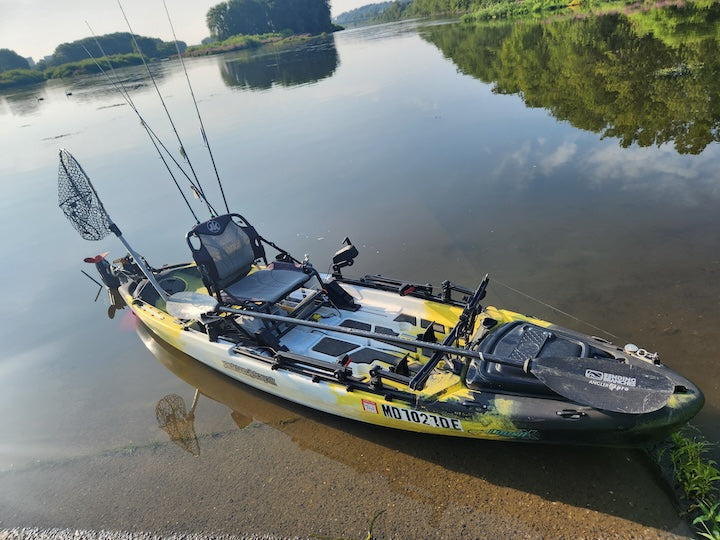
Let's walk through a complete kayak rigging layout designed around one simple philosophy: dominant-hand accessibility and intentional placement.
▶ The Left Side (Non-Dominant Hand)
The paddle sits on the left of the cockpit, secured in a dedicated mount. Since the right hand is reserved for landing fish and casting, the paddle stays on the non-dominant side—easy to grab when transitioning between paddling and fishing, and safely out of the way during hooksets.
The anchor system is also positioned on the left. When a fish strikes, you want to be able to drop anchor with your free hand while keeping your dominant hand firmly on the rod. This dual-hand workflow—fishing right, anchoring left—is what separates efficient rigging from chaotic scrambling.
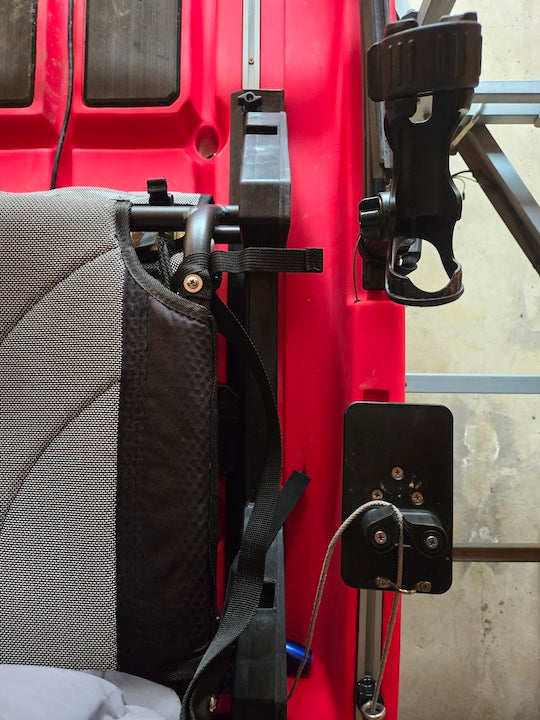
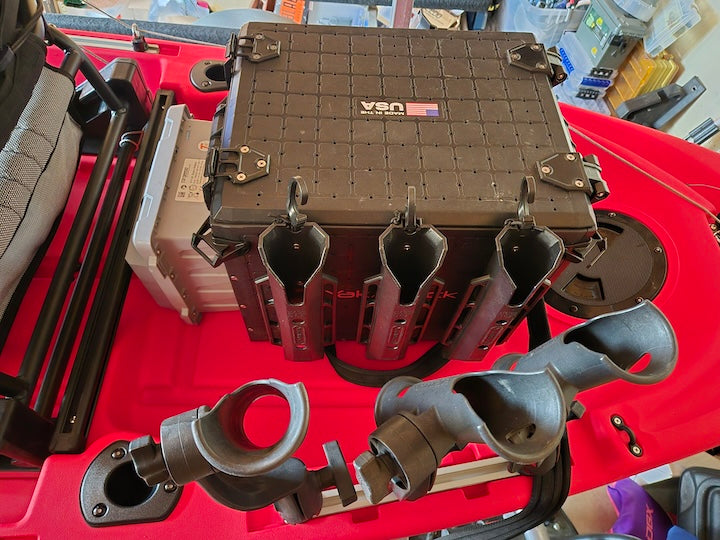
All six rod holders are arranged behind the seat on the left side as well—three mounted on a crate and three on a track rail. Having them all on one side eliminates the risk of hooking a rod on the backswing during a cast. When a different rod is needed, a simple turn to the left puts them all within easy reach.
▶ The Right Side (Dominant Hand)
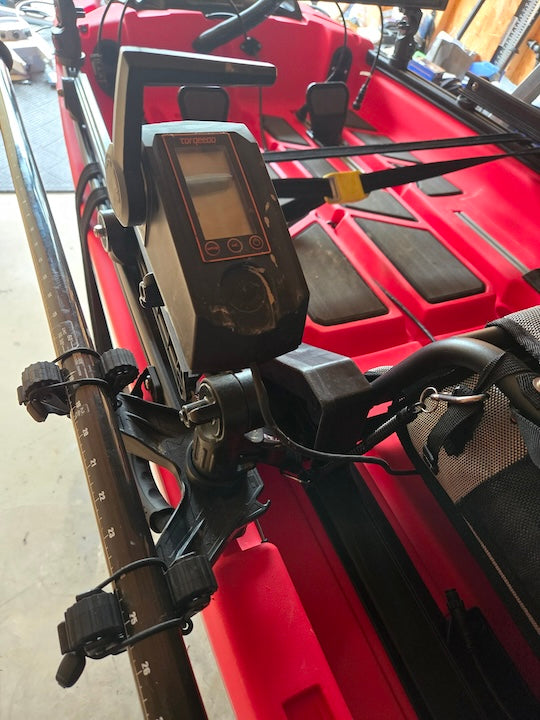
The right side is kept deliberately clear for action. The landing net sits angled slightly to the right, positioned in front of the seat for quick access during fish landings. This is where the action happens—scooping, unhooking, and measuring all happen on the dominant side.
The motor lift cord is also on the right, since pulling up the motor requires the stronger, more coordinated hand. Meanwhile, the throttle control stays on the left for cruising while the right hand remains free for fishing tasks.
▶ Front & Center
The fish finder sits dead center, directly in the line of sight but mounted low enough that it never interferes with casting, netting, or general movement. Visibility without obstruction—that's the goal.
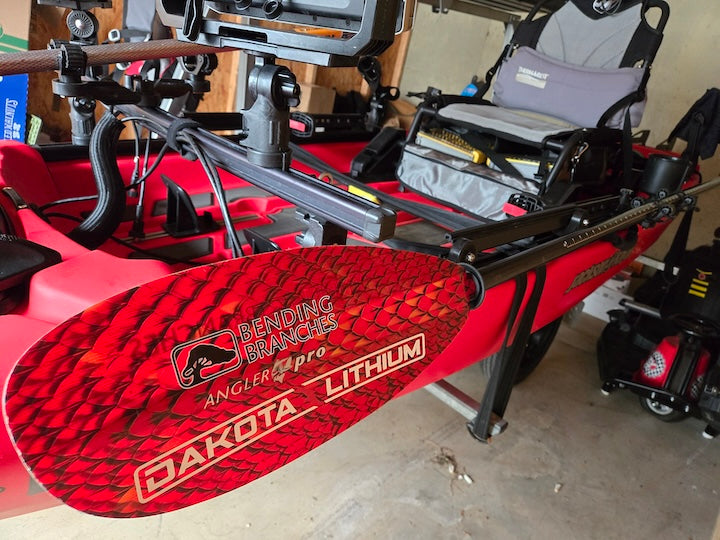
💡 Key Takeaway: The goal is to rig every single item the same way on any kayak you use. Once you've found what works through trial and testing, consistency across setups means you can grab any piece of gear instinctively—no hesitation, no wasted motion.
How Should New Kayak Anglers Plan Their Setup?
If you've just picked up a kayak and you're eager to start mounting accessories, take a step back. The best advice any experienced competitor can give you is this: start bare bones.
Outfit your kayak with the absolute essentials—your safety gear and your paddle—and head out on the water a few times before adding anything else. This gives you the chance to feel out your natural reach radius. You'll quickly discover where your hands go instinctively, which side you favor for different tasks, and where dead zones exist on your boat.
Bring a notepad along and jot down observations while you're actually sitting in the kayak. The best rigging decisions are made on the water—not standing in a garage staring at a dry boat.
A word of caution: Many anglers take their brand-new kayak straight to a dealer, hand over a pile of money for a full rigging job, and walk away. A week later they're on the water wishing things were positioned differently. The problem? Holes have already been drilled. Components are locked in place. Avoid this by doing your homework on the water first, then working collaboratively with a rigging professional—armed with your own notes about where everything should go.
What Gear Do Beginners Actually Need?
The kayak fishing community has a certain "keeping up with the Joneses" energy. Newcomers arrive at events, see veteran anglers loaded up with top-tier electronics and accessories, and suddenly feel compelled to go shopping for gear they don't yet understand or need.
Before pulling out the wallet, ask yourself two honest questions: "Do I need this, or do I just want it?" and "Will this genuinely improve my ability to get out on the water and catch fish?" Because at the end of the day, catching fish is the entire point.
It also comes down to a choice between aesthetics and utility. Do you want the best-looking boat in the parking lot? Or do you want a setup that's genuinely comfortable and functional for four to twelve hours straight on the water?
Priority Gear Checklist
Personal Flotation Device (PFD)
Non-negotiable. Pair it with a Coast Guard-approved whistle attached directly to the vest. Check your state's Department of Natural Resources for additional local safety requirements.
A Quality Paddle
Your paddle is your engine. A lightweight, well-designed paddle reduces fatigue, eliminates hand cramping, and keeps you comfortable for the long haul. It's one of the most impactful upgrades you can make.
Visibility & Tournament Gear
If you plan to fish tournaments, you'll need a light pole and flag. These are often required for competition and serve as critical safety markers on the water.
Everything Else—Based on Your Style
Some anglers are minimalists who rely on built-in flush-mount rod holders. Others load up with multiple rods, tackle boxes, and electronics. Build outward from the essentials based on your actual fishing style—not someone else's Instagram setup.
Why Weight Distribution Can Make or Break Your Ride
This is something that catches a lot of anglers off guard—especially those running motors, elaborate fish finder setups, or multiple battery systems. All of that added gear means added weight, and where that weight sits dramatically affects how your kayak performs.
Every kayak has a weight capacity, but knowing the number isn't enough. What matters is how the weight is distributed. If all your batteries, your motor, and your own body weight are concentrated toward the stern, the bow lifts out of the water. Tracking suffers, maneuverability drops, and paddling becomes significantly harder.
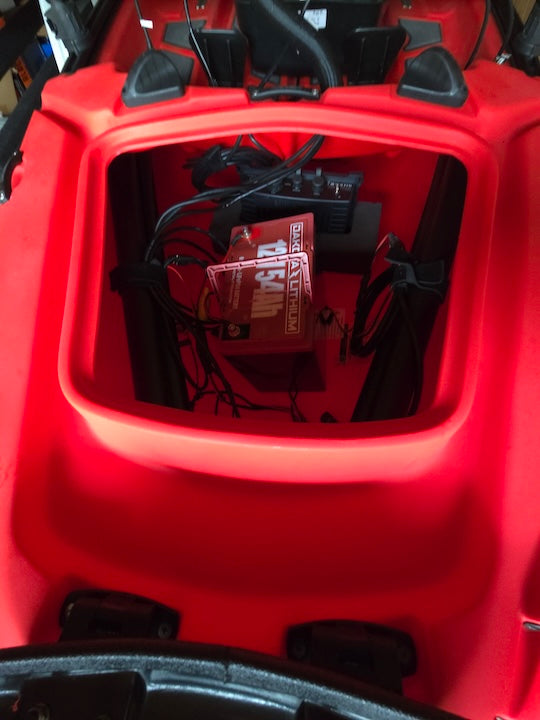
The fix is straightforward: split your heavy gear between the front and rear hatches. Place some batteries up front to counterbalance the weight in back. Adjust your seat position to find that sweet spot where the kayak sits level and responds naturally to paddle strokes.
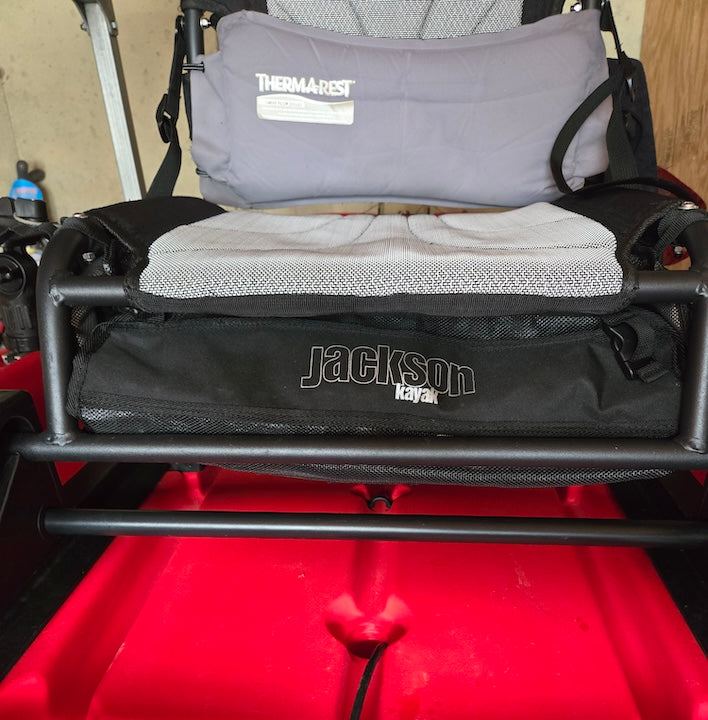
Pro Tip for River Fishing: When paddling rivers, it can actually be beneficial to shift a bit more weight toward the back so the bow rides slightly higher. This helps you navigate shallow areas and react to current changes more effectively. It's a situational adjustment—but one worth knowing about.
The Paddle Upgrade That Changes Everything
Nearly every kayak angler starts with the same story: a budget paddle grabbed off a retail shelf. Aluminum shaft, plastic blades, heavy as a brick. It works—technically. But after a few hours on the water, your hands are cramping, your shoulders ache, and there's a grimy residue coating your palms from the cheap materials.
The moment you switch to a quality paddle—one designed with lightweight materials, ergonomic blade shapes, and proper shaft construction—the difference is staggering. The fatigue vanishes. Your strokes feel more efficient because the blade design actually pushes water effectively instead of fighting it. You can paddle longer, stay comfortable through marathon sessions, and genuinely enjoy the experience instead of counting down the hours until you can get off the water.
For serious anglers, paddle choice often comes down to the conditions you fish most. A carbon fiber paddle that's feather-light works brilliantly on rivers where quick reactions and fast transitions matter. A fiberglass model with slightly larger blades is ideal for open flatwater where you need powerful, sustained strokes to cover distance.
The bottom line? When you're spending four to twelve hours on the water, comfort and efficiency aren't luxuries—they're necessities. Your paddle is your motor. Invest in it accordingly.
Ready to Rig Your Kayak for Success?
Whether you're building your first setup or fine-tuning an existing rig, the right accessories make all the difference. Explore our curated selection of kayak fishing gear designed for real-world performance.
Aquaglide Universal Connection