

Building an accessible pool environment is one of the most important steps you can take to ensure that everyone — regardless of physical ability — can safely enjoy the water. Whether you're designing a new pool or upgrading an existing one, these 12 accessibility features will help create an inclusive space that welcomes all swimmers with open arms.
12 Features to Consider for Your Pool
Here are twelve accessibility features that can be incorporated into any pool area.
1. Zero-Entry or Beach Entry
A zero-entry or beach entry design incorporates a gradual slope at one end of the pool, mimicking the gentle incline of a natural shoreline. This allows individuals who use wheelchairs, walkers, or other mobility devices to glide smoothly into the water without the need for steps or ladders. It's one of the most universally beneficial pool accessibility additions available today.
2. Pool Lift or Ramp
A pool lift or ramp is an essential tool for facilitating safe entry and exit for individuals with limited mobility. Pool lifts are especially valuable for those who are unable to use stairs or ladders, offering a powered seat that lowers the user gently into the water and raises them back out. Ramps serve a similar purpose, providing a smooth, inclined surface that accommodates wheelchairs and other assistive devices.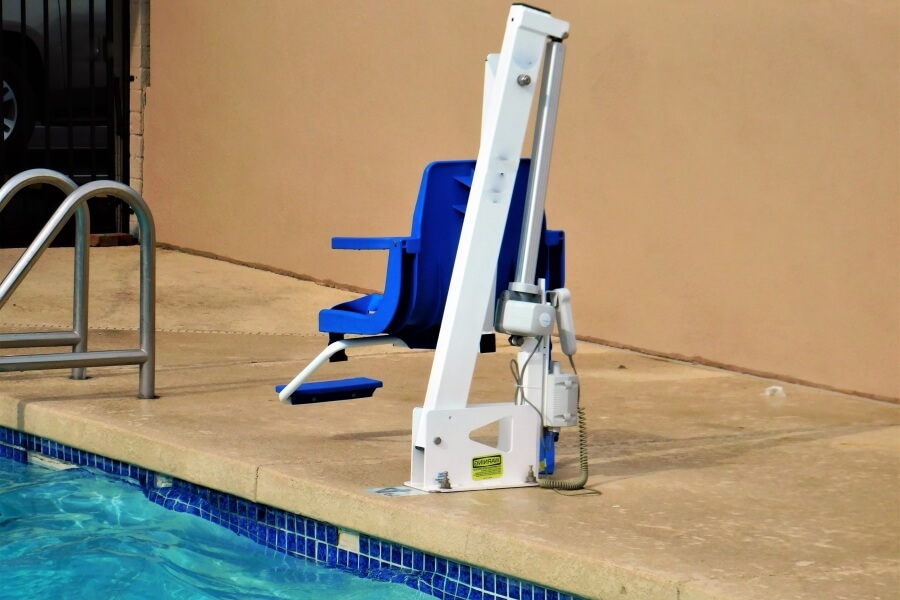
3. Accessible Changing Rooms
Changing rooms near the pool area should be designed with wheelchair accessibility in mind. This means equipping them with the right facilities — such as transfer benches, sturdy grab bars, accessible sinks, and spacious layouts that allow comfortable maneuvering. A well-designed changing room sets the tone for an inclusive pool experience from the moment visitors arrive.
4. Wheelchair-Accessible Poolside Paths
Smooth, wide pathways surrounding the pool area are critical for accommodating wheelchairs, walkers, and other mobility aids. These paths should be free of cracks, uneven surfaces, and obstructions so that everyone can navigate the pool deck confidently and comfortably, without worrying about potential hazards.
5. Poolside Seating and Shaded Areas
Providing plenty of seating options — including shaded areas — is essential for individuals who may need to take frequent breaks, rest between swims, or simply relax by the water. Benches, lounge chairs, and covered pavilions ensure that everyone has a comfortable spot to unwind, regardless of their physical capabilities or sensitivity to sun exposure.
6. Visible Depth Markers
Depth markers should be highly visible and easy to read, using bold numbers and contrasting colors. This is particularly important for individuals with visual impairments, as clearly marked depths help swimmers understand where they are in the pool and navigate the water with confidence and safety.
7. Tactile Warning Strips
Installing tactile warning strips along the pool's edge or near steps is a straightforward yet highly effective way to alert individuals with visual impairments to changes in elevation. These textured strips provide a physical cue underfoot, giving swimmers advance notice before they reach an edge, step, or drop-off — greatly reducing the risk of accidental falls.
8. Poolside Handrails
Handrails installed along the pool's edge, on stairways, and alongside ramps offer crucial support for individuals who face balance or mobility challenges. Sturdy, well-placed handrails give swimmers something firm to hold on to while entering, exiting, or moving around the pool — making the entire experience safer and more comfortable.

9. Water Wheelchairs
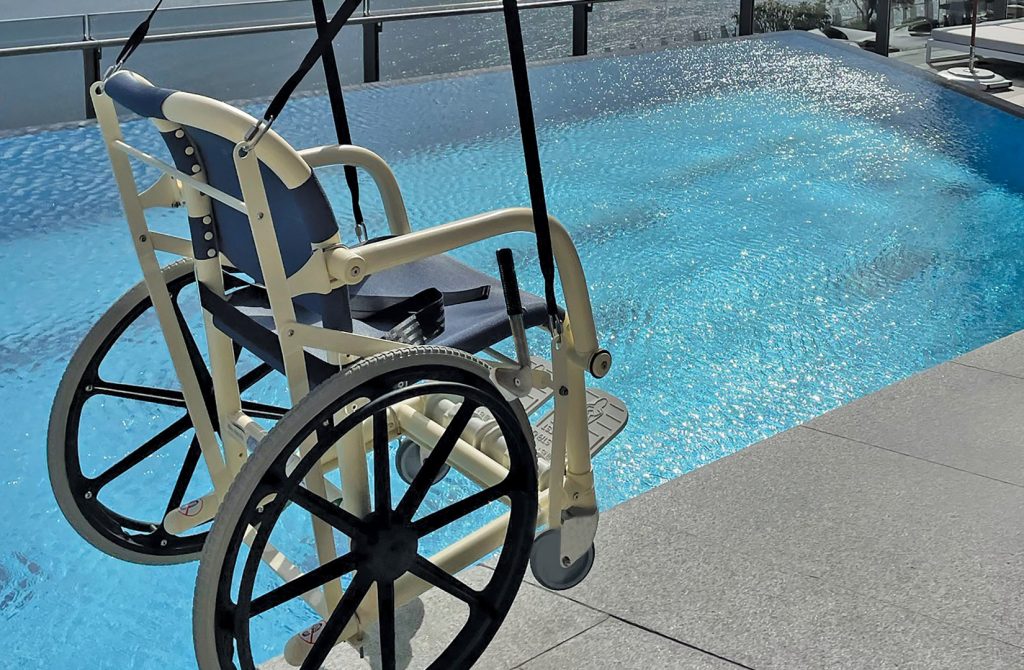
Water wheelchairs are specially engineered for pool environments, allowing individuals with mobility impairments to enter the water and enjoy it comfortably. Made from rust-resistant materials with aquatic-friendly wheels, these chairs make it possible for users to move freely within the pool area and experience the joy of swimming without barriers.
10. Accessible Pool Toys and Equipment
Ensuring that pool toys and recreational equipment are accessible to everyone is an often-overlooked but important consideration. Choose toys and gear that cater to a wide range of abilities — including flotation devices, adaptive swim aids, and sensory-friendly items — so that all pool users can participate fully in the fun.
11. Textured and Slip-Resistant Surfaces
Applying non-slip, textured materials to pool decks, ramps, and surrounding surfaces is a fundamental safety measure. These surfaces help prevent dangerous slips and falls in wet conditions, promoting a safer environment for all users — especially children, seniors, and individuals with balance or coordination difficulties.
12. Accessible Restrooms
Restrooms located near the pool area should be fully wheelchair-accessible and outfitted with essential features such as grab bars, accessible sinks, and ample clearance space. An accessible restroom isn't just a convenience — it's a necessity that ensures every visitor can use the facilities with dignity and independence.
Making Your Pool Truly Inclusive
Incorporating a combination of these accessibility features ensures that your pool is not only physically accessible but also welcoming and inclusive for individuals of all abilities. Each of these elements — whether it's a pool lift, tactile warning strips, or a simple grab bar — contributes to a safer, more enjoyable experience for everyone.
Every single one of these features matters. It's far better to have them and not need them than to need them and not have them. When planning or upgrading your pool, consult with a qualified pool contractor who understands accessibility requirements and can help bring your vision to life.
If you're ready to take the next step toward building a truly accessible backyard pool, don't hesitate to reach out to a professional. Pool accessibility is becoming an increasingly important focus for homeowners across Toronto, the GTA, and beyond — and for good reason.