

The Science Behind Wine Coolers
Temperature-Controlled Wine Storage Explained
Unlike standard kitchen refrigerators designed to keep food cold at around 35°F, wine coolers are engineered to maintain the ideal preservation range — typically between 45°F and 65°F — depending on the varietal being stored. This precise temperature window slows premature aging, protects the complex flavor compounds in the wine, and keeps every bottle ready to serve at the right temperature.
There are two primary cooling technologies used in modern wine coolers, each with distinct advantages:
Thermoelectric Cooling
These units use the Peltier effect — passing an electric current through a thermoelectric module to produce a temperature differential. The result is whisper-quiet, vibration-free operation that protects wine sediment and suits environments where ambient temperatures stay below 77°F. Energy-efficient by design, they are ideal for indoor cellars and kitchen cabinetry.
Compressor-Based Cooling
Mirroring the technology found in full-size refrigerators, compressor wine coolers use refrigerant gas and a motorized compressor to cool the interior. These units can reach significantly lower temperatures and handle warm ambient environments — making them versatile for garages, outdoor kitchens, and larger collections. Note that compressor models produce some vibration and operating noise.
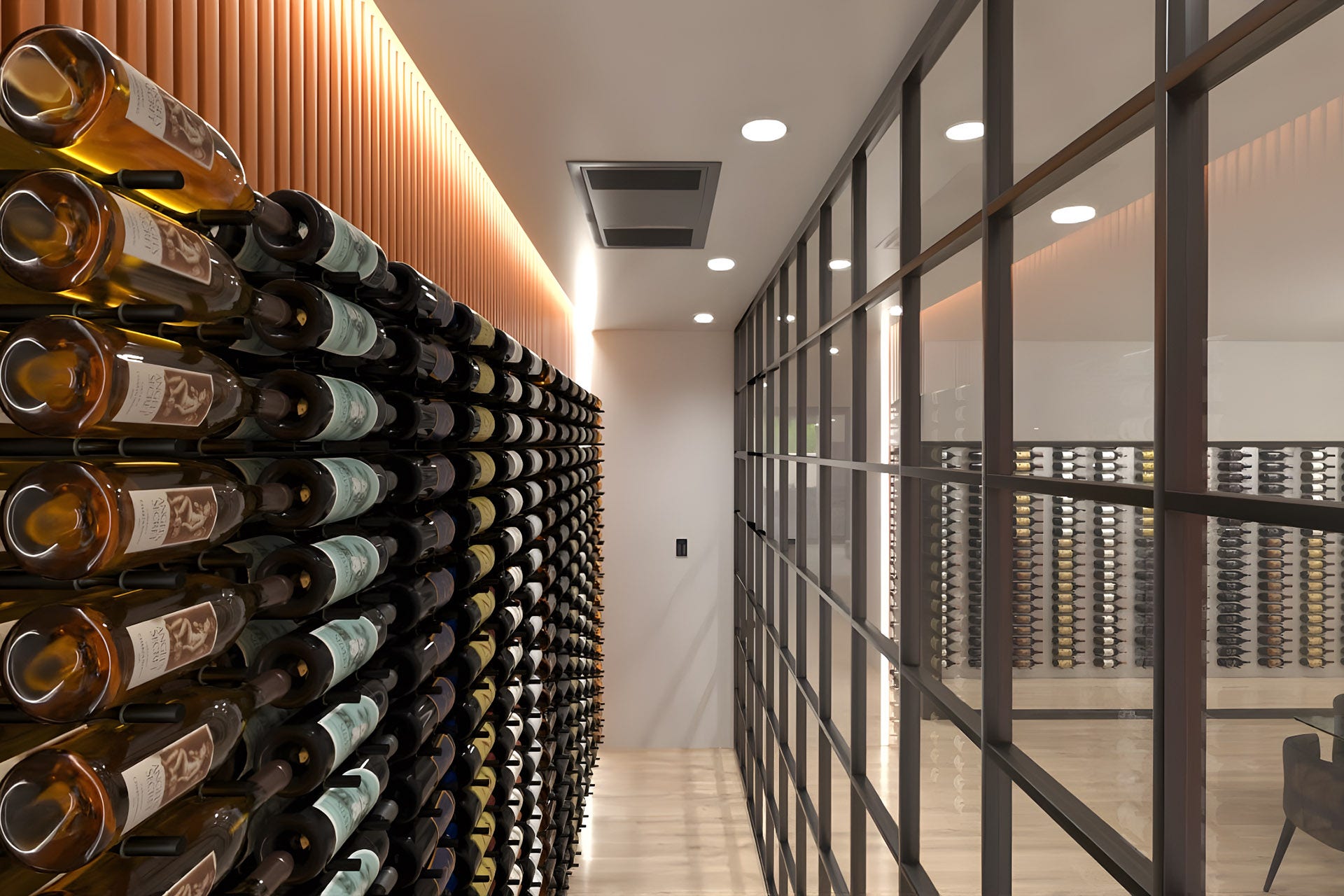
Key Features
What to Look for in a Quality Wine Cooler
Dual-Zone Temperature
Store red and white wines simultaneously at their ideal separate temperatures within a single unit.
Adjustable Shelving
Flexible shelf configurations accommodate standard Bordeaux bottles, larger Burgundy formats, and everything in between.
UV-Blocking Glass
Tinted tempered glass doors shield your collection from UV rays that break down tannins and accelerate aging.
Humidity Control
Proper humidity levels prevent natural corks from drying out, protecting the airtight seal and keeping wine fresh.
Frequently Asked Questions
Wine Cooler Questions Answered
Can a wine cooler get as cold as a regular fridge?
No — and that is by design. Wine coolers are calibrated to preserve wine, not chill food. Standard refrigerators run around 35°F, while wine coolers typically operate between 45°F and 65°F to protect wine quality over time.
Do wine coolers run continuously?
Wine coolers cycle on and off to maintain a consistent internal temperature. Compressor models cycle more frequently, while thermoelectric units make subtle, continuous adjustments based on the surrounding ambient temperature.
Should I use ice in a wine cooler?
No. Wine coolers rely on engineered cooling systems to manage both temperature and humidity levels. Ice is not used in or required for any wine cooler.
How do I make my wine cooler perform colder?
To optimize cooling performance: verify the thermostat is set correctly, ensure the unit is placed in a well-ventilated area away from heat sources and direct sunlight, and for compressor models, regularly clean the condenser coils.
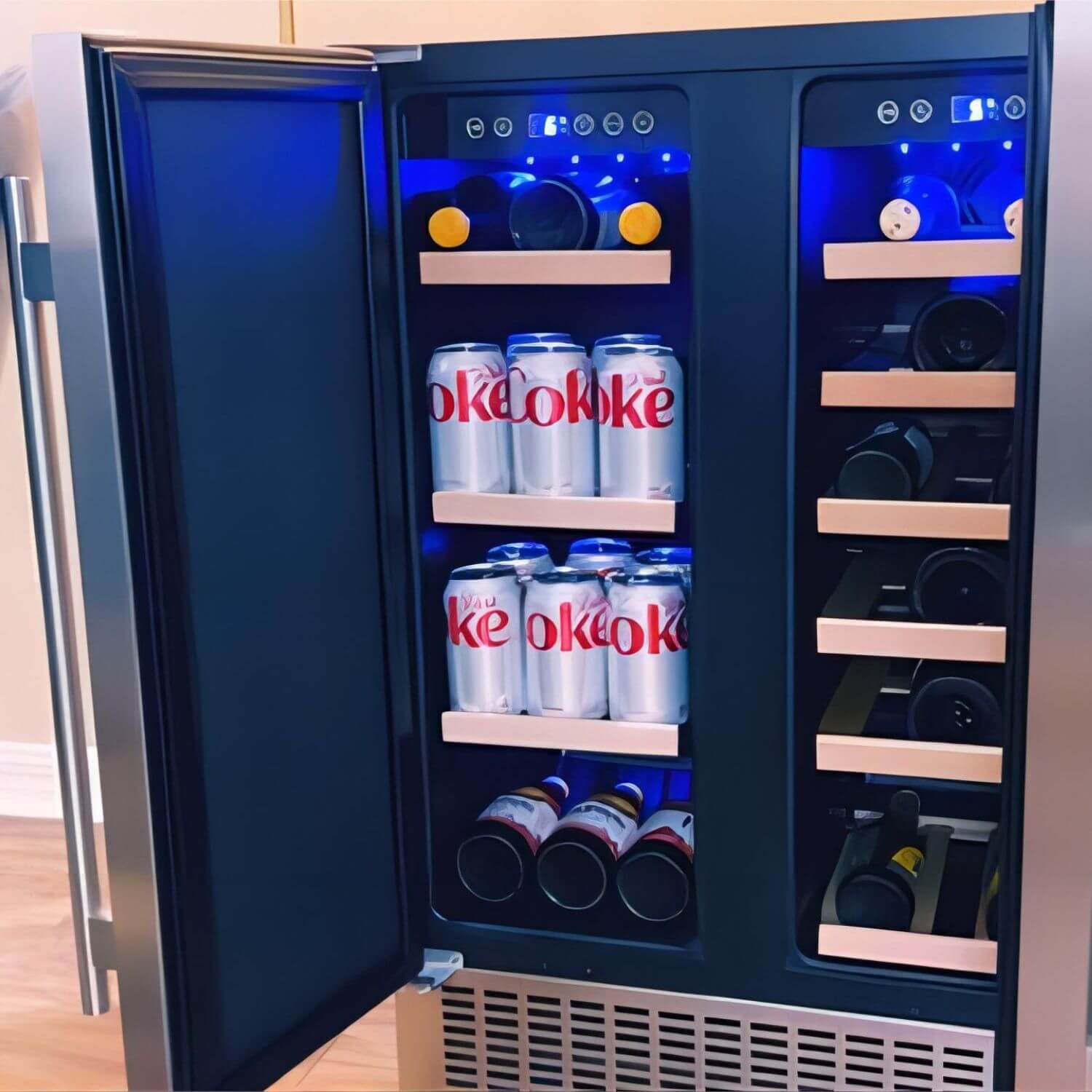
Can I store regular beverages in a wine cooler?
Yes — wine coolers can store other drinks such as craft beer, sodas, or sparkling water, though keep in mind the temperature range is optimized for wine rather than maximum cold refreshment.
Troubleshooting
Solving Common Wine Cooler Issues
Why is my wine cooler not blowing cold air?
Possible causes include:
- A dirty or clogged condenser coil
- Failing fans or thermoelectric modules
- Low refrigerant in compressor-based units
Routine maintenance and professional servicing resolve most of these issues.
Is it safe to turn off a wine cooler?
Switching off a wine cooler while storing wine is not recommended — temperature fluctuations degrade wine quality over time. If the unit is empty, it can be powered down safely.
How much electricity does a wine cooler use?
Wine coolers are generally efficient. Thermoelectric models use 100–200 kWh per year. Compressor models use slightly more but remain cost-effective compared to full-size refrigerators.
What refrigerant is used?
Most modern compressor wine coolers use R600a (isobutane) — an environmentally responsible refrigerant with a low global warming potential and strong energy efficiency ratings.
Why Backyard Provider
The Right Wine Cooler Is One Click Away
At Backyard Provider, we curate wine coolers that blend reliable performance with beautiful design — whether you are building a dedicated wine cellar or adding a sleek countertop unit to your kitchen. Here is why collectors trust us:
Extensive Selection
From compact 6-bottle units to freestanding 50-bottle cellars — our range covers every storage need and space constraint.
Expert Guidance
Our team knows wine storage inside and out. We help you match the right cooler to your collection and lifestyle.
Energy-Efficient Models
We stock units that balance strong cooling performance with low energy consumption — saving you money long term.
US-Wide Shipping
Fast, reliable delivery to every state — so your new wine cooler arrives safely and on time.
Ready to Elevate Your Wine Storage?
The AOBOSI 28-Bottle Retro Dual-Zone Wine Cooler combines vintage charm with modern precision cooling — dual temperature zones, whisper-quiet operation, and a 15-inch freestanding design built for serious collectors.
AOBOSI Retro Dual-Zone Cooler