

What Is a Scissor Lift?
A scissor lift is a type of aerial work platform (AWP) designed to provide temporary access to elevated areas. Unlike other aerial lifts, scissor lifts move vertically in a straight line — the platform rises and lowers directly above its base, making it one of the most stable and predictable options for working at height.
The name "scissor lift" comes from the mechanism underneath the platform. Crossed, folding supports — shaped just like the blades of a pair of scissors — extend and retract to raise and lower the work deck. This criss-cross lattice structure is what gives the machine its distinctive look and its exceptional vertical stability.
Scissor lifts are widely used across construction, facilities management, warehousing, entertainment production, and manufacturing. They are available in both rough-terrain outdoor models and smooth-surface indoor electric variants, making them versatile enough for nearly any project environment.
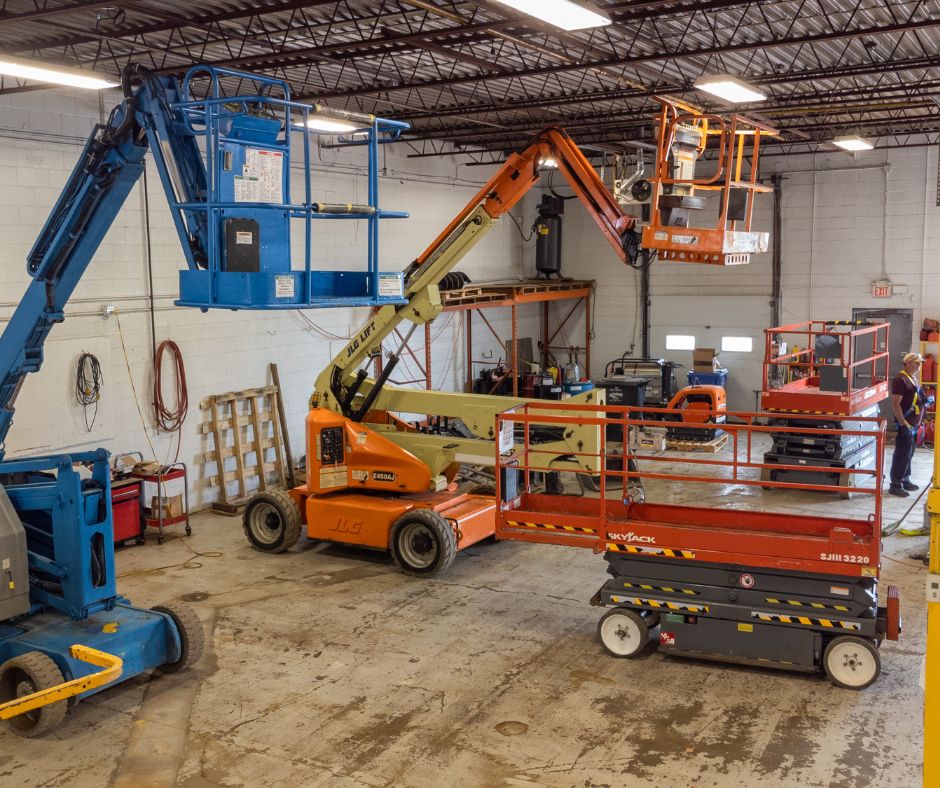
Boom Lifts vs Scissor Lifts
Both boom lifts and scissor lifts fall under the aerial work platform category, but they serve different purposes and excel in different conditions. Understanding the core differences will help you determine which lift type is right for your job.
- Move vertically only — straight up and down
- Large, stable work platforms — ideal for multiple workers
- Best for flat or near-flat surfaces
- Lower height range (typically up to 50 ft)
- Lower cost to rent and operate
- Electric models available for indoor use
- Higher load capacity per platform
- Extend horizontally and vertically
- Smaller basket — usually 1–2 workers
- Access hard-to-reach or irregular positions
- Greater height capability (up to 185 ft+)
- Higher rental and fuel costs
- Best for outdoor rough-terrain access
- More maneuverable around obstacles
In short: if your work is directly overhead and requires a large stable surface for tools and personnel, a scissor lift is the better choice. If you need to reach around, over, or between obstacles, or require extreme heights, a boom lift is more appropriate.
Popular Jobs for Scissor Lifts
Scissor lifts are among the most versatile pieces of access equipment available. Their stable, spacious platforms make them the preferred choice for a wide range of professional applications across multiple industries.
From installing overhead lighting in commercial warehouses to maintaining signage on the exterior of buildings, scissor lifts bring workers safely to the task — without the need for scaffolding or ladders. Their ability to carry multiple workers and heavy tools in a single trip improves both efficiency and job site safety.
Choosing the Right Scissor Lift for the Job
Not all scissor lifts are created equal. Selecting the right machine for your project requires evaluating several critical factors — from working height and load capacity to terrain type and power source.
How High Do You Need to Go?
Scissor lifts typically offer working heights between 20 and 50 feet, though some heavy-duty models exceed this range. Always factor in the working height you actually need — not just the platform height. The working height is generally calculated as platform height plus an additional 6 feet for a standing operator.
What Surface Will You Work On?
Indoor electric scissor lifts are designed for smooth, flat surfaces — concrete floors, epoxy-coated warehouse surfaces, and similar terrain. For outdoor jobsites, rough-terrain models feature larger pneumatic tires, greater ground clearance, and four-wheel drive to navigate uneven ground, gravel, and slopes safely.
What Load Will You Carry?
Platform capacity must accommodate the total weight of all workers, tools, and materials on the platform simultaneously. Exceeding the rated load capacity is one of the leading causes of scissor lift accidents. Always confirm the platform capacity before use and never overload.
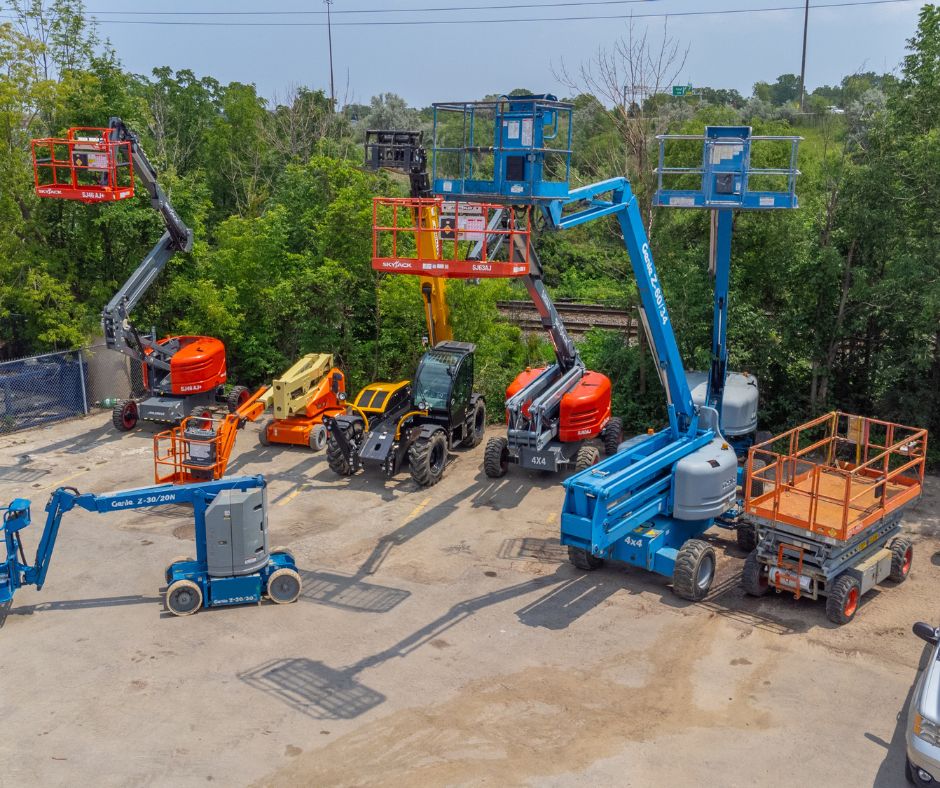
Scissor Lift Manufacturers
The scissor lift market is served by several established global manufacturers, each with a distinct product range catering to different industry needs. Here is a look at the most recognized names in the space and what sets them apart.
Genie
One of the most recognized brands in aerial work platforms globally. Genie scissor lifts are known for reliability, a wide range of sizes, and strong dealer support networks.
JLG
JLG produces a full lineup of electric and diesel scissor lifts. They are particularly noted for their rough-terrain models and high-capacity platforms used in heavy construction environments.
Skyjack
A Canadian manufacturer known for simple, durable designs with low maintenance requirements. Skyjack is favored in rental fleets for its ease of operation and serviceability.
Haulotte
A French manufacturer with a strong presence in Europe and growing market share globally. Haulotte emphasizes energy efficiency and safety innovations across their scissor lift range.
Potential Hazards & Safety Protocols for Scissor Lifts
Like all elevated work platforms, scissor lifts carry inherent risks when operated improperly. Understanding the most common hazards is the first step toward preventing accidents and ensuring a safe worksite for every operator and crew member nearby.
Falling From the Platform
Falls are the most serious risk associated with scissor lift operation. Workers must always use the guardrail system correctly and never lean over the edge or use the guardrail as a step to gain additional height.
Tip-Overs & Collapses
Overloading the platform, operating on slopes beyond the machine's rated incline capacity, or driving over drop-offs can cause the lift to tip. Always check ground conditions before raising the platform.
Electrocution Hazard
Scissor lifts operating near overhead power lines are at serious risk. Maintain minimum safe clearance distances from all energized lines. Assume all overhead lines are live unless confirmed otherwise by qualified personnel.
Crushing Injuries
Workers can be struck or crushed by moving parts of the scissor mechanism, by the platform against overhead structures, or by the machine itself when driving through tight spaces. Never position yourself between the scissor arms during operation.
Ground & Surface Hazards
Soft ground, slopes, holes, and uneven surfaces can cause instability. Always inspect the ground before positioning the lift and use outriggers or stabilizers where required by the manufacturer.
Wind & Weather
Outdoor scissor lift operations must account for wind speed. Most manufacturers specify a maximum wind speed for safe operation. Do not operate during storms, heavy rain, or conditions that reduce visibility or stability.
Top Ways to Be Safe While Operating a Scissor Lift
Safe operation begins before you ever power the machine on. Following pre-operation checklists, maintaining situational awareness, and respecting the equipment's rated limits are all essential habits for every operator.
Training is non-negotiable. Operators should receive formal instruction specific to the type and model of scissor lift being used, and training should be refreshed whenever a new machine type is introduced to the worksite or after any incident occurs.
The History of the Scissor Lift
The scissor lift has an interesting history rooted in the broader development of industrial access equipment during the twentieth century. What began as a mechanical curiosity evolved into one of the most essential tools in modern construction and maintenance.
The modern scissor lift concept emerged in the early 1960s alongside the broader aerial work platform industry. Early models were hydraulically powered and primarily used in industrial manufacturing plants where fixed scaffolding was impractical.
The aerial lift industry began formalizing safety standards during this decade. Manufacturers introduced guardrail systems and began publishing load capacity ratings more rigorously. Electric models entered the market, enabling safe use in indoor environments for the first time.
Rough-terrain scissor lifts were developed to meet demand from outdoor construction sites. Pneumatic tires, improved ground clearance, and four-wheel drive systems transformed the scissor lift from an indoor-only tool to a versatile outdoor machine.
Electronic controls, proportional drive systems, and improved stability technology became standard. The rental market expanded dramatically, making scissor lifts accessible to smaller contractors who could not justify outright purchase.
Modern scissor lifts feature advanced telematics, zero-emission electric drives, enhanced fall protection systems, and smart diagnostic platforms. Height and load capacity continue to improve as materials and engineering advance.
Scissor Lift Quick Reference
Use this overview table to quickly compare common scissor lift specifications and understand what each category means for your project planning.
| Specification | Typical Range | What It Means for You |
|---|---|---|
| Platform Height | 19 ft – 50 ft | The maximum height the working deck can reach |
| Working Height | 25 ft – 56 ft | Platform height + ~6 ft for standing operator reach |
| Platform Capacity | 500 lbs – 2,500 lbs | Maximum combined weight of workers, tools, and materials |
| Platform Size | 5 ft × 7 ft to 6 ft × 14 ft | Usable deck area for workers and equipment |
| Power Source | Electric / Diesel / Hybrid | Determines indoor/outdoor suitability and emission output |
| Stowed Height | 5 ft – 9 ft | Height of the collapsed unit — important for doorway clearance |
| Drive Speed | 1.5 – 4.5 mph | Ground travel speed — slower when platform is raised |
Ready to take your access equipment setup to the next level? Explore the AMGO Leveling Bar & Kits, engineered to enhance stability and precision for your lifting applications.
AMGO Leveling Bar & Kits