

If you've spent any time on a Reformer, you know there are certain exercises that keep pulling you back — the ones you can't stop thinking about, can't stop practicing, and can never quite perfect. The Short Box Series is one of those sequences. It sits at the top of that list for good reason.
What makes this series so essential? It's one of the first times in a Reformer practice when you work entirely without the assistance of the springs. You're no longer anchored by the machine's resistance — you're anchored by yourself. That's a significant shift, and it changes everything about how you feel your body working.
The Short Box Series is composed of at least 5 to 6 core exercises, with several iterations you can layer in as your practice deepens. In this guide, we'll walk through the five major exercises that form the foundation of this series, along with tips for getting the most from each one.
The Key Exercises
The Short Box Series centers on these foundational movements. Master these before moving on to advanced variations:
- Round
- The Reach
- Side-to-Side
- Twist
- Twist and Reach
Additional variations of the Tree can be added once you've built a solid foundation in the five movements above.
Round
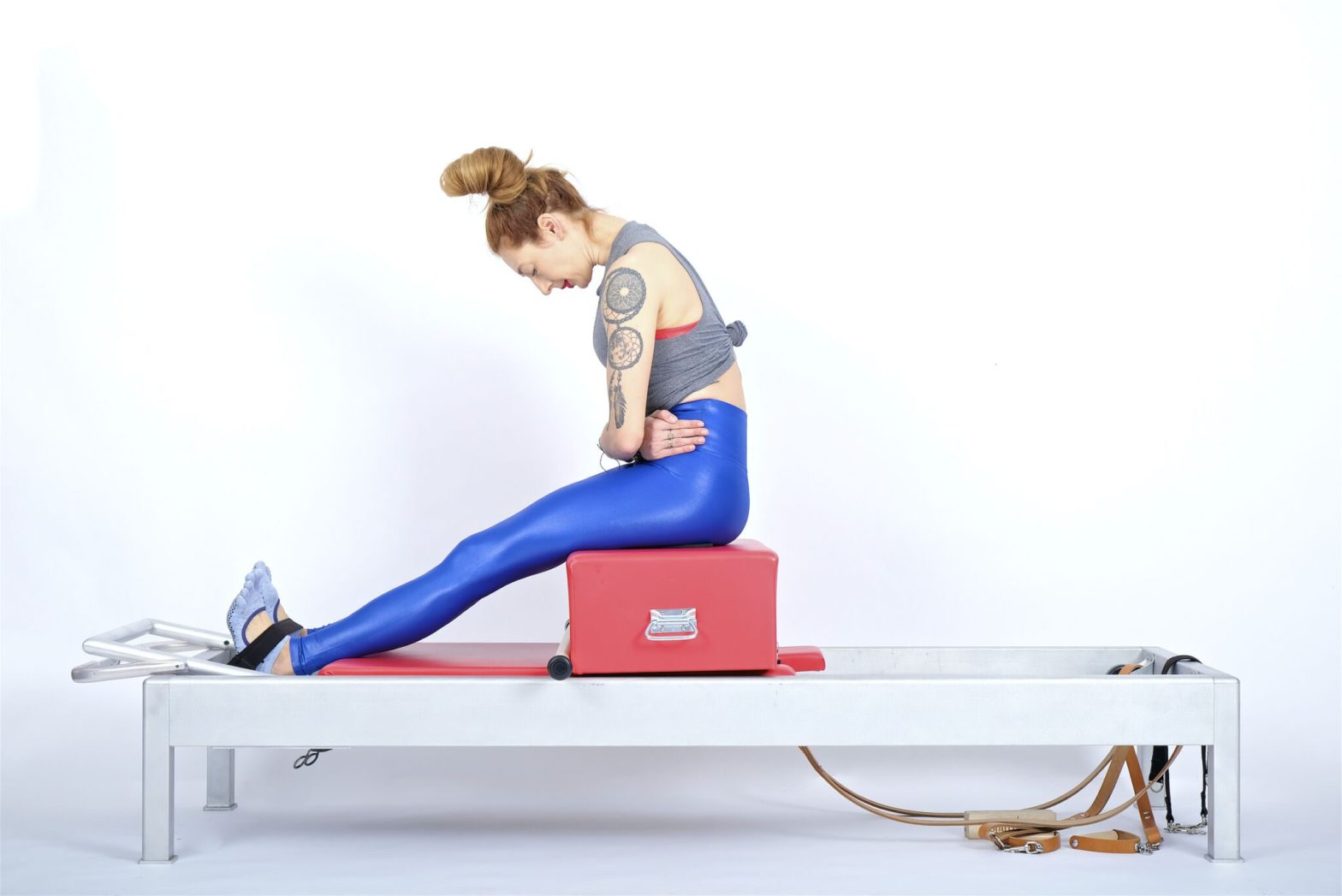
Also known as "The Hug," the Round exercise on the Short Box closely mirrors the Roll Up on the Mat. If you're familiar with that movement, you'll recognize the familiar sensation immediately — with the notable difference that you're now elevated, unsupported by the floor, and working against gravity in a new way.
The round shape of the spine is the central focus here. Other exercises throughout the Pilates system share this same rounded quality — the Rolling Back on the Cadillac, the Elephant on the Reformer, and the Push Down on the Wunda Chair are all excellent companions to this exercise, each helping you deepen your understanding of the spinal curve.
With practice, the shape will become more natural, more consistent, and far more powerful. Don't rush it — let the round emerge from genuine articulation of the spine, not just a forward lean.
The Reach
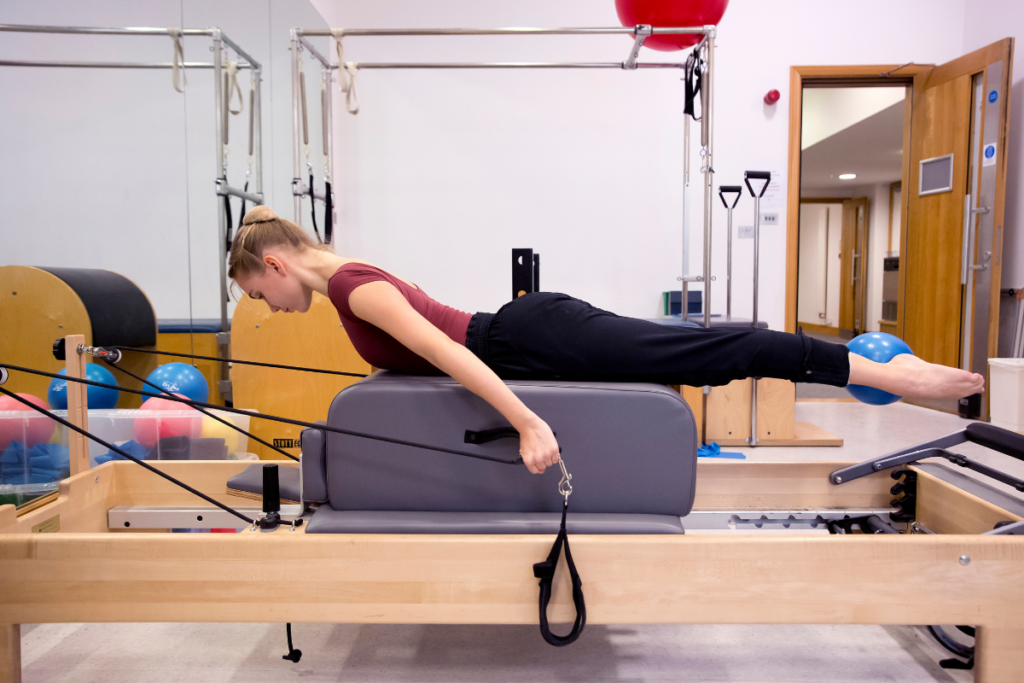
The name of this exercise deserves a moment of reflection. "The Reach" is the name our instructors use — a deliberate choice because it implies action rather than a passive state of being. Where some traditions call this movement "Flat Back," we've found that framing the exercise as an active, intentional reach transforms how students approach it.
This is an exercise that newer students often approach as a shape to hold rather than a movement to execute. The word "reach" changes that instinct entirely. You're not settling into a flat position — you're extending, lengthening, pressing outward from a strong center. That single reframe can unlock the exercise in your very first lesson with a new student.
Coaching Cue
- Think of lengthening the crown of your head away from your tailbone — not just leaning back.
- Keep the abdominals drawn in firmly so the lower back remains protected throughout the reach.
- The arms should extend as an extension of that same energy, not as a separate action.
Side-to-Side

Let's be honest — the Side-to-Side spent years at the top of the list of most challenging exercises for many Pilates practitioners. It demands that you lift and reach both sides evenly to bend, all while maintaining the central stability you built in the Reach. Easier said than done.
The good news: once you have the Reach working well in your body, you have the foundation for this exercise. The strength in your center that allows you to reach long and strong is exactly the same quality that carries you through a Side-to-Side with control and grace.
With a Pole
Yes, a pole is traditionally used for the Reach, Side-to-Side, Twist, Twist and Reach, and Around the World. The pole provides external cues and can help you reach further from your center — a genuine assist for developing the pattern.
Without a Pole
Working without the pole places a greater demand on your center, since the exercise's inherent mechanics encourage you to reach further away from your core. Losing the pole can be a great tool for advancing the Side-to-Side specifically.
The Twist & Twist and Reach
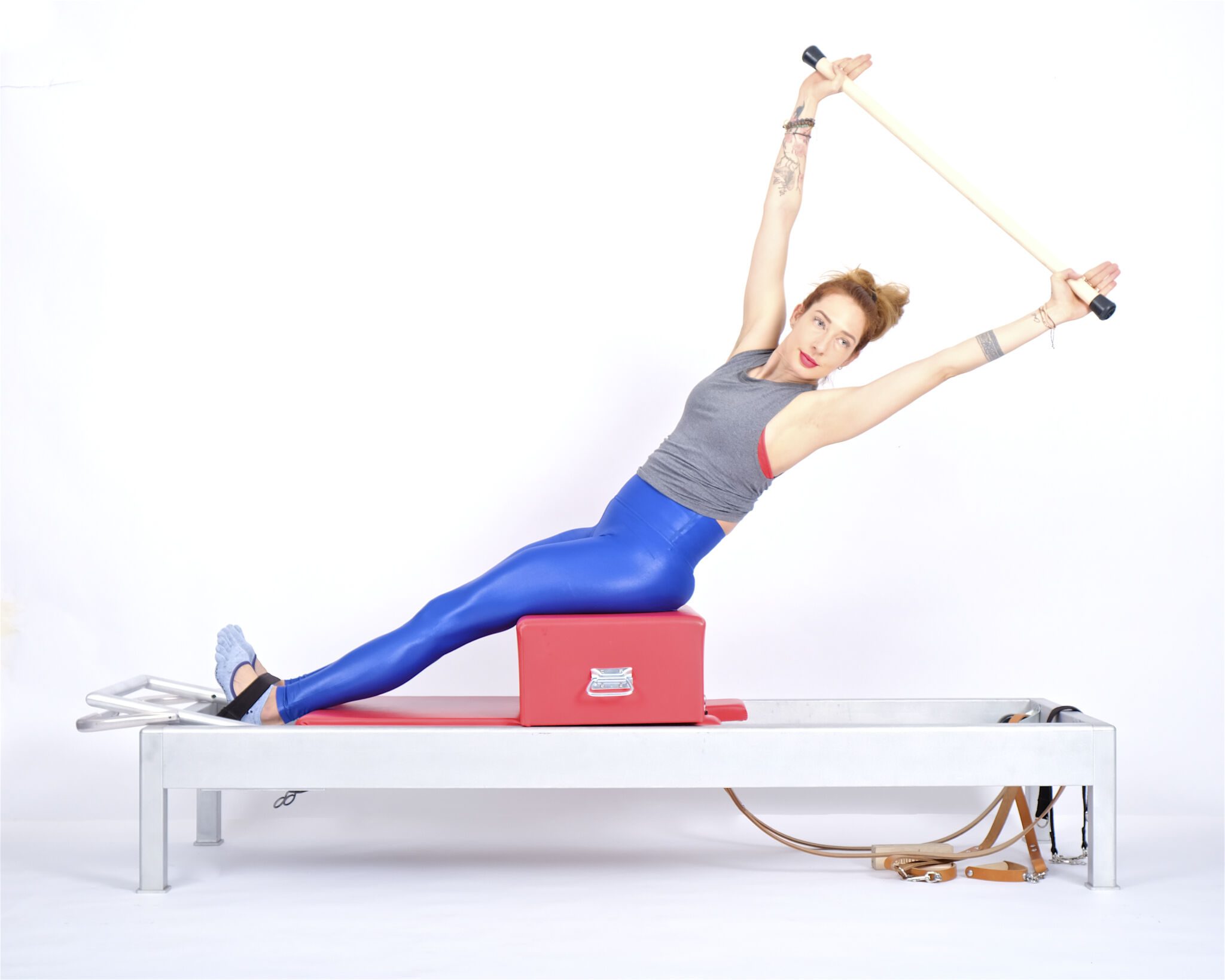
A true multi-tasker, the Twist ultimately builds into the full Twist and Reach — one of the most demanding and rewarding exercises in the entire series. These two movements work together, with the Twist serving as the essential foundation before adding the complexity of the reach component.
Start with the pure Twist and build your confidence there. The center you've developed throughout the earlier exercises in this series will carry you well here. Once the rotation feels stable and the core is holding, the reach becomes a natural and even effortless extension of the movement — and you'll be able to drop the pole without losing a single degree of the work you've done.
Take your time with this progression. Rushing into the Twist and Reach before the Twist is solid often results in losing the rotation to gain the reach — which defeats the purpose of the exercise entirely.
The Tree

Glorious and occasionally humbling — the Tree is an exercise that will continue to evolve and challenge you as your Pilates practice matures. Sometimes hated, sometimes loved, it shifts character entirely depending on the variation you're practicing and the layer of challenge you're prepared to meet.
The Tree is not a single fixed exercise. It's a framework with multiple iterations, each building on the last:
This progression also serves as a beautiful foreshadowing of the High Fridge, making it an essential bridge exercise in any complete Reformer program. As your practice deepens, the Tree reveals new layers — including the kind of hip stability and hamstring length that informs virtually every other exercise in the system.
Ready to bring your Short Box Series practice home? Explore our professional-grade Pilates Reformer:
M8 Pro Reformer & Sitting BoxBegin at the Beginning
Don't try to master the entire series in a single session. Start with the Round and the Reach, build your center, and let each exercise reveal itself at its own pace. The Short Box Series rewards patience with a level of body awareness that changes how you move in every other exercise — and in everyday life.