

Whether you're just getting started or upgrading to a dedicated studio, this guide walks you through everything you need — from choosing the right space and floor surface to selecting the equipment that will carry your practice for years to come.
Planning Your Home Pilates Studio Space
Start with a plan. Before purchasing any equipment, evaluate where in your home you can realistically dedicate a Pilates area. Ideally, choose a quiet spot with good light — this could be a spare bedroom, a corner of a living room, or a dedicated basement or garage space. A home office that doubles as a practice space also works well. Wherever you choose, look for a room or area with good ventilation and natural daylight to make the environment pleasant enough that you'll actually want to practice there.
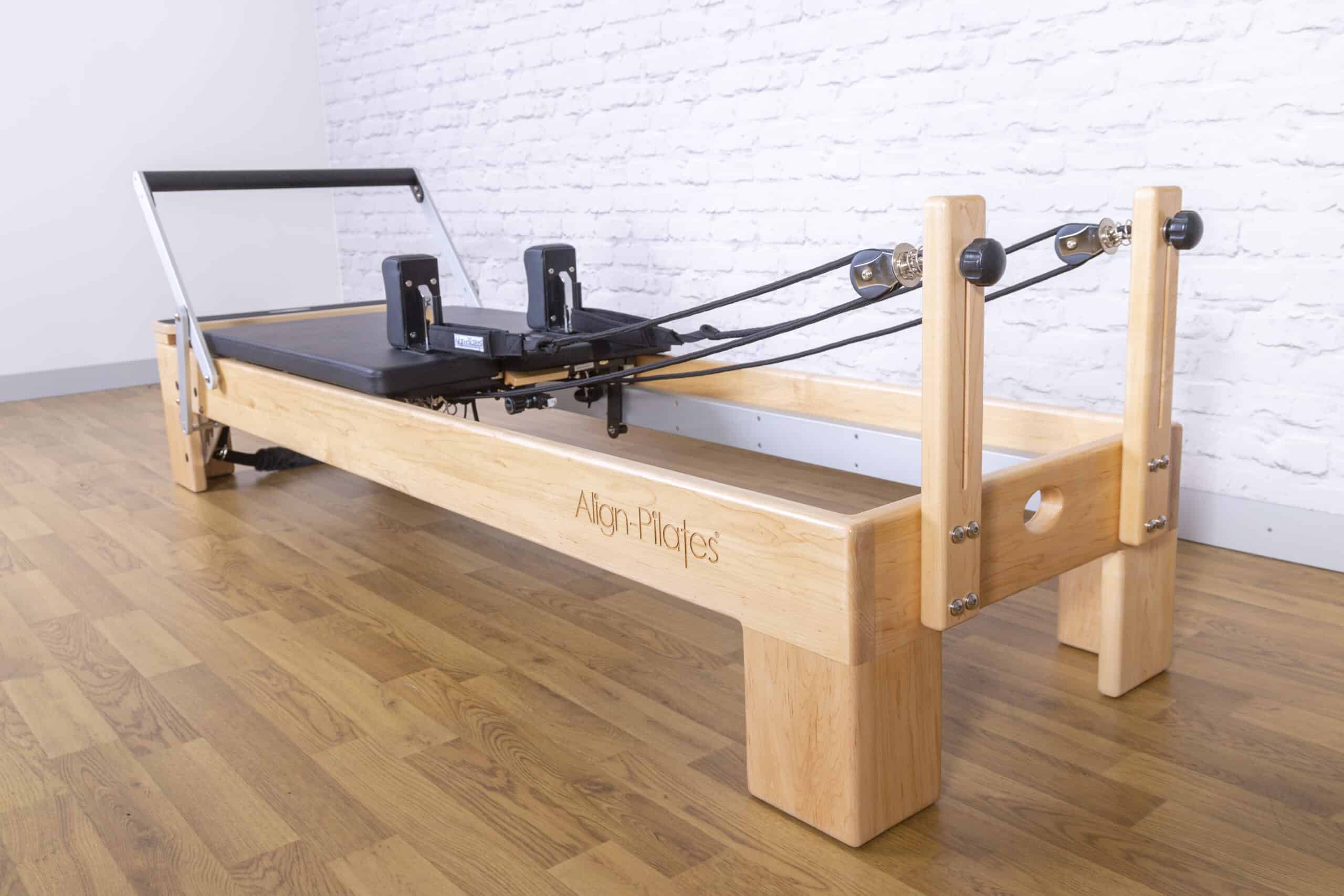
Consider your floor. Many people overlook this, but floor surface matters enormously in Pilates. Hardwood or cork flooring is ideal — it's firm enough to be supportive, has a small amount of natural give, and provides great traction. If you're setting up on a concrete floor, invest in a good mat or rubber flooring tiles underneath your equipment. Avoid thick carpet, which makes the Reformer unstable and throws off your balance on the mat.
Measure carefully. Before you buy a single piece of equipment, measure your available space in all directions — width, length, and ceiling height. A standard full-size Reformer typically measures around 8 feet long and 2 feet wide. You'll also want at least 3 feet of clearance on each side for comfortable movement. For a larger studio setup with a tower or additional apparatus, measure generously and plan the layout in advance. Sketch it out on paper — you'd be surprised how much this helps.
Layout Tip
When planning your layout, think beyond the footprint of the equipment itself. Consider how you'll move around it during a session — getting on and off, adjusting springs, and transitioning between exercises. Leave more space than you think you need. You can always fill in later; you can't add square footage.
Think about the full environment. Consider everything else in the space: mirrors are invaluable for self-correction and they make a room feel larger. Good speakers or a tablet mount for streaming classes will elevate every session. Keep the area clean, minimal, and free of clutter — Pilates is a practice that rewards focus, and a calm environment supports that mentally as much as it does physically.
What Do You Need for Pilates at Home? Essential Equipment & Gear
One of the best parts of Pilates is that you don't need a huge machine to get started. In fact, you can build a strong home practice on a modest budget. Below is a breakdown of the essentials at the affordable end of the spectrum — the foundational tools that will serve you well from day one.
Mat & Small Props: Pilates Essentials on a Budget (Under $500)
You can have an effective home Pilates studio with just a handful of back-to-basics, affordable Pilates equipment. Here are the key essentials at the entry level:
Pilates Mat
From $30–$80A quality mat is non-negotiable. Standard yoga mats are too thin — look for a dedicated Pilates mat with at least 1/2 inch of cushioning to protect your spine during rolling exercises. A good mat can last years with proper care.
Resistance Bands
From $10–$30Simple resistance bands add challenge to your mat exercises without adding bulk or cost. They're inexpensive, versatile, and easy to store — an ideal first addition to a basic mat setup. Great for arms, legs, and footwork variations.
Pilates Ring (Magic Circle)
From $20–$45This lightweight ring is a classic Pilates prop targeting the thighs, arms, and inner body. It intensifies mat exercises and trains the hands-on force needed to engage muscles with precision — a surprising amount of challenge from a simple tool.
Small Stability Ball
From $15–$40A small inflatable ball is incredibly versatile for balance exercises, spinal support, and adding proprioceptive challenge to a wide range of movements. It can also be used for support or as a challenge tool depending on how it's positioned.
Foam Roller
From $20–$50Useful for balance exercises and for self-massage and myofascial release after a session. A foam roller is one of the most versatile pieces of equipment in any home studio and earns its place in every setup.
Dumbbells / Hand Weights
From $15–$40A large international brand isn't necessary here. A modest set of light hand weights — typically 1 to 3 lbs — is all you need to complement Pilates arm work and add targeted resistance to your mat practice.
When shopping for affordable Pilates equipment, don't sacrifice quality entirely for price. A mat that deteriorates after three months, or a resistance band that snaps mid-session, costs more in replacements than a slightly more expensive original would have. Read reviews carefully, look for brands with return policies, and invest a little more in the items you'll use most — particularly your mat and any props that contact your body directly.
Reformers & Beyond: Upgrading to a Studio-Grade Home Pilates Gym
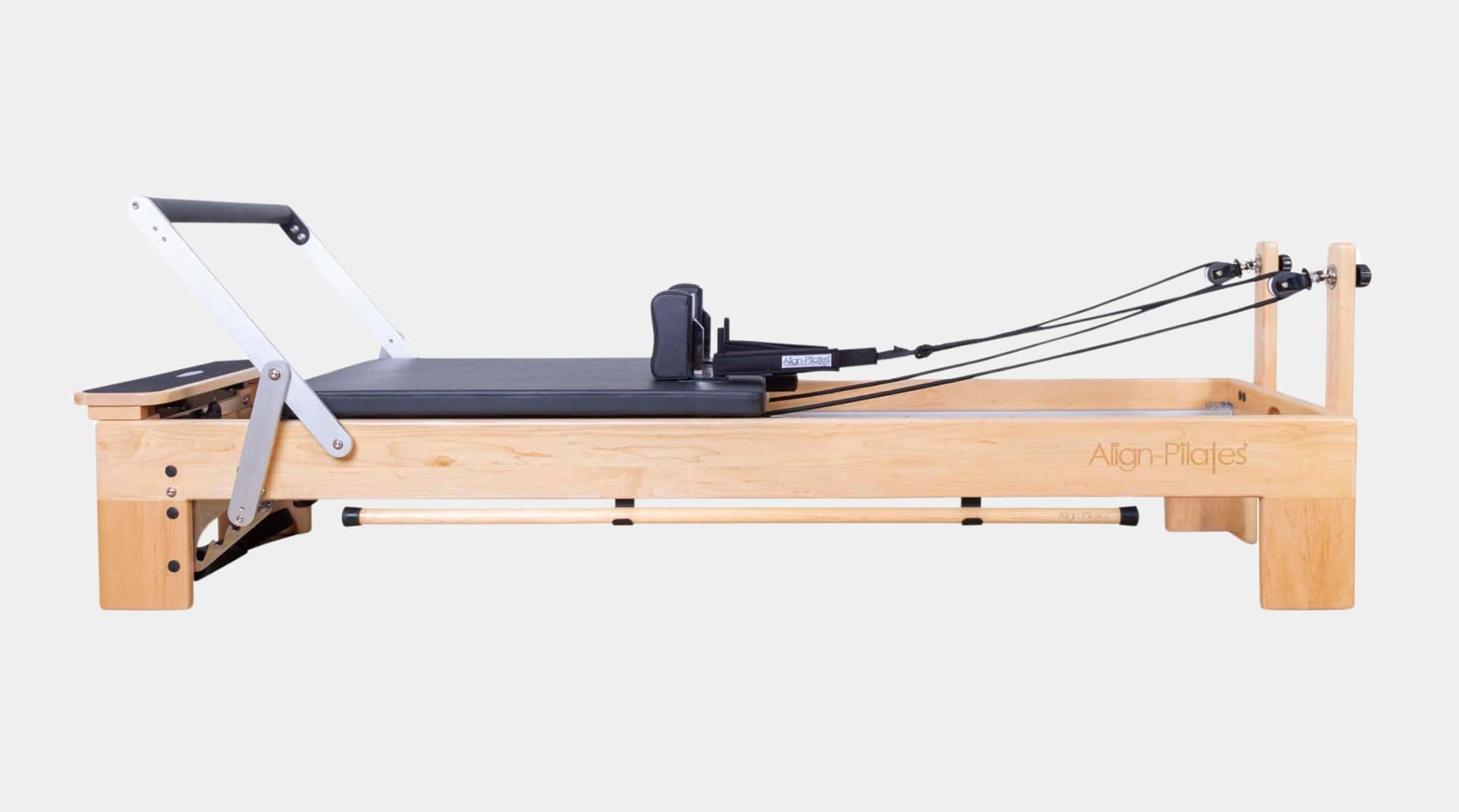
As your practice deepens, you'll likely find yourself drawn toward the centerpiece of the Pilates system: the Pilates Reformer. A full-carriage spring-resistance machine designed for comprehensive whole-body conditioning, the Reformer is the piece of apparatus that most people associate with serious, studio-level Pilates. And for good reason.
The Reformer: What to Know Before You Buy
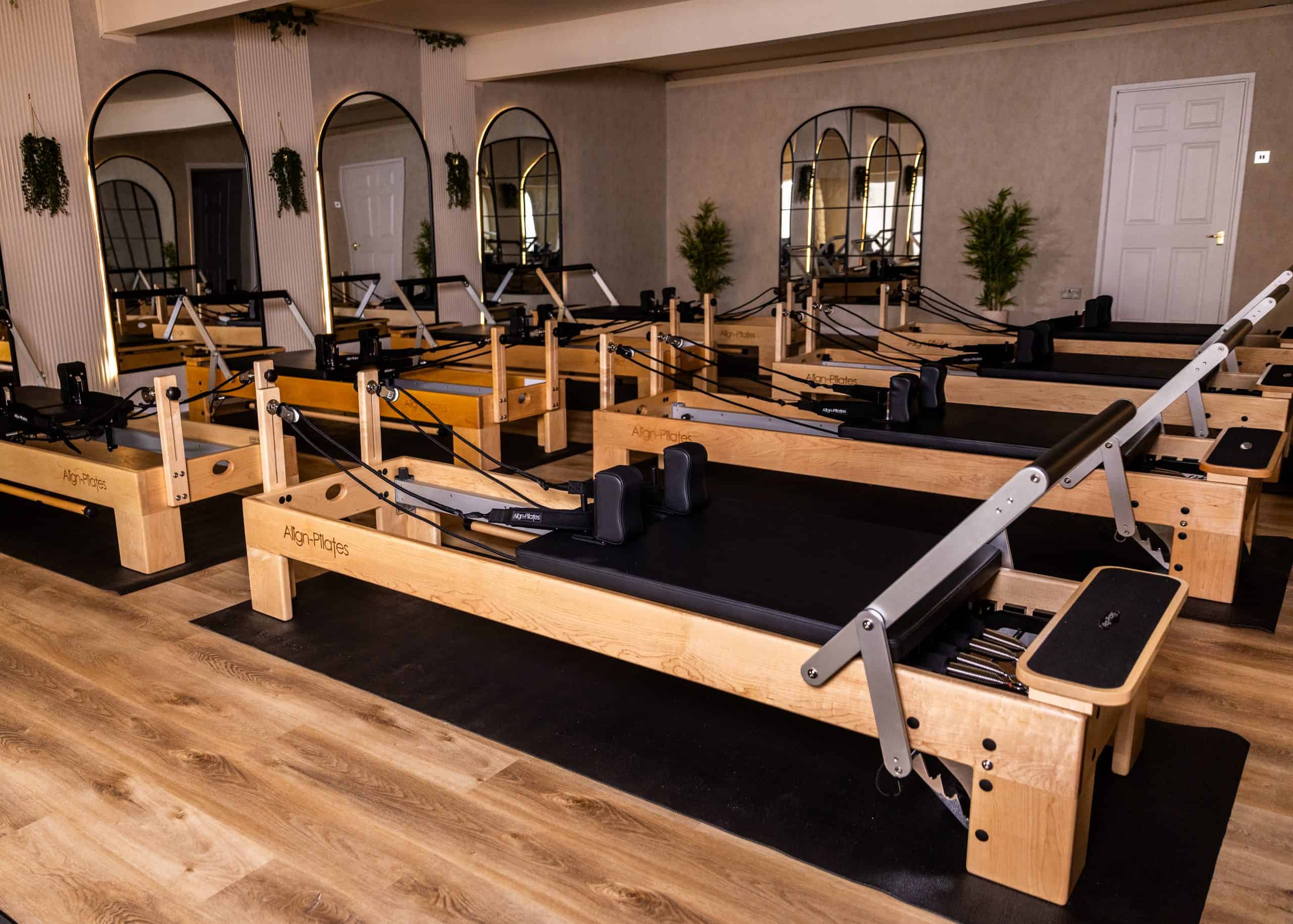
A Reformer allows you to perform hundreds of exercises with adjustable resistance, targeting every muscle group and movement plane. There are home-model Reformers and there are studio-level Reformers — the two are meaningfully different. If you're a devoted Pilates practitioner who wants to do things properly and stop paying studio fees, purchasing a high-quality reformer is a genuine game-changer. It's also a significant investment, which makes the quality of the machine especially important.
Keep in mind that quality reformers have a lot of commonalities: solid construction, smooth carriage movement, accurate spring resistance calibration, and a footprint designed for real estate efficiency. When comparing models, look for those specifications first — not just the brand name or price tag. A well-made reformer will serve you daily for years; a cheap one may leave you feeling like something is always off.
Home Model Reformers
Designed for home use with a more compact footprint. Often foldable, lighter, and easier to move or store. Ideal if space is a concern. Quality home models offer the full range of Reformer exercises with excellent spring resistance and a smooth carriage — you don't need a studio machine to get a studio-quality workout at home.
Studio-Grade Reformers
Built for heavy daily use in a professional environment. Heavier, wider, and with more spring options and accessories. If you're a committed practitioner or a teacher setting up a teaching space at home, a studio-grade machine is worth every penny of the investment.
Space & Setup for Reformers
Before buying a Reformer, use the space and layout guidelines from the planning section above. You'll need the space not just for the machine but for mounting and dismounting safely, for floor work alongside it, and for instructors or workout partners to assist. Most quality Reformers are 8 feet long — plan your room accordingly, and always measure ceiling height if you plan to use a tower or vertical frame attachment.
A truly well-considered home setup might also include a sitting box, which is stored beneath the Reformer when not in use and dramatically expands the range of exercises available to you — including the Short Box Series covered in our separate guide.
The Sitting Box Advantage
A sitting box unlocks an entire category of Reformer exercises that can't be done without it. If you're investing in a Reformer, we strongly recommend purchasing a sitting box bundle from the start rather than adding it later — it's more cost-effective and you'll use it from day one.
Other Studio Additions Worth Considering
Once your Reformer is in place, there are a handful of other studio additions that serious practitioners find genuinely valuable over time:
- 1 Cadillac / Tower The most comprehensive apparatus in the Pilates system after the Reformer. Often available as a tower attachment that mounts to the back of your Reformer — a space-efficient way to access the full Cadillac exercise repertoire without a second freestanding machine.
- 2 Wunda Chair Compact and incredibly challenging. The Wunda Chair sits on the floor and requires exceptional core control and stability. It's a brilliant complement to the Reformer and takes up surprisingly little floor space relative to the difficulty of the workout it delivers.
- 3 Ladder Barrel Used primarily for spinal articulation and hip flexibility work. The Ladder Barrel is a more specialized piece of equipment and typically comes later in a home studio buildout, but its unique shape allows exercises that nothing else in the system replicates.
- 4 High-Quality Wall Mirror Not a Pilates apparatus, but genuinely invaluable. A full-length mirror allows you to self-correct form, track alignment, and deepen your proprioceptive awareness without an instructor present. This is one of the best non-equipment investments you can make in your home studio.
What to Expect at Every Budget Level
Home Pilates studios can be built for a wide range of budgets. Here's a general guide to what you can realistically put together at different price points:
| Budget Range | What You Can Set Up |
|---|---|
| Under $200 | A complete mat-based practice: quality Pilates mat, resistance bands, magic circle, and small props. Everything you need to begin and maintain a serious mat practice indefinitely. |
| $500 – $1,500 | All mat essentials plus a quality home-model Reformer at the lower end, or a mid-range home Reformer with sitting box at the higher end. This range is where most home practitioners start their machine practice. |
| $2,000 – $5,000 | A professional-grade or semi-professional Reformer with full accessories and sitting box bundle. This level gives you studio-quality movement at home and is genuinely worth the investment for dedicated practitioners. |
| $5,000+ | Full studio buildout with premium Reformer, Cadillac/tower, Wunda Chair, flooring, and mirrors. This is a true home studio that rivals a professional teaching space in both quality and variety of available exercises. |
Wherever you're starting from, the most important thing is to begin. A mat and a magic circle will change your body. A Reformer will change your practice entirely. Both are worthwhile — and both will keep rewarding you as long as you keep showing up.
Ready to bring a studio-grade Reformer into your home? Explore our top-rated bundle:
M8 Pro Reformer & Sitting BoxYour Practice. Your Space. Your Way.
A home Pilates studio doesn't have to be elaborate to be extraordinary. Start with the essentials, plan your space thoughtfully, and invest in quality where it matters most. The rest will follow naturally — one session at a time.