

In the world of hydroponic growing, few systems balance simplicity and performance as elegantly as ebb and flow. Whether you're growing herbs in a small apartment or managing a larger backyard operation, this flood-and-drain method has proven itself across every crop type and every stage of growth.
Ebb and flow hydroponics — also called flood and drain — works by rhythmically flooding a plant's root zone with a nutrient-rich solution, then allowing it to drain completely back into a reservoir below. This gentle, repeating cycle oxygenates the roots, delivers balanced nutrition, and keeps conditions in the root zone consistently ideal. The result is faster, healthier plant growth in a fraction of the space needed by soil gardening.
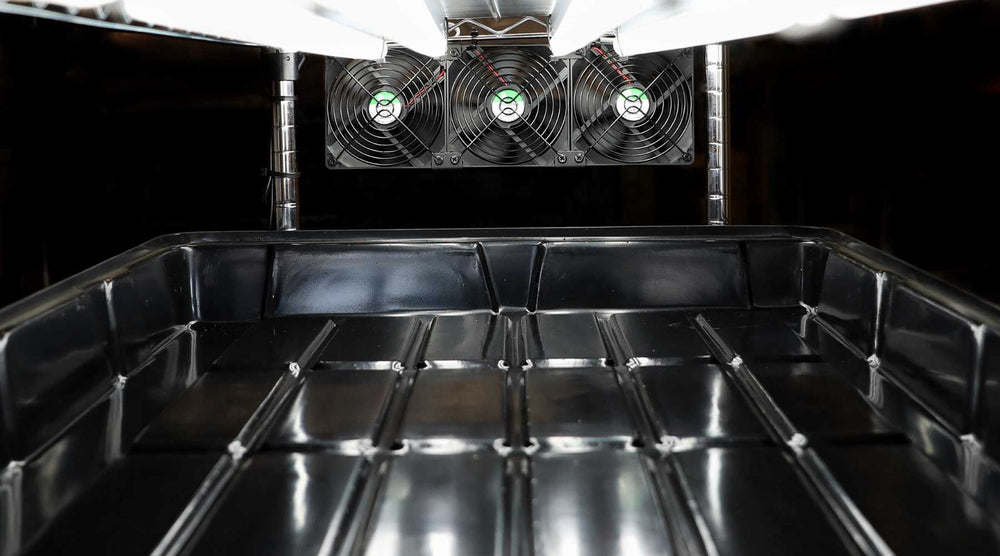
The commercial appeal of ebb and flow is well earned. These systems support everything from small container herbs to large flowering crops. Because the watering cycle is automated, your plants receive precisely timed nutrition and hydration without the risk of overwatering or dry-out. Oxygen-rich root zones mean disease resistance, vigorous root development, and ultimately higher yields in a smaller footprint.
System Mechanics
How Does an Ebb & Flow System Work?
At its core, an ebb and flow system uses a submersible pump to flood the grow tray with a nutrient solution from the reservoir below. Once the tray reaches the desired fill level, the pump shuts off and gravity does the rest — draining the solution back down into the reservoir, ready for the next cycle.
A timer-controlled pump pushes nutrient solution from the reservoir up into the grow tray, submerging the base of the plant containers.
The grow medium soaks up the solution. Roots drink in water, nutrients, and dissolved oxygen during the brief flooding window.
The pump stops. Gravity pulls the solution back into the reservoir through the drain fitting, leaving the roots moist but not saturated.
The cycle repeats on a precise schedule — daily, several times a day, or tuned to specific crop needs — automatically.
Because the nutrient solution is held in the reservoir and recirculated, you can monitor and adjust EC and pH in one central location. This makes ebb and flow one of the most manageable recirculating systems available, especially for growers who want consistent results without constant hands-on intervention.
hoosing Your Setup
Ebb & Flow System Types
Ebb and flow systems come in two primary configurations, each suited to different growing goals, space constraints, and crop types. Understanding the difference helps you pick the right foundation before you invest in hardware.
The Flood Tray System
The most widely used design. A flat, shallow tray (typically 2–4 inches deep) sits above the reservoir on a table or shelf. Plants in pots or net cups sit directly in the tray. The reservoir below stores nutrient solution and houses the pump. Flood events fill the tray, bathing the bottom of every container simultaneously. This is the go-to choice for growers running multiple smaller plants.
The Dutch Bucket System
Designed for larger, individual plants — tomatoes, peppers, cannabis, cucumbers. Each plant lives in its own bucket or barrel connected to a shared reservoir via inlet and drain lines. A control box manages timing and flow distribution. This system is stackable, scalable, and packs impressive growing density into limited floor space, making it a commercial favorite.
"The best ebb and flow setup is the one that grows the plants you love, in the space you have — scaled to fit your ambition."
What You'll Need
Setting Up Your Ebb & Flow System
Every ebb and flow installation shares the same core components, regardless of scale. Make sure each element is properly sized for your grow space before you begin.
- Reservoir — Must hold at least 3× the volume of your flood tray at full capacity. Choose opaque containers to prevent algae growth from light exposure.
- Flood Tray or Grow Buckets — The site where plants live. Select a depth and size appropriate for your chosen grow medium and plant size.
- Submersible Pump & Timer — The heart of the system. Your pump must have enough flow rate to fill the tray within a reasonable window. The timer controls flood frequency.
- Fill & Drain Fittings — Overflow fittings prevent the tray from flooding too deep. Standard configurations use one fill and one drain port per tray.
- Sturdy Table or Rack — The flood tray sits above the reservoir. Remember that water weighs approximately 8.3 lbs per gallon — structure matters.
Weighing Your Options
Pros & Cons of Ebb & Flow
Advantages
- Grow crops that struggle with other hydroponic systems due to substrate requirements
- Adaptable flood timing keeps conditions ideal through every stage of growth
- Stackable tray-and-rack designs maximize vertical growing space dramatically
- Centralized reservoir makes nutrient management simple and precise
- Works for virtually any crop from herbs to heavy-feeding fruiting plants
Things to Keep in Mind
- Different crops at different stages may need different flood frequencies
- Root health can be affected if pump timers fail — monitoring is important
- Cleanliness is non-negotiable; algae and pathogens spread quickly in shared systems
- Larger setups require careful plumbing to ensure even distribution to all sites
hat Goes in the Pot
Choosing Your Grow Medium
One of the great advantages of ebb and flow is its compatibility with a wide range of growing substrates. The right medium depends on how often you plan to flood and what your crop demands.
Clay Pebbles (LECA)
The most popular choice. Drains rapidly, supports multiple daily flood events, and allows excellent oxygen exposure to roots between cycles. Reusable and economical.
Perlite & Vermiculite
Retains more moisture between floods, making it ideal for crops that prefer slightly wetter root zones. Less forgiving if flooding frequency is too high.
Coco Coir
An organic alternative with excellent water retention. Buffers pH naturally and contains beneficial microbes. Requires thorough flushing before use in a recirculating system.
Rockwool
Precise and predictable. Holds moisture well and integrates seamlessly with commercial-scale operations. Requires pre-soaking and pH adjustment before planting.
Begin by trialing different substrates with different crop varieties. Run two systems side by side if possible — compare root structure, growth rate, and yield. The data you collect in your own environment will always outperform any general recommendation.
Ready to Grow?
Start Your Ebb & Flow System Today
The AirCube Active Oxygen Ebb & Flow Grow System brings everything you need into one precision-engineered package — 12 grow sites, active oxygenation, and a design built for serious results from the very first flood cycle.
AirCube 12-Site Ebb & FlowThe Bottom Line
Ebb and flow hydroponics has earned its reputation as one of the most versatile and productive growing methods available to home and commercial growers alike. From compact herb gardens to multi-tier fruiting systems, the flood-and-drain cycle delivers what plants need — consistently, automatically, and efficiently.
The key to long-term success is matching your system design to your crop type, maintaining a clean and balanced nutrient reservoir, and staying curious enough to keep refining your approach. Start with the fundamentals, observe how your plants respond, and let the data guide your next decision.
Your backyard — or basement, or greenhouse — is already a growing space waiting to happen. Ebb and flow just makes it thrive.