

A deep dive into the machine that transformed modern Pilates — its history, mechanics, benefits, and how to make it work for your body.
Since its invention in the early twentieth century, the Pilates Reformer has remained one of the most respected — and most misunderstood — pieces of fitness equipment in the world. Whether you've spotted it in a boutique studio or seen it featured in elite athletic recovery programs, chances are you've wondered what all the fuss is about. The answer, as it turns out, goes far deeper than a simple sliding carriage.
At Backyard Provider, we believe exceptional training shouldn't require a studio membership or a commute. That's why we're breaking down everything you need to know about the Pilates Reformer — from its foundational principles to its most transformative benefits — so you can make an informed, confident decision for your wellness journey.
What Is a Pilates Reformer?
The Pilates Reformer is a purpose-built exercise apparatus consisting of a padded, wheeled carriage that glides back and forth along a horizontal frame. The carriage is connected to one end of the frame by a set of springs that provide variable levels of resistance — from featherlight to genuinely challenging. Users push or pull the carriage using their hands, feet, or both, while a system of ropes and pulleys guides movement patterns through a full range of motion.
Developed by Joseph Pilates in the early 1900s, the machine was originally called the "Universal Reformer" — a name that hinted at its remarkable versatility. Joseph Pilates believed that physical and mental health were inextricably connected, and he designed the Reformer to train the whole person: building strength, improving posture, deepening body awareness, and restoring natural movement patterns that daily life tends to erode.
"The Reformer doesn't just challenge your muscles — it teaches your entire body how to move with control, precision, and intention. That's what makes it unlike any other piece of equipment."
Today's Reformers maintain the essential genius of Joseph Pilates' original design while incorporating modern materials and engineering for improved performance, safety, and ease of use at home.
How Do You Use a Pilates Reformer?
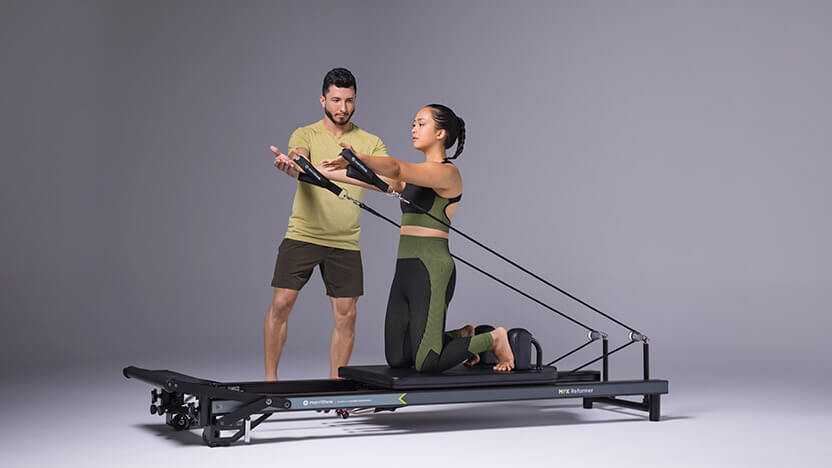
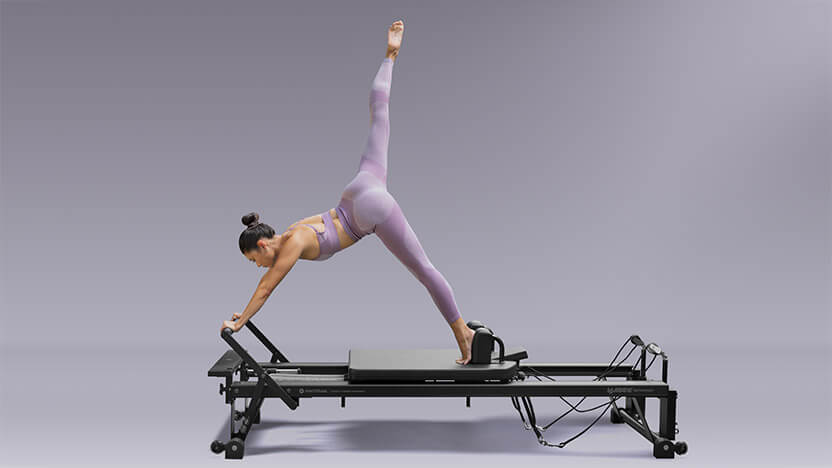
The Reformer's genius lies in its adaptability. Depending on the exercise, you may be lying on your back, seated upright, kneeling, standing, or even balanced on one limb — all while managing the tension of the spring system. This constant demand for stability is what makes every Reformer session so comprehensive.
Here's a simplified breakdown of how a beginner session typically unfolds:
-
Spring selection: Choose your resistance level by attaching different combinations of springs to the carriage. Lighter resistance is often used for footwork and stretching; heavier resistance targets the larger muscle groups in the legs and core.
-
Footbar setup: Adjust the footbar to the appropriate height for your leg length and the exercise you're about to perform. Most exercises begin with the footbar in a mid-range position.
-
Movement execution: Lie on the carriage, place your feet on the footbar, and press outward with controlled, even force — drawing the carriage away from the footbar. Return slowly, never allowing the springs to snap. The quality of each repetition matters more than the quantity.
-
Breathing and alignment: Inhale to prepare, exhale to exert. Keep your spine neutral, your pelvis stable, and your shoulder blades gently anchored to the carriage. Form is everything on a Reformer.
-
Progression: As you grow more confident, layer in upper-body movements using the ropes and pulleys, introduce rotational patterns, or challenge your balance by transitioning to standing exercises.
What Are the Benefits of Pilates Reformer Training?
Few training modalities can match the breadth of benefits that consistent Reformer work produces. The combination of spring-loaded resistance, instability challenges, and full-range movement patterns creates an environment that simultaneously builds strength, improves flexibility, corrects postural imbalances, and trains the nervous system. Here's what you can realistically expect:
Full-Body Strength
Every Reformer exercise recruits multiple muscle groups simultaneously, making each session a true total-body workout. The spring resistance challenges muscles through their entire range of motion — not just at peak contraction.
Core Stability
The Reformer demands constant engagement of the deep stabilizing muscles — the transverse abdominis, multifidus, and pelvic floor — that conventional gym equipment rarely reaches. Over time, this transforms your posture and reduces back pain.
Flexibility & Mobility
The gliding carriage allows you to stretch safely into positions that would be difficult or uncomfortable on a mat alone. Regular sessions measurably improve hamstring length, hip mobility, and thoracic rotation.
Rehabilitation Support
Physiotherapists and sports medicine professionals routinely prescribe Reformer work for recovery from knee, shoulder, hip, and spinal injuries. The spring system allows injured areas to be loaded appropriately — gently at first, then progressively.
Mind-Body Awareness
Pilates is as much a mental discipline as a physical one. The Reformer's feedback system trains you to detect subtle asymmetries and compensations in your movement, creating body intelligence that carries over into everything you do.
Improved Posture
By strengthening the posterior chain and lengthening the hip flexors, the Reformer directly counteracts the effects of prolonged sitting — one of the most widespread contributors to chronic pain and poor posture in modern life.
Who Is the Pilates Reformer Best For?
One of the most remarkable qualities of the Reformer is its genuine suitability for virtually every fitness level. The spring resistance system means an experienced athlete and a first-time exerciser can both find an appropriately challenging workload on the exact same machine — making it one of the most inclusive pieces of fitness equipment ever designed.
Beginners & New Movers
The Reformer's guided movement patterns and adjustable resistance make it exceptionally safe for those new to structured exercise. The spring feedback helps beginners feel correct alignment before they can see it.
Athletes & Active Individuals
Reformer training is a staple of elite sports conditioning programs. It develops unilateral strength, rotational power, and movement efficiency that translate directly to on-field performance and injury prevention.
Rehabilitation Patients
The ability to offload body weight and control resistance with precision makes the Reformer one of the safest tools available for recovering from surgery or musculoskeletal injury under professional guidance.
Older Adults
Research consistently supports Pilates Reformer training as an effective intervention for improving balance, bone density, and functional independence in older populations — with a very low injury risk profile.
Bringing Reformer Training Home: What to Look For
Studio Reformer classes offer expert guidance, but the cost and scheduling demands aren't sustainable for everyone. A home Reformer removes those barriers entirely — giving you the freedom to train on your own timeline, at your own pace, for a one-time investment rather than an ongoing monthly fee.
When choosing a home Reformer, there are several key factors to evaluate carefully:
Frame Height & Adjustability
The carriage height determines how comfortable and safe it is to mount and dismount the machine. Look for a model with multiple footbar height positions and a carriage that sits at a manageable height from the floor — particularly important if you're managing any joint sensitivity.
Spring System
The number and quality of springs determine your resistance range. A well-designed spring system should allow you to progress from very light resistance (ideal for rehabilitation and beginners) all the way to challenging loads that tax even experienced practitioners.
Ropes & Pulley Quality
The rope and pulley system should feel smooth and consistent throughout the movement arc, with no catching or slack. Adjustable rope lengths are a significant advantage for users of different heights, and for exercises performed in varied positions.
Footbar Design
A sturdy, multi-position footbar is non-negotiable. The footbar is the primary anchor point for most lower-body exercises, and its stability directly affects your safety and performance.
Foldability & Footprint
For home users, storage is often a real constraint. Modern foldable Reformers collapse significantly without sacrificing structural integrity — an essential feature if you're working with a smaller space.
The Cardio Rebounder: A Game-Changing Addition
Traditional Pilates Reformer training is predominantly resistance-based — which is wonderful, but it means cardio conditioning has historically required a separate workout entirely. The addition of a cardio rebounder attachment changes that equation dramatically.
A rebounder attaches to the end of the Reformer frame, allowing you to perform a dynamic, spring-loaded jumping motion while lying on the carriage. This elevates your heart rate quickly and sustainably without any impact on your joints — making it an exceptional cardio option for those managing knee, hip, or ankle conditions. It also adds a genuinely fun dimension to your sessions that helps maintain long-term motivation.
The combination of resistance-based Pilates work and low-impact cardio rebounding in a single session represents one of the most time-efficient and joint-friendly full-body workouts available for home training.
If you're investing in a home Reformer and have any interest in improving your cardiovascular conditioning alongside your strength and flexibility, choosing a model that includes a rebounder — or is designed to be compatible with one — is a decision you're unlikely to regret.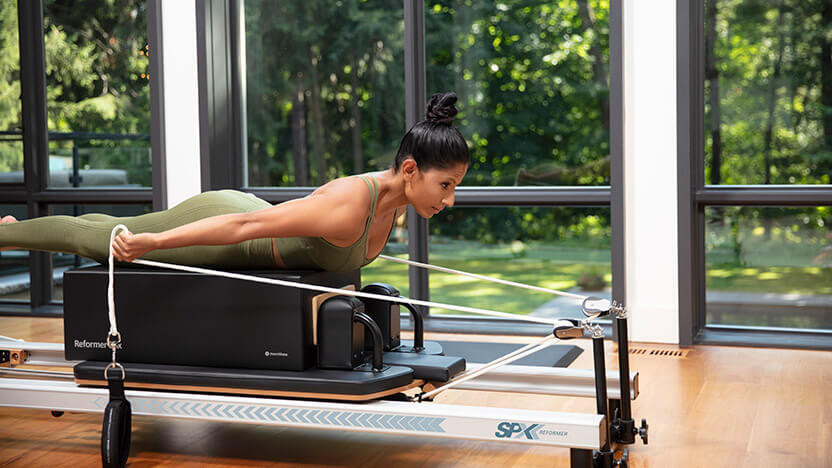
Tips for Getting Started on Your Reformer
Purchasing your first Reformer is exciting — but approaching your initial sessions thoughtfully will dramatically accelerate your progress and reduce the learning curve. Here's how to set yourself up for success:
-
Start with an orientation session or beginner video series. Even experienced gym-goers benefit enormously from understanding the machine's mechanics before loading it. Many manufacturers provide excellent introductory content, and numerous qualified Pilates instructors offer online beginner programs.
-
Use lighter resistance than you think you need. The Reformer's spring system can feel deceptively easy until you've developed the neuromuscular coordination to use it properly. Begin with one or two light springs and focus entirely on movement quality.
-
Train three times per week to begin. Three sessions of 30–45 minutes per week is sufficient to produce noticeable improvements in strength, mobility, and postural awareness within four to six weeks of consistent practice.
-
Pay attention to your breath. Breathing is not an afterthought in Pilates — it's an integral part of the technique. Exhaling on the effort and inhaling on the recovery creates intra-abdominal pressure that protects your spine and deepens muscle engagement.
-
Track your progress. The Reformer rewards consistency. Keep a simple training log noting which spring settings you used, which exercises felt strong, and where you noticed limitations. Revisiting these notes monthly reveals progress that might otherwise go unnoticed.
Ready to Bring the Reformer Home?
The AeroPilates Premier Foldable Reformer combines professional-grade spring resistance, a full rope-and-pulley system, and a dedicated cardio rebounder — all in a space-smart foldable design built for serious home training.
AeroPilates Premier Reformer