


For many people, swimming is one of life's great pleasures — but for individuals with mobility challenges, getting into the pool can feel like a daunting obstacle rather than a relaxing retreat. The good news is, it doesn't have to be that way.
With the right pool lift, designed and installed by trusted accessibility professionals, the water becomes accessible to everyone. Whether you're a caregiver searching for a solution for a loved one, or a facility manager building a more inclusive environment, selecting the right pool lift is one of the most meaningful decisions you can make.
This guide walks you through every consideration — from pool type and compliance requirements to safety features and budget — so you can move forward with confidence.
Key Factors to Consider When Choosing a Pool Lift
Type of Pool
The single most important starting point is understanding your pool. Pool type determines which lifts are ADA-compliant for your setting, which models are structurally compatible, and even which anchoring systems will work. Commercial facilities, for instance, are required by law to meet ADA compliance standards — a responsibility residential pools don't share in the same way, though many homeowners choose to meet those standards regardless. Other variables to consider include whether your pool is above-ground or in-ground, the available deck space, water depth, and whether the water is chlorinated, saltwater, or chemically treated in other ways. These details matter both for product compatibility and long-term durability.
Permanent or Portable Pool Lifts
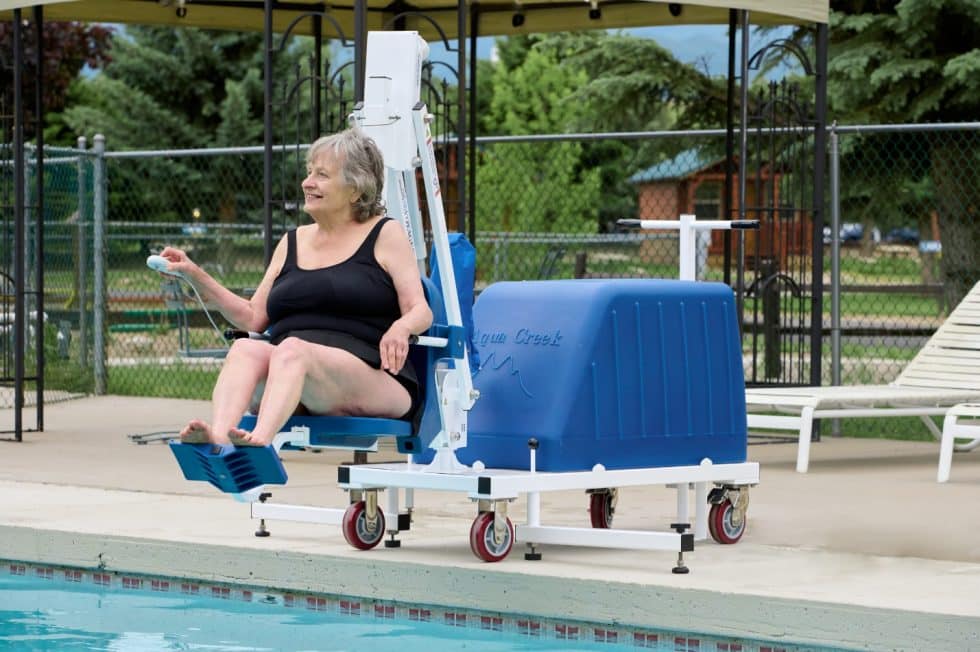
Portable lifts are designed exclusively for residential pools — they can be moved out of the way and stored when not in use, which is a major benefit for homeowners who want flexibility. However, for commercial or public pools, ADA regulations require lifts to be installed and accessible at all operating hours. That means permanent pool lifts are the standard for hotels, aquatic centers, and other public facilities. How a lift is anchored also varies: some models use concrete deck anchors, while others offer more adaptable wooden deck anchor systems depending on your surface type.
Frequency of Use
Think honestly about how often the lift will be used. For a private residential pool, a portable lift may offer the best balance of convenience and cost — it can be stored when not needed and deployed quickly when it is. For commercial environments, the ADA requires that lifts be in position and ready for use at all times during operating hours, making a permanent installation not just preferable but mandatory. Higher usage frequency also informs your choice of seating materials, motor type, and overall build quality.
Weight Capacity
ADA standards for commercial pool lifts require a minimum weight capacity of 300 pounds — but meeting that minimum is just a baseline. Beyond capacity, the lift must be able to sustain a load of at least 1.5 times its rated weight — an important structural safety margin. Additionally, the seat on an ADA-compliant lift must be able to submerge at least 18 inches below the water surface. For personal use, verify your model's rated capacity carefully, and consider going above the minimum if you expect variable or heavier users.
Safety Features
Safety is non-negotiable. Look for lifts that include supportive seatbelts or harnesses to keep users secure during entry and exit. Many models also feature moveable footrests, padded armrests, and anti-slip surfaces around the lift deck to minimize the risk of accidents. ADA-compliant powered pool lifts must include an emergency stop button, and all user controls should be positioned so that the person in the lift can operate them independently — a critical requirement for dignity and self-sufficiency.
Budget
Pool lifts typically range in price from $3,000 to $10,000 depending on the model, capacity, and features. Beyond the unit cost, factor in installation expenses, structural deck modifications, optional upgrades like padded seating, and ongoing maintenance. Power source is another budget variable — pool lifts come in battery-operated, electric, and manual crank configurations, each with different upfront and long-term cost profiles. A slightly higher investment in quality up front often means lower maintenance costs over the life of the product.
Additional Pool Lift Considerations
- User Comfort & Experience: Seating configurations vary widely — adjustable heads, armrests, footrests, and padded surfaces all contribute to a more comfortable and dignified experience. These aren't luxury extras; for regular users, they meaningfully affect confidence and enjoyment in the water.
- Environment & Materials: Weather-resistant, marine-grade materials are essential for a long-lasting lift. Salt air, chlorine, and UV exposure all degrade lower-quality finishes quickly. Pool covers designed specifically for lift protection are also worth investing in, especially for outdoor or oceanfront installations.
- Technological Features: Modern pool lifts offer a range of control options — from manual crank systems to full remote control operation. Battery-powered models give users flexibility without the need for hard-wired connections, making them easier to install and relocate if needed.
Pool Lift Maintenance & Care
Proper maintenance is the difference between a lift that lasts a decade and one that fails within a few seasons. Chlorine and saltwater are harsh on mechanical components — regular cleaning and inspection of all moving parts is essential to keep the lift functioning safely and smoothly.
If your lift is exposed to high chlorine concentrations or is installed near a saltwater pool or oceanfront, it should be rinsed and dried at least three times per week. During periods of non-use, cover the lift to protect it from weather. Check all bolts and fasteners on a monthly basis, and lubricate joints and pivot points as directed by the manufacturer. Following the recommended maintenance schedule faithfully will protect your investment and ensure reliable performance every time it's needed.
Ready to Make Your Pool Accessible?
The right pool lift transforms any pool into a welcoming, inclusive space. Whether it's for a private home or a commercial facility, investing in the right solution means long-term safety, compliance, and peace of mind. Explore our featured pool accessibility equipment below and take the first step today.
BE 196cc 2500 PSI Pressure Washer