

Table of Contents
1. What Is a Drain Inspection Camera?
2. A Brief History of Drain Camera Technology
3. Full Color HD vs. Grainy Analog Black & White
4. Key Differences in Camera Equipment and Service
5. How a Drain Inspection Camera Actually Works
6. Special Features of Modern Drain Cameras
A drain inspection camera — sometimes called a sewer camera or pipe camera — is essentially a compact CCTV unit built to navigate the interior of plumbing pipelines. Unlike a standard surveillance camera, it connects to a portable control panel that allows a technician to guide it through pipes from above ground. The camera sends a live video feed to a viewing screen and stores the recorded footage on a memory card for review and analysis later.
These devices have become indispensable for anyone dealing with drainage issues, whether you are a professional plumber performing routine inspections, a property owner investigating a stubborn clog, or a contractor verifying the quality of a new installation. However, not all drain inspection cameras are created equal, and the service quality you receive can differ dramatically from one provider or product to the next.
A Brief History of Drain Camera Technology
The roots of closed-circuit television go back to 1942, when Siemens AG installed the very first CCTV system at a test facility in Germany. Its purpose was to observe rocket launches remotely, specifically the V-2 — the world's first long-range guided ballistic missile developed during World War II. Roughly seven years later, the first commercially available CCTV system arrived in the United States under the name Vericon. It received minimal publicity, and most people only knew that it could be purchased and set up without any kind of government approval.
Over time, CCTV technology expanded into security monitoring, traffic management, broadcasting, and eventually into specialty applications like pipeline inspection. That transition brought the technology into the plumbing world, where it became an invaluable tool for diagnosing pipe conditions without excavation. Today, drain inspection cameras represent one of the most important advancements in modern plumbing and construction maintenance.
Full Color HD vs. Grainy Analog Black & White
The question practically answers itself. Nearly everyone today is accustomed to watching full-color, high-definition content on their screens. So why would you accept a blurry, washed-out, black-and-white feed when inspecting something as important as your drainage system?
When you commission a drain inspection video, the entire purpose is to see for yourself what is happening inside your pipes. You should never have to depend solely on a contractor's verbal interpretation of a murky, low-resolution image. Modern HD equipment allows you to view crystal-clear footage and make informed decisions about repairs, replacements, or maintenance with full confidence.
Key Differences in Camera Equipment and Service
Like any piece of professional equipment, drain inspection cameras vary widely in capability, image quality, and the range of features they offer. The skill and expertise of the operator matters just as much as the hardware itself. Company policies on pricing, video sharing, and warranties also play a significant role in your overall experience.
HD Equipment vs. Older Analog Systems
High-definition imaging is vastly superior to outdated analog systems, and this difference becomes even more dramatic in the dimly lit interiors of underground pipes. When you are making critical repair decisions — some potentially costing thousands of dollars — those decisions should always be based on the clearest possible footage.
Did you know? Older VHS-based sewer cameras captured footage at roughly 320 × 240 pixels. Modern drain inspection cameras record in Full HD at 1920 × 1080 pixels — that is over 27 times the resolution. This means you can zoom into details without losing image clarity, making accurate diagnoses far more reliable.
Full Color vs. Black and White
It may seem surprising, but a number of drain service providers still rely on black-and-white cameras. While a monochrome image can show general pipe shape, a full-color feed makes it far easier to identify the nature of a problem — whether it is rust, root intrusion, grease buildup, or a crack. Color footage removes the guesswork that often accompanies unclear, muddy grayscale images, and it gives both technicians and property owners a much more accurate picture of what is happening underground.
Digital Drain Inspection Cameras
Modern digital cameras can instantly share the recorded inspection video via email, text, or Wi-Fi transfer. There is no waiting around for a physical copy to be prepared. You receive the footage immediately, which means you can review it at your convenience, share it with a second opinion, or archive it for future reference — all without delay.
Built-In Pipe Locating Feature
Newer camera systems include a built-in pipe locator that pinpoints the exact position and depth of the camera head underground. This feature prevents excavation mistakes, misidentified problem areas, and unnecessary digging in the wrong location. For contractors, this accuracy saves hours of labor and significantly reduces project costs.
Watch Out for Hidden Charges on Video Copies
One of the most common frustrations with drain inspection services is being charged extra for a copy of the video footage. Many providers still treat the recorded video as an add-on rather than a standard part of the inspection package. When selecting equipment or hiring a service, always clarify upfront whether a digital copy of the inspection video is included. Modern cameras with Wi-Fi and SD card support make video sharing seamless and essentially cost-free.
How Does a Drain Inspection Camera Actually Work?
The process is straightforward but highly effective. A controlled video recording unit is fed through a pipe system to visually inspect for issues such as blockages, cracks, joint failures, or displaced sections. The camera is attached to a flexible push rod — long enough to reach from individual branch lines all the way to the main sewer connection. In areas where no human could physically reach, a drain inspection camera is the most practical and efficient diagnostic tool available.
Professional plumbers and contractors rely on these cameras for a wide range of applications:
Pinpointing Clogs and Damage
A drain camera eliminates the guesswork involved in finding the exact location of a blockage or crack. This targeted approach makes repairs faster, less expensive, and far less disruptive to your property.
Identifying Vulnerable Areas
Regular inspections reveal tiny cracks, minor dirt accumulations, and early-stage deterioration before they grow into serious blockages or pipe failures. Catching problems early is always cheaper than dealing with emergencies.
Determining Pipe Material and Condition
Many older homes and buildings have plumbing systems that have been in place for decades. A camera inspection confirms the type of pipe material, its current state of wear, and whether it needs repair or full replacement.
Mapping Hidden Pipe Networks
Complex plumbing systems often feature interconnected pipes running behind walls, beneath floors, and deep underground. A drain camera maps out these hidden connections, allowing repairs and replacements to happen without demolishing large sections of walls, flooring, or outdoor areas.
Verifying New Installations
Before a newly installed pipeline goes into active use, a camera inspection confirms that the work was done correctly and the line is free of debris, improper joints, or installation defects. This step provides peace of mind and documentation for warranties.
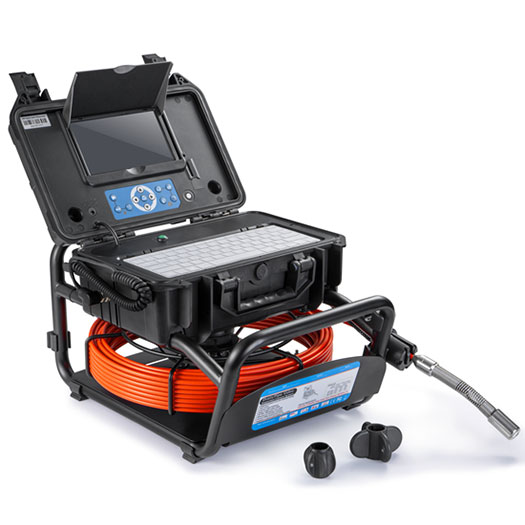
Special Features of a Modern Drain Inspection Camera
Because a drain inspection camera operates underground in a challenging environment, it must be engineered for durability and performance. The housing needs to withstand accidental impacts against pipe walls and rough surfaces. High-quality LED lighting is essential for producing viewable footage inside dark pipes — a poorly lit video would be effectively useless for diagnosis.
More advanced camera models include a built-in gyroscope that automatically corrects the orientation of the image if the camera head rolls over during its journey through the pipe. This ensures the footage remains stable and easy to interpret regardless of the camera's physical position.
From VHS Tapes to Wi-Fi Streaming
In the early days, drain camera footage was stored on bulky VHS tapes. Then came DVD burners, which have also become outdated. Today's cameras use compact SD cards with large storage capacities. Videos are written automatically and the cards can be reused for years. Footage can be emailed, uploaded, or shared wirelessly — making the entire inspection process faster and more transparent.
Some of the most advanced models also feature built-in pipe locator technology that functions similarly to GPS. The screen displays the distance to the camera head as well as its depth below ground, typically indicated by a directional arrow. This information is invaluable when planning excavation work, as it helps determine whether a hand shovel, a backhoe, or heavier equipment is required.
While a drain inspection camera shares some functional similarities with an ordinary camcorder, the two are built for entirely different purposes. A professional-grade pipe camera is ruggedized, waterproof, and designed to deliver reliable results in confined, wet, and dark conditions. Operating one correctly takes training and experience — a qualified technician knows how to navigate bends, interpret footage accurately, and protect both the equipment and the plumbing system during the inspection process.
The Bottom Line
The quality of a drain inspection camera — and the expertise of the person operating it — directly affects the value you get from any pipe inspection. Whether you are investing in your own camera system or hiring a professional service, always prioritize HD resolution, full-color imaging, digital recording with easy sharing, and built-in pipe locating capability.
The right equipment paired with proper training ensures accurate diagnoses, fewer unnecessary repairs, and greater confidence in every plumbing decision you make. Do not settle for outdated technology when modern solutions are readily available and more affordable than ever.