

Rooftop tents have transformed overlanding and car camping — turning any vehicle into a mobile basecamp. Before you invest, here's a full breakdown of what to look for, what questions to ask, and how to find the tent that genuinely fits the way you travel.
The Basics
What Is a Rooftop Tent?
A rooftop tent is a sleeping shelter designed to mount directly to your vehicle's roof rack or crossbars. Unlike traditional ground tents, rooftop tents keep you elevated — off the cold, wet, and uneven ground — and let you transform your vehicle into an all-in-one camping rig with minimal gear.
Most models come with a fitted mattress, folding ladder, and weather-resistant shell. Whether you favour a quick overnight stop on a long drive or a week-long adventure in the wilderness, rooftop tents offer a level of convenience that ground camping simply cannot match.
They attach to standard roof racks and are designed to be left on between trips, so when the road calls, you're already halfway packed.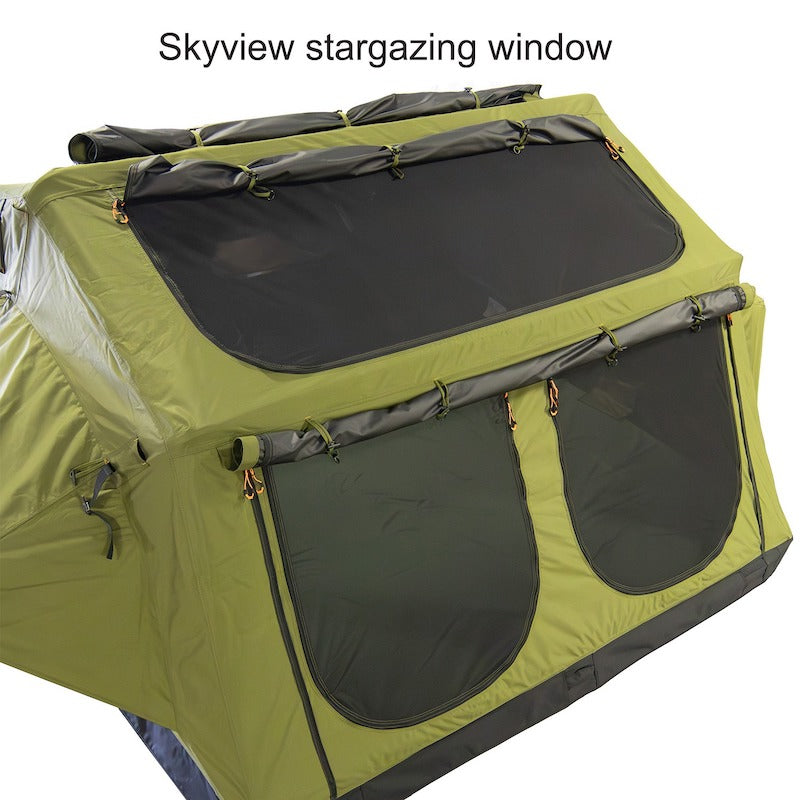
Why Campers Love Them
Why Are Rooftop Tents So Popular?
The rooftop tent market has exploded over the past decade — and for good reason. They solve several genuine pain points that traditional campers face every single trip. Here are the six reasons people make the switch and never look back.
Convenient — fast to set up and pack away
No more staking out ground sheets or hunting for level terrain. Most rooftop tents are camp-ready in under five minutes, and packing down is just as quick. Spontaneous overnight stops become completely stress-free.
Always ready for adventure
Because the tent lives on your roof between trips, you're always equipped. Throw your sleeping bag in the car and go — there's no packing and repacking a tent every time the weekend rolls around.
Cheaper than campgrounds, campers, and hotels
A quality rooftop tent is a one-time investment that opens up free camping on public land, remote tracks, and forest roads. Over time, the savings compared to paid campsites or accommodation are significant.
Better access to remote locations and campsites
You're not looking for a flat, cleared campsite anymore. Pull off anywhere your vehicle can reach, and you have a bed for the night. Mountain ridges, river crossings, and back-country tracks all become viable sleeping spots.
Safer and stronger than a ground tent
Elevated off the ground, you're removed from moisture, insects, snakes, and curious wildlife. A rigid-shell tent also offers significant structural protection in wind and rain that fabric ground tents simply can't replicate.
Warmer and drier than ground level
Cold air settles near the ground overnight. Sleeping elevated keeps you warmer in cooler seasons and away from ground moisture and condensation — a genuine comfort advantage during shoulder-season camping.
Decision Framework
How to Choose the Best Rooftop Tent for You
There's no single "best" rooftop tent — only the best one for your vehicle, your travel style, and your budget. Work through these considerations before you commit.
Confirm your vehicle's roof load rating
Every vehicle has a dynamic roof load limit — the maximum weight the roof can carry while in motion. This figure is typically between 75 kg and 150 kg and is listed in your owner's manual. Your tent, roof rack, and any additional gear must fall within this limit. Never exceed it.
Decide on hardshell vs softshell
Hardshell tents open in seconds and sit compact on the roof. Softshell tents offer more sleeping space at a lower price point. Your travel rhythm — whether you move every night or stay put for several days — is the most reliable guide here.
Choose the right size for your group
Rooftop tents are rated by sleeping capacity, but always consider your comfort preferences. A tent rated for two may feel cramped with two adults and gear; a family of four may need a larger annex setup. Think about who you typically camp with.
Factor in the climate you camp in
If you camp year-round in cold or wet climates, invest in a tent with quality insulation, sealed seams, and good ventilation to manage condensation. Desert campers should look for mesh panels and UV-resistant materials.
Set a realistic budget — and stick to it
Entry-level softshell tents start around $800–$1,200. Premium hardshell models can reach $3,500 or more. More expensive does not always mean better for your needs — evaluate features against your actual camping requirements, not aspirational ones.
Research the brand's after-sales support
A rooftop tent is a long-term investment. Prioritise brands that offer genuine warranties, replacement parts, and responsive customer service. A tent with a two-year warranty and a local distributor is worth more than a cheaper no-name alternative.
Before You Buy
Is Your Roof Rack Compatible with a Rooftop Tent?
Not all roof racks are created equal. A rooftop tent requires a rack rated for both the static weight of the tent and the dynamic load while driving. Decorative or factory-fit racks are often only rated to 50–75 kg static — far too low for most tents.
Before purchasing a tent, check that your rack is rated to handle at least 1.5x the tent's listed weight as a dynamic load. Look for quality aftermarket racks from reputable brands if your current setup doesn't meet the spec.
- Check your vehicle's roof load rating in the owner's manual
- Verify your roof rack's dynamic load rating separately
- Ensure your crossbar width matches the tent's mounting footprint
- Confirm T-slot or track compatibility with your tent's mounting hardware
- Factor in the added weight of bedding and accessories}
Size Guide
What Size Rooftop Tent Is Best for You?
Rooftop tent sizing is typically quoted as a sleeping dimension — the actual internal floor space when the tent is fully open. Use these benchmarks as a starting point, then consider how you actually sleep and what gear needs to come with you.
| Tent Size | Typical Dimensions | Best For | Notes |
|---|---|---|---|
| Solo / 1-Person | ~90 × 200 cm | Solo travellers & motorcycle tourers | Lightest option, smallest packed footprint |
| 2-Person | ~120 – 140 × 200 cm | Couples or solo campers wanting extra space | Most popular size, fits most mid-size vehicles |
| 3-Person | ~150 – 160 × 220 cm | Couples with a child or two adults who like space | Check your vehicle's roof load rating carefully |
| 4–6 Person | ~180 – 220 × 240+ cm | Families or groups | Often requires extended rack or two-vehicle setup |
Inside the Tent
Rooftop Tent Design and Layout
Beyond the hardshell vs softshell choice, the interior design of a rooftop tent significantly affects day-to-day comfort. Here's what to evaluate when looking at how a tent is built and laid out inside.
Sleeping Opening (Soft vs Hard)
Softshell tents typically have a larger floor opening because the entire body folds out. Hardshell tents have a fixed floor footprint — what you see on the roof is what you sleep in. If interior space is your priority, softshell wins on raw square metres.
Storage Pockets and Organisation
Quality tents include interior mesh pockets, shoe bags at the base of the ladder, and gear organiser loops. These details matter enormously on longer trips where keeping the interior tidy is the difference between restful sleep and a cluttered frustration.
Windows and Airflow
Ventilation is critical in warmer climates and for managing condensation in cold ones. Look for tents with multiple mesh windows, a roof vent or skylight, and zippered privacy covers. Airflow affects sleep quality more than most buyers anticipae.
Ease of Setup — the Real-World Test
Watch actual setup and pack-down videos before purchasing — not promotional content. Real-world setup times often differ from marketing claims. Pay close attention to how awkward the process is alone, in the dark, and in wet weather.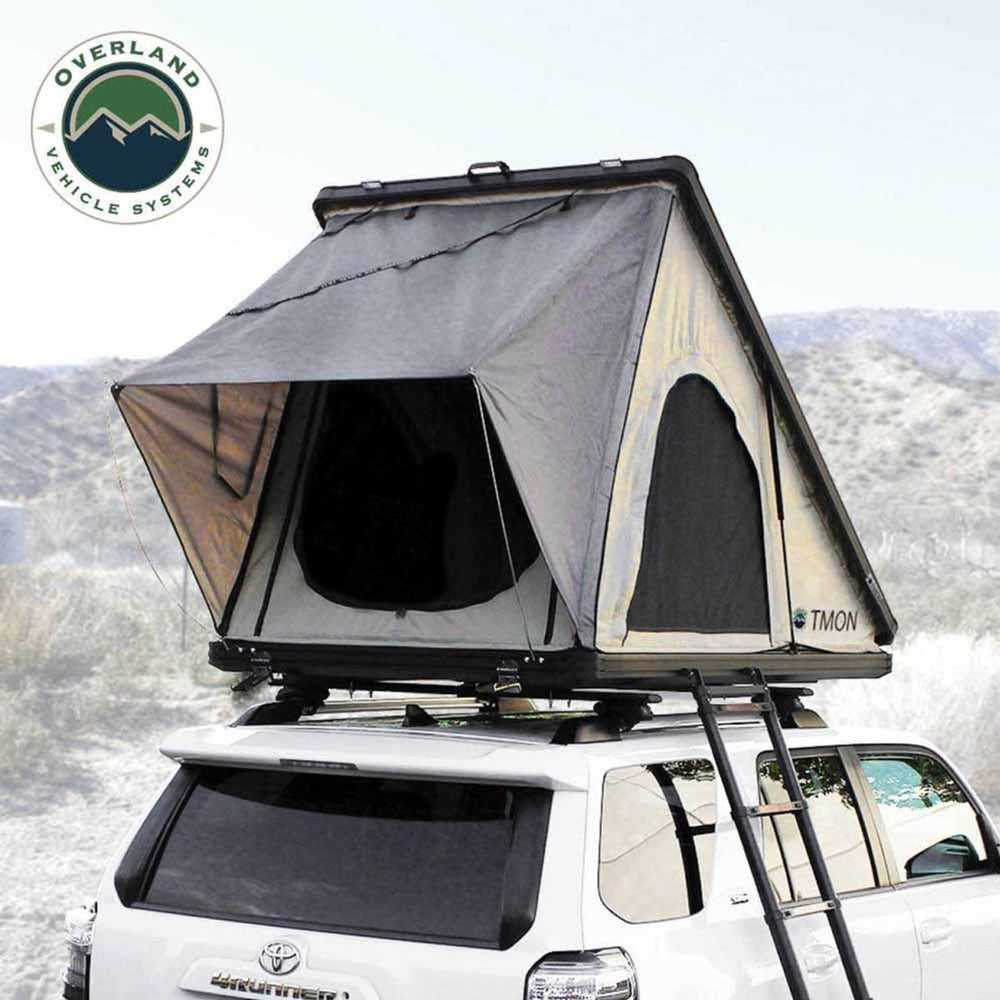
The Big Decision
Hardshell vs Softshell — Which Is Better?
Neither is universally better — they serve genuinely different camping styles. The right answer depends entirely on how you travel, where you go, and how much you value speed versus space.
Hardshell Rooftop Tent
- Opens and closes in seconds — no poles or fabric to manage
- Rigid shell resists wind, rain, and impact
- Low-profile, aerodynamic when closed
- Ideal for frequent movers and short overnight stops
- Generally lighter than equivalent softshell models
- Higher upfront cost
Softshell Rooftop Tent
- Larger sleeping footprint when fully deployed
- Better height for sitting up and moving around
- More flexible layout and annex options
- Excellent for extended basecamp stays
- More affordable entry point
- Slightly taller packed profile on roof
What It's Made Of
What Are the Best Rooftop Tent Materials?
The materials used in a rooftop tent's shell, canvas, and mattress directly determine how long it lasts, how well it handles the weather, and how comfortable it is to sleep in. Here's what to look for in each component.
Shell — Hardshell
Look for fibreglass or ABS plastic shells with UV-resistant coatings. Aluminium-framed lids offer the best strength-to-weight ratio. Avoid thin plastics that flex or creak in wind.
Canvas — Softshell
285 gsm polycotton canvas is the industry standard for softshell tents. It breathes, resists condensation, and handles UV better than pure polyester. Heavier canvas (320+ gsm) offers superior four-season performance.
Mattress Foam
High-density foam (60–80 kg/m³) holds its shape over years of use. Some premium tents use memory foam toppers for added comfort. Avoid tents with cheap open-cell foam that degrades quickly in humidity.
Rainfly and Seams
Look for a hydrostatic head rating of at least 3,000 mm on the fly material. All seams should be taped or welded, not just stitched. Stitched-only seams leak in sustained heavy rain regardless of the fabric's rating.
Ladder
Anodised aluminium ladders resist corrosion and handle weight reliably. Check that the ladder extends at an angle (not straight vertical) and that rungs are wide enough to be comfortable with bare feet.
Mounting Hardware
Stainless steel or zinc-coated mounting hardware is essential. Cheap mild steel corrodes quickly with road exposure. Confirm that the mounting clamps or brackets are rated to the tent's listed weight plus a safety margin.

A Rooftop Tent Built for Serious Adventurers
Everything in this guide points toward one conclusion: invest in a tent with proven construction, real-world versatility, and enough space to sleep comfortably no matter how long the adventure runs. The 23ZERO Walkabout delivers exactly that.
23ZERO Walkabout 87" 2.0 — 6-Person Roof Top Tent
A large-format softshell rooftop tent built for groups and families who refuse to rough it. Polycotton canvas, high-density foam mattress, multi-panel ventilation, and a setup that's genuinely manageable solo. Purpose-built for extended adventures across any terrain.